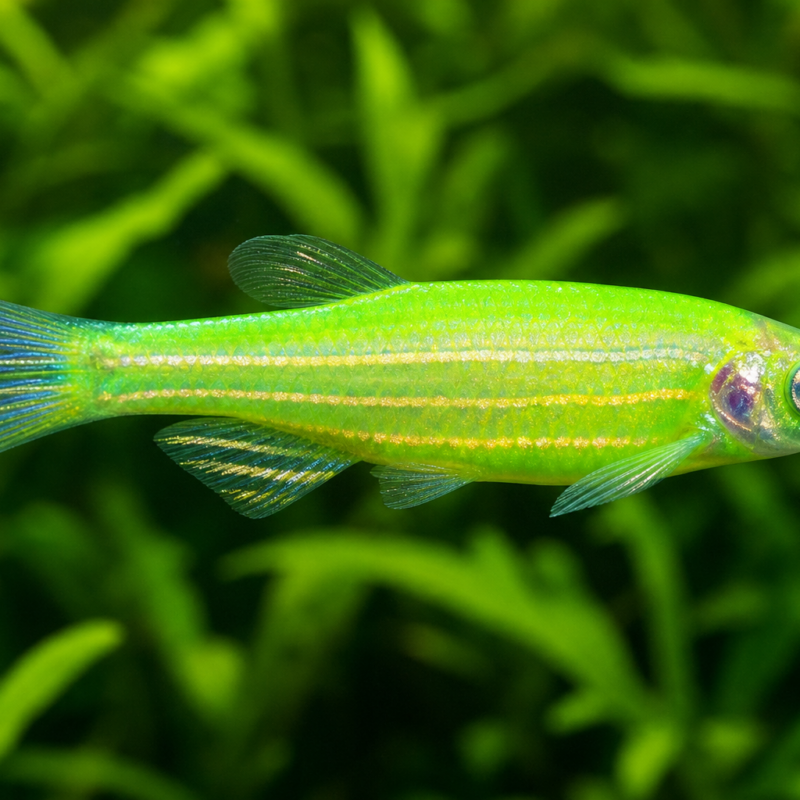
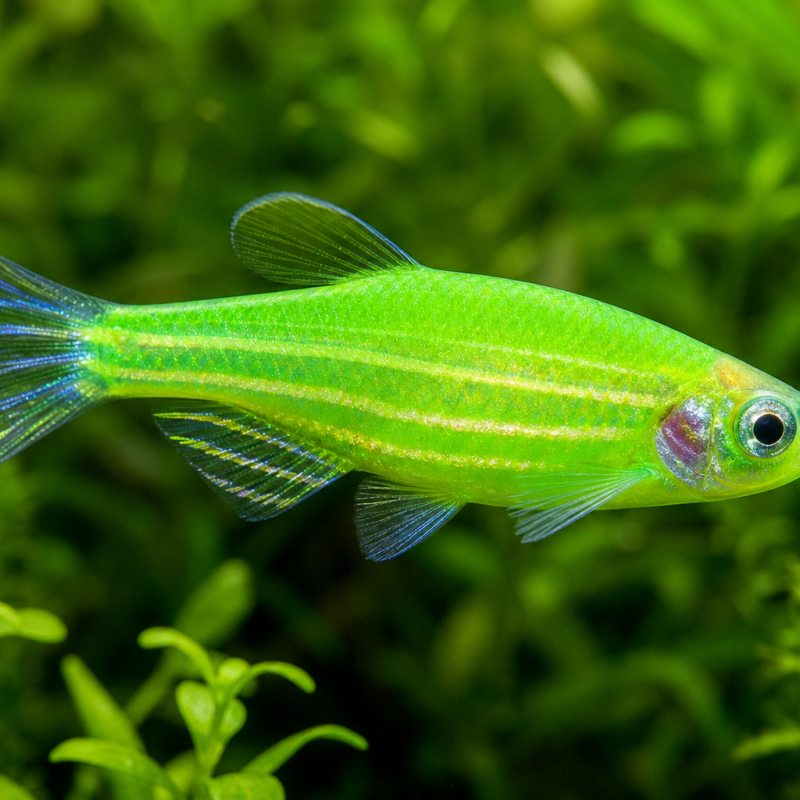
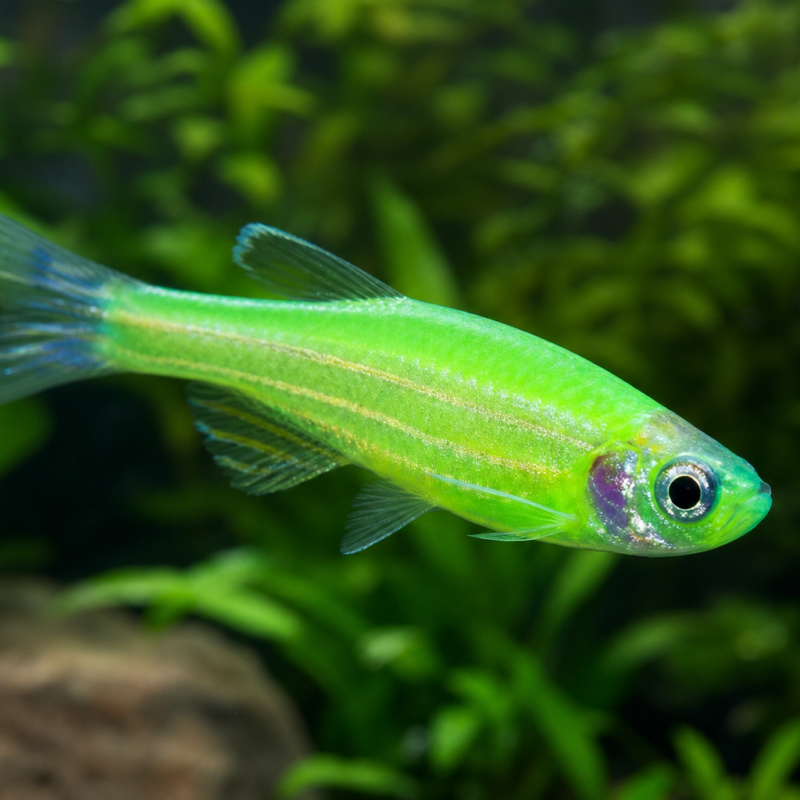
Colored Zebra Danio
Danio rerio · Peaceful · Beginner care
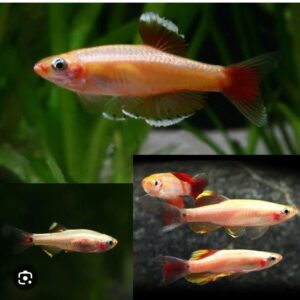
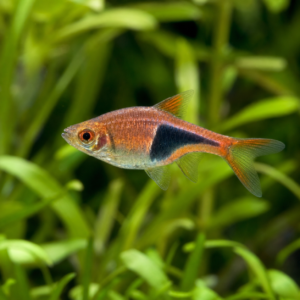
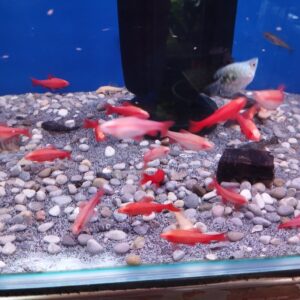
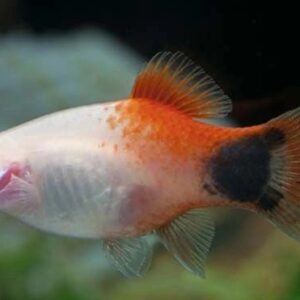
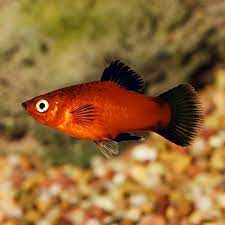
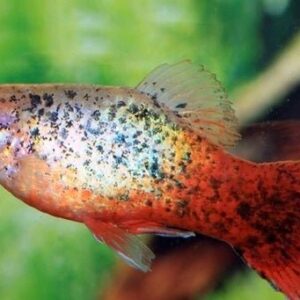
Brightly coloured strains of the ever-reliable Zebra Danio — neon reds, greens, oranges and blues over the same striped, torpedo-shaped body. One of the hardiest, most active shoaling fish you can keep.
At a glance
Species profile Danio rerio
Origin
South Asia (India, Bangladesh, Nepal)
Family
Cyprinidae (carp and minnow family)
Adult size
Up to 5 cm (2 in)
Diet
Flake, micro-pellets and small live/frozen foods (daphnia, brine shrimp, bloodworm) (Omnivore)
Temperament
Peaceful
Swimming level
Middle to top
Minimum group
6+ (shoaling)
Lifespan
3-5 years
Minimum tank
60 L (15 gal)
Water type
Freshwater
Size to scale
5 cm adult length, shown to scale against an iPhone 15 Pro (14.66 cm).
Natural range
Where it comes from — South Asia
South Asia (India, Bangladesh, Nepal)
Water
Singapore tap water vs its needs
Hardness: Soft to hard (5-19 dGH).
In the aquarium
How it lives in the tank
Swims in the top & middle of the tank
Keep in a group of 6+
Sensitivity Index — Hardy
Hardy and beginner-friendly; keep up routine water changes and it will thrive.
Our own read on how forgiving this species is of water changes — not a formal standard.
Keeping & care
What this fish needs
Family
About the Cyprinidae family carp and minnow family
Cyprinidae is one of the largest families of freshwater fishes, native to North America, Africa, and especially Eurasia, and includes many of the hobby's most familiar aquarium fishes — barbs, danios, rasboras, "sharks," and goldfish among them. Members are typically small to medium, toothless-jawed (they grind food with pharyngeal teeth), egg-laying schooling fishes, and most popular species are active, peaceful, and undemanding. Care demands vary by species, but the common aquarium members generally prefer soft-to-moderate, slightly acidic-to-neutral water and thrive in groups.
Keep the schooling species (barbs, danios, rasboras) in groups of at least six to eight in a planted, gently-to-moderately flowing tank; larger and boisterous species can nip fins or outgrow small aquaria, so match adult size and temperament to tankmates.
Breeding
Egg-scatterer (most common; some substrate/plant depositors)Most aquarium cyprinids are egg-scattering spawners that release adhesive eggs among fine-leaved plants, spawning mops, or over a substrate, giving no parental care. Breeding is typically triggered by conditioning adults on rich foods and then providing warmer, slightly softer water and morning light; the parents should be removed after spawning because they readily eat their own eggs and fry. Many species — danios, rasboras, barbs, and white cloud mountain minnows — spawn reliably in home aquaria, while others are bred only in commercial or specialist setups.
Feeding
Recommended food

Compatibility
Best tankmates
Community