
Demasoni Cichlid Care Guide: Tiny, Aggressive and Electric Blue
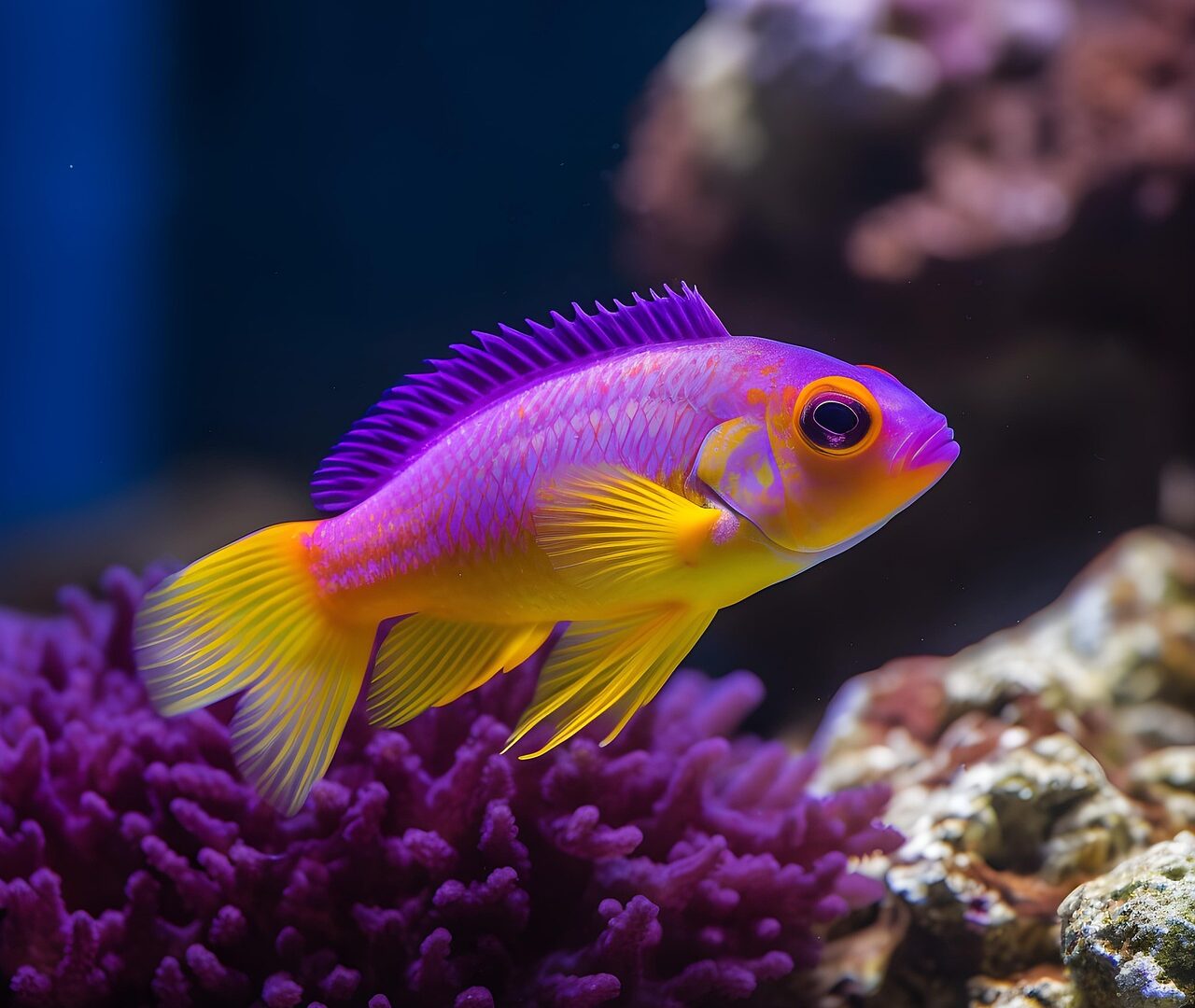
Few mbuna pack as much attitude into such a small frame as Pseudotropheus demasoni. This demasoni cichlid care guide covers a species barely reaching 8 cm yet capable of terrorising tankmates twice its size. With alternating dark blue and light blue vertical bars, the demasoni is visually striking and endlessly entertaining to watch. Gensou Aquascaping in Singapore has helped many hobbyists succeed with this feisty fish, and the key is understanding that numbers, rockwork and diet solve most problems before they start.
Origin and Appearance
Pseudotropheus demasoni was first collected from Pombo Rocks along the Tanzanian coast of Lake Malawi. Its habitat consists of shallow, rocky zones with strong wave action. Both males and females share nearly identical dark-blue-and-light-blue barring, which makes sexing juveniles a genuine challenge. Adults top out at around 7-8 cm, making them one of the smallest mbuna in the hobby. Despite the modest size, their colour intensity rivals fish three times larger.
Tank Requirements
A 250-litre tank is the minimum for a group, but 350 litres or more gives substantially better results. The tank should be densely stacked with rocks to create dozens of small caves, crevices and line-of-sight breaks. Aggression in demasoni is constant and diffuse; without ample hiding spots, a dominant male will systematically eliminate rivals. Use an inert substrate like pool-filter sand, then build rockwork from floor to water line. Secure heavy stones with aquarium-safe silicone or egg crate to prevent collapses in Singapore’s HDB flats where floor vibrations can shift loose stacks.
Water Parameters and Maintenance
Target pH 7.8-8.6 and raise Singapore’s soft tap water to GH 10-14 with a Rift Lake mineral buffer. Temperature between 24 °C and 27 °C works well, and ambient room temperature in most Singaporean homes sits comfortably in this range. Demasoni are sensitive to dissolved nitrate, so keep it under 15 ppm with twice-weekly 25% water changes. A powerful canister filter or sump rated for at least ten times the tank volume handles the bioload of a large colony. Always dechlorinate PUB tap water, which is chloramine-treated.
The Critical Rule: Overstock to Reduce Aggression
Here is where the demasoni cichlid care guide differs from almost every other fish guide you will read. Keeping too few demasoni is a death sentence for subordinates. A colony of 12 is the absolute minimum; 18-24 in a 350-litre tank is far more stable. High numbers spread aggression so thinly that no single fish endures fatal harassment. It sounds counterintuitive, but understocking this species is the most common beginner mistake. Heavy filtration and frequent water changes compensate for the elevated bioload.
Diet and Feeding
Demasoni are herbivores that graze aufwuchs in the wild. Feed a spirulina-based pellet or flake as the daily staple. Blanched zucchini, cucumber or nori sheets make excellent supplements. Avoid all high-protein foods such as bloodworms, tubifex and beef heart, as these trigger Malawi bloat with alarming speed in this species. Feed small amounts two to three times daily rather than one heavy feeding. This approach also keeps the colony busy and further reduces aggression, since foraging occupies fish that might otherwise chase rivals.
Suitable Tankmates
Mixing demasoni with other mbuna requires care. Avoid any species with similar vertical barring, such as Cynotilapia zebroides, because the demasoni will attack lookalikes relentlessly. Good companions include yellow labs (Labidochromis caeruleus), rusty cichlids and acei cichlids, all of which differ enough in colour pattern to coexist. A group of Synodontis multipunctatus catfish works well as bottom dwellers. Steer clear of peacocks and mild haplochromines, which cannot handle mbuna aggression levels.
Breeding
Breeding happens readily in a well-maintained colony. Females are maternal mouthbrooders, holding 5-15 eggs for roughly 21 days. Because males and females look nearly identical, the easiest approach is to buy 18-20 juveniles at $5-$10 each from local breeders on Carousell or shops in the Serangoon North area and let them pair naturally. Strip fry at day 18 if you want higher survival rates, or allow the female to release them into the main tank where rockwork gives fry hiding spots. Fry accept crushed spirulina flake from day one.
Health Considerations
Malawi bloat is the number one killer, almost always linked to improper diet or poor water quality. Symptoms include a swollen belly, white stringy faeces, lethargy and rapid breathing. Treatment with metronidazole can work if caught early, but prevention through strict herbivorous feeding and low nitrates is far more reliable. Aggression-related injuries like torn fins heal quickly in clean water. Quarantine every new addition for at least two weeks to avoid introducing ich or bacterial infections to your established colony.
Related Reading



