
Labidochromis Hongi Care Guide: Red-Top Swedish Variant
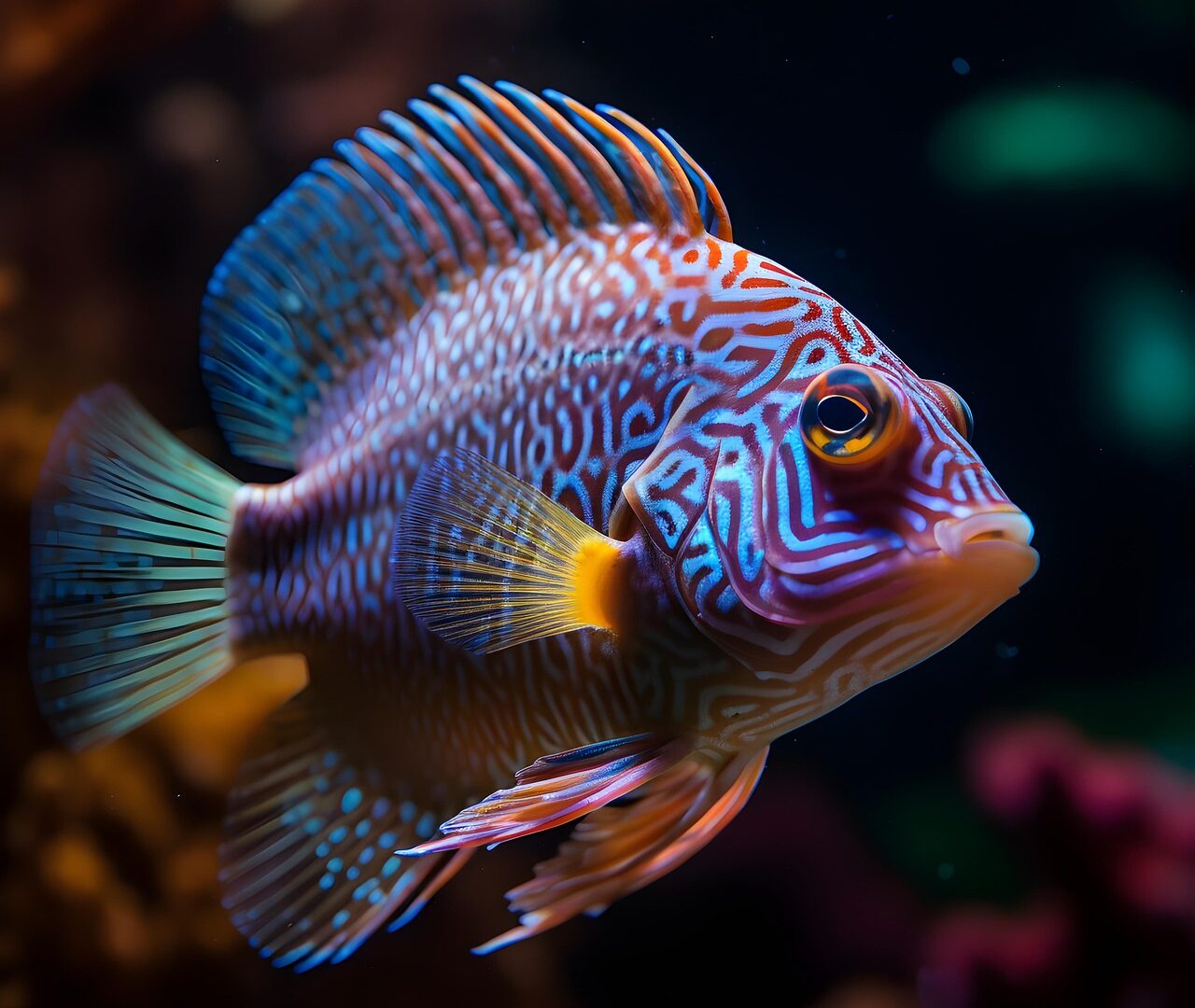
If you want a mbuna that blends fiery orange-red dorsal colouring with a powder-blue body, the Labidochromis hongi care guide you are reading now covers one of the hobby’s most eye-catching Malawi cichlids. Labidochromis sp. “Hongi” originates from Hongi Island in Lake Malawi, though the popular “Red Top” or “Swedish” line was selectively bred in Sweden to intensify the red dorsal fin and face. Gensou Aquascaping in Singapore stocks and recommends this species regularly because it strikes an excellent balance between vivid colour and moderate temperament.
Origin and Variant History
Wild-type Hongi from Hongi Island show a subtle orange flush on the dorsal fin and head against a blue-grey body. Swedish breeders isolated and enhanced the red pigment over multiple generations, producing the Red Top Swedish variant now dominant in the trade. Both forms belong to the Labidochromis genus, closely related to the well-known yellow lab (Labidochromis caeruleus). Males display the most intense colour, reaching a deep crimson-orange crown that contrasts sharply with their steel-blue flanks. Females show lighter colouring but retain the characteristic dorsal blush.
Tank Size and Aquascaping
A group of one male and three to four females fits comfortably in a 200-litre tank. For a mixed mbuna community, aim for 300 litres or above. Build rockwork with plenty of caves using ocean rock or inert granite, securing heavy pieces against each other. Leave open sandy areas in the foreground where males display. Hongi appreciate line-of-sight breaks more than absolute cave count, so arrange rocks in clusters rather than a single continuous wall. Pool-filter sand or aragonite sand works well as substrate.
Water Conditions
Maintain pH between 7.6 and 8.4. Singapore’s PUB tap water is soft and slightly acidic, so you will need to buffer hardness up to GH 8-12 using a commercial Rift Lake salt mix or crushed coral in your filter media. Temperature of 25-28 °C suits this species perfectly, and most Singapore homes sit within that range year-round without a heater. Weekly water changes of 30% keep nitrates manageable. Hongi tolerate brief parameter fluctuations better than many mbuna, but consistency is always the goal.
Feeding Requirements
Hongi are omnivores leaning herbivorous. A quality spirulina pellet forms the dietary backbone, supplemented with occasional frozen foods like brine shrimp or mysis once or twice a week. Blanched peas and zucchini rounds provide useful fibre. Avoid heavy reliance on protein-rich foods, as Malawi bloat remains a risk for all mbuna. Feed two small meals per day rather than one large serving. This keeps fish active and reduces food competition among the group.
Temperament and Community Planning
Among mbuna, Hongi sit in the moderate aggression bracket, less volatile than demasoni or auratus but more assertive than yellow labs. Dominant males chase rivals and court females vigorously, so keeping a harem ratio of one male to three or four females prevents any single female from bearing the brunt. Suitable tankmates include Labidochromis caeruleus, acei cichlids and Iodotropheus sprengerae. Avoid species with red-topped colour patterns to prevent cross-aggression driven by colour similarity.
Synodontis catfish and bristlenose plecos (provided you maintain Malawi-appropriate hardness) round out the lower levels of the tank nicely.
Breeding the Red-Top Swedish Line
Hongi breed willingly in captivity. The male digs a shallow pit or clears a flat rock, then performs a vigorous lateral display to attract a receptive female. After spawning, the female collects 10-25 eggs and incubates them in her mouth for approximately 21 days. Fry emerge at about 10 mm and can eat finely crushed flake or powdered spirulina immediately. Isolating the holding female in a breeding box or nursery tank dramatically improves survival. Juveniles at 3-4 cm start showing colour and typically sell for $6-$12 each on Carousell or at local fish shops.
Health and Longevity
With proper water quality and diet, Hongi live 7-10 years. The usual mbuna concerns apply: Malawi bloat from overfeeding protein, ich from temperature instability, and aggression injuries in overcrowded or under-stocked tanks. Quarantine new arrivals for two weeks in a separate tank before introducing them to your colony. Watch for early signs of bloat, specifically white stringy faeces and loss of appetite, and address water quality immediately if they appear. A well-maintained Hongi colony rewards you with some of the most vivid colour contrasts available in the freshwater hobby.
Related Reading



