
Diamond Tetra Tank Mates: Best Companions for Sparkle Tetras
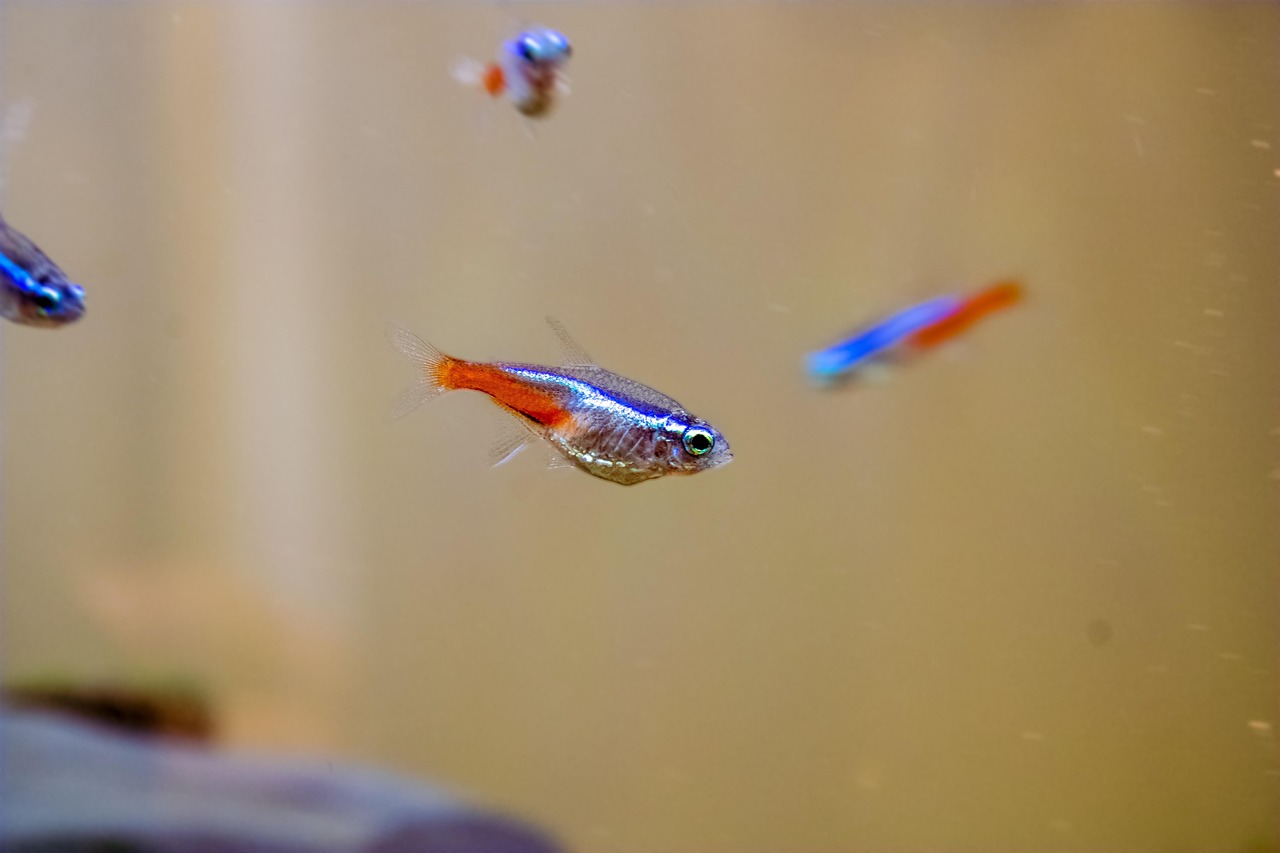
Few freshwater fish catch the light quite like Moenkhausia pittieri, the diamond tetra, whose iridescent scales flash silver and gold with every turn. Selecting the right diamond tetra tank mates ensures this spectacular display continues without stress or aggression. At Gensou Aquascaping in Singapore, we have stocked these tetras in countless community setups and know which pairings thrive and which create problems.
Understanding Diamond Tetra Behaviour
Diamond tetras are mid-water schooling fish that grow to around 6 cm. They are generally peaceful but can show mild fin-nipping tendencies, particularly in groups smaller than eight. Keeping a proper school curbs this behaviour almost entirely, as the fish focus their social energy within the group.
They occupy the middle to upper water column and appreciate moderate flow. Avoid pairing them with very slow-moving, long-finned species that might become targets of occasional curiosity nips.
Top Schooling Tank Mates
Rummy-nose tetras (Hemigrammus rhodostomus) are an outstanding choice. Their tight schooling complements the diamond tetra’s looser formation, and both species prefer similar water conditions — soft, slightly acidic water that matches Singapore’s tap supply. Harlequin rasboras (Trigonostigma heteromorpha) add a warm copper tone that contrasts beautifully with the diamond tetra’s sparkle.
Cardinal tetras work well too, occupying the lower-to-mid water column and staying out of the diamond tetra’s preferred zone. A tank combining all three creates layers of colour and movement that make planted aquascapes truly come alive.
Bottom Dwellers That Pair Well
Corydoras catfish are near-perfect companions. Species like Corydoras pygmaeus or Corydoras habrosus stay small and spend their time sifting through substrate well below the diamond tetra’s swimming level. For larger tanks of 120 litres or more, a group of Corydoras sterbai adds robust bottom-level activity.
Kuhli loaches (Pangio kuhlii) offer another option. These nocturnal scavengers stay hidden during the day and become active at dusk, adding interest to your tank during evening viewing hours.
Shrimp and Invertebrate Compatibility
Adult cherry shrimp (Neocaridina davidi) generally coexist with diamond tetras, though shrimplets will be eaten. If you want a self-sustaining shrimp colony alongside your tetras, provide dense moss cover — Java moss or Taxiphyllum barbieri works well. Amano shrimp (Caridina multidentata) are large enough to be left alone entirely and contribute excellent algae control.
Nerite snails are completely safe and help keep glass and hardscape clean. They are readily available at most Singapore fish shops for $2-4 each.
Species to Avoid
Long-finned guppies and male bettas are poor choices. The flowing fins can trigger nipping from diamond tetras, leading to stress and fin damage. Aggressive cichlids, even smaller ones like rams in breeding mode, may bully the relatively docile tetras. Large, boisterous fish such as giant danios or tinfoil barbs will simply intimidate them into hiding.
Other known fin-nippers like serpae tetras and Buenos Aires tetras create a hostile environment when housed together. Stick with peaceful community species for the best results.
Ideal Tank Setup for a Community
A 120-litre tank is the minimum for a proper diamond tetra community. Plant the background densely with stem plants like Rotala rotundifolia or Hygrophila polysperma, leaving open swimming space in the front and middle. Moderate filtration with gentle surface agitation mimics their natural habitat in Venezuelan streams.
Aim for 24-28 degrees C — in Singapore, a fan or clip-on cooler during particularly hot months keeps temperatures from climbing past 30 degrees C, which can stress tetras.
Stocking Ratios and Group Sizes
Start with eight to ten diamond tetras as your centrepiece school. Add a group of six to eight complementary schooling fish in a different colour. Round out the bottom with six corydoras or five kuhli loaches. This diamond tetra tank mates guide approach keeps bioload manageable while creating visual depth across all water layers.
Avoid the temptation to add too many species. Three to four carefully chosen species always look better than seven underpopulated groups competing for space and food.
Related Reading



