
Long-Fin Emperor Tetra Care Guide: Purple Royalty With Flowing Fins
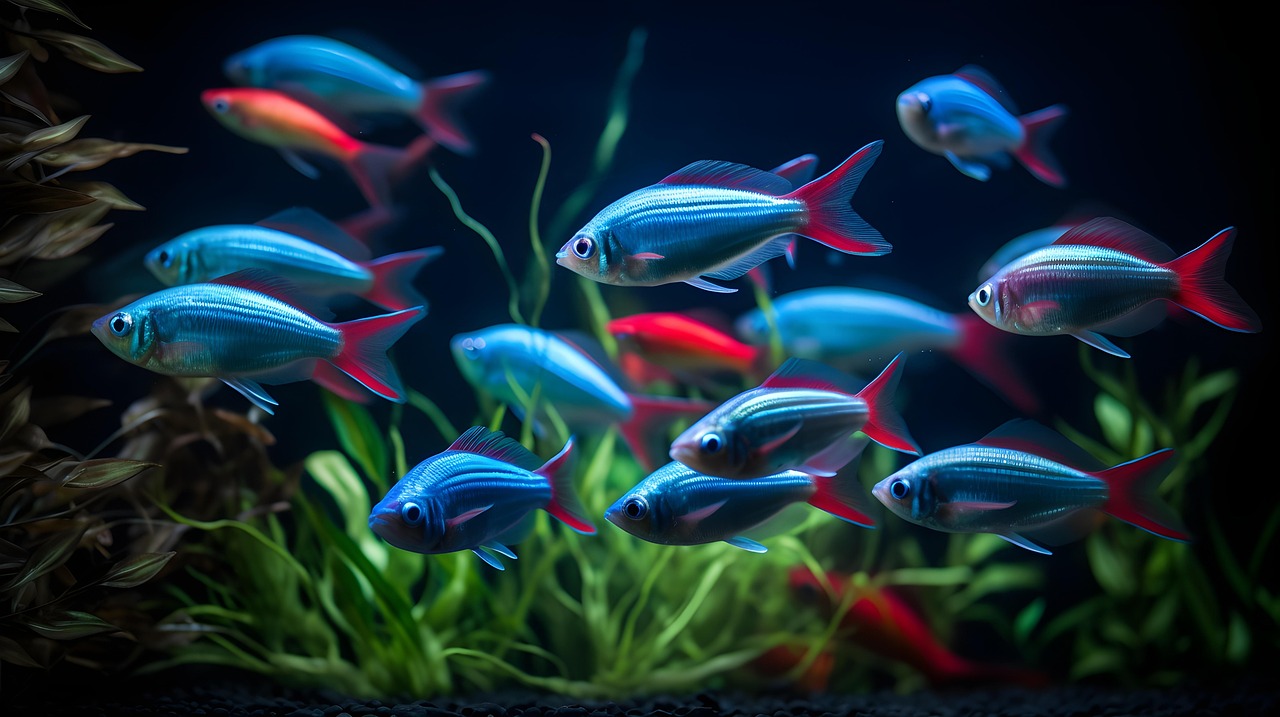
With iridescent purple flanks and dramatically extended finnage, the long-fin emperor tetra is one of the most regal community fish available. This long fin emperor tetra care guide covers Nematobrycon palmeri in its flowing-finned form, a variant selectively bred for exaggerated dorsal and caudal extensions that trail like silk through the water column. Gensou Aquascaping at 5 Everton Park, Singapore, frequently recommends this species for planted tanks because its gentle temperament and moderate size make it a superb centrepiece schooler.
Species Background
Nematobrycon palmeri originates from the Rio Atrato and Rio San Juan basins in Colombia. Wild fish display a bold black lateral stripe bordered by shimmering purple and gold, with a distinctive trident-shaped caudal fin in males. The long-fin variant enhances these features with elongated dorsal and anal fins that can extend 2-3 cm beyond the standard form. Adults reach approximately 5-6 cm body length, though fin extensions make males appear considerably larger. Their unique blue-green irises give them an intense, almost piercing gaze.
Ideal Tank Setup
A group of eight to ten long-fin emperors does well in a 100-litre planted aquarium. Dense vegetation along the back and sides with an open swimming corridor in the front suits their behaviour perfectly. They prefer subdued lighting, so floating plants like Salvinia or Amazon frogbit help diffuse overhead light. Dark substrates such as ADA Amazonia or fine black sand enhance their purple colouration dramatically. Moderate water flow from a hang-on-back or small canister filter works best; excessive current batters their delicate extended fins.
Water Parameters
Emperor tetras thrive in soft, slightly acidic water, which aligns beautifully with Singapore’s PUB tap water at GH 2-4 and a pH hovering around 6.5-7.0 after dechlorination. Temperature between 24 °C and 28 °C is ideal. In most Singapore homes, ambient temperature sits within this range, so a heater is rarely needed. Keep nitrates below 20 ppm with weekly 25% water changes. These fish come from tannin-stained blackwater habitats, so adding Indian almond leaves or driftwood that leaches tannins makes them feel right at home.
Feeding
Emperor tetras are unfussy omnivores. A high-quality micro pellet or crushed flake serves as the staple diet. Supplement with frozen daphnia, baby brine shrimp and cyclops two to three times a week to maintain condition and enhance colouration. Live foods like grindal worms trigger particularly enthusiastic feeding responses. Feed small amounts twice daily and watch that every fish gets its share. Long-fin variants swim slightly slower than standard emperors, so ensure faster tankmates do not outcompete them during feeding.
Behaviour and Tankmates
Despite their royal appearance, emperors are peaceful community fish. Males establish small territories and display to each other with spread fins, but actual aggression is rare and never harmful. Keep them in groups of at least six to encourage natural schooling and display behaviour. Excellent companions include corydoras catfish, otocinclus, smaller rasboras like Trigonostigma heteromorpha, and other peaceful tetras. Avoid fin-nipping species such as tiger barbs or serpae tetras, which will shred those flowing fins in days.
Sexing and Breeding
Males are easy to identify once mature: they display longer fin extensions, a more prominent trident caudal shape, and deeper purple colouration. Females are slightly smaller with rounded fins and a subtler colour palette. Breeding requires soft, acidic water around pH 5.5-6.5 and a temperature of 26-27 °C. Condition pairs with live foods for two weeks, then introduce them to a dim breeding tank with fine-leaved plants like java moss. Females scatter adhesive eggs among vegetation, typically 50-100 per spawning. Remove adults after spawning to prevent egg predation. Fry hatch in 24-36 hours and become free-swimming after five days, accepting infusoria and then baby brine shrimp.
Health and Lifespan
Long-fin emperor tetras live 4-6 years with proper care. Their extended fins make them marginally more susceptible to fin rot if water quality drops, so consistent maintenance is non-negotiable. Watch for white spots indicating ich, which usually appears after sudden temperature changes. In Singapore, the main risk is overheating during prolonged heatwaves when ambient temperatures exceed 31 °C. A small clip-on fan blowing across the water surface or a simple aquarium cooling fan brings the temperature down by 2-3 °C. These elegant fish reward attentive care with a display that few freshwater species can match.
Related Reading
- Long-Fin Black Neon Tetra Care Guide: Flowing Dark Elegance
- Long-Fin Clown Pleco Care Guide: Driftwood Dweller With Flowing Fins
- Purple Emperor Tetra Care Guide: Regal Colour in Schools
- Long-Fin Yellow Lab Cichlid Care Guide: Flowing Fins on Mbuna Gold
- Bentosi Tetra Care Guide: Ornate Fins and Subtle Elegance



