How to Aquascape a Long Shallow Tank: Panoramic Layouts
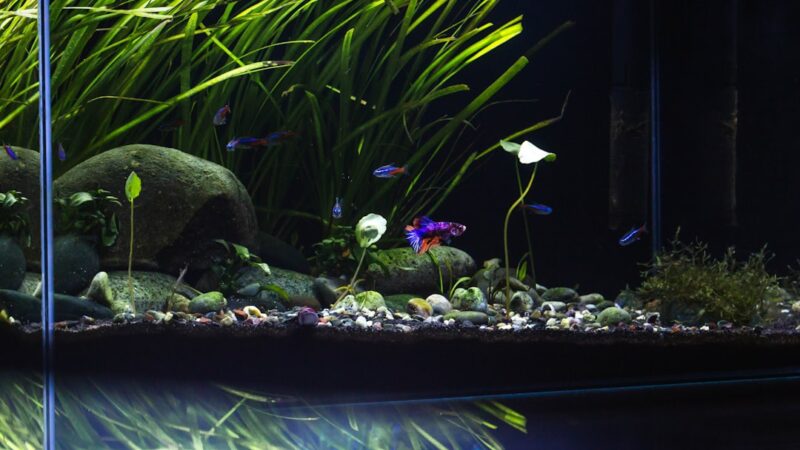
This aquascape long shallow tank panoramic guide unlocks the full potential of wide-format aquariums. Long, shallow tanks — typically 90-150 cm wide and only 25-36 cm tall — offer a cinematic viewing experience that standard cube tanks cannot match. Gensou Aquascaping Singapore has over 20 years of hands-on experience designing panoramic layouts at our 5 Everton Park studio and in client homes across the island.
Advantages of the Long Shallow Format
Shallow water depth means light reaches the substrate with minimal loss. Plants at the bottom of a 30 cm tank receive nearly twice the PAR compared to the same fixture over a 60 cm tank. This opens up demanding carpeting species and intense red stem plants without requiring top-tier lighting.
Gas exchange is superior. The large surface-area-to-volume ratio means oxygen enters and CO2 exits efficiently at the waterline. Fish display more natural lateral swimming behaviour. The panoramic view from a sofa or across a dining table is immersive in a way that tall, narrow tanks simply cannot replicate.
Layout Styles That Suit Wide Tanks
The Iwagumi style — minimalist rock arrangements with carpet plants — thrives in long shallow formats. Three or five stones placed along the length, following the rule of thirds, create a powerful composition with plenty of negative space. ADA’s classic 90P and 120P tanks were designed precisely for this approach.
Nature-style layouts using a winding path from one end to the other exploit the horizontal space beautifully. Driftwood arching across the full width mimics a fallen tree spanning a stream, drawing the eye from left to right in a visual journey.
Hardscape Proportions
In a shallow tank, hardscape must not overwhelm the water column. Keep the tallest element below 70% of the water height. In a 30 cm tank, that means your main stone or wood piece tops out at roughly 20 cm. Elements that breach the waterline can look dramatic but also trap debris and restrict surface gas exchange.
Spread hardscape elements across the full length. A common mistake is clustering everything in the centre, leaving dead zones at both ends. Use a primary focal point at the golden ratio (one-third from either end) with secondary elements balancing the opposite side.
Carpeting Plants and Foreground Design
Shallow tanks with strong light are the ideal environment for carpet plants. Hemianthus callitrichoides (HC Cuba), Micranthemum ‘Monte Carlo‘, and Eleocharis ‘Mini’ all carpet quickly under 60-80 PAR and pressurised CO2. In a 120 cm tank, a lush foreground carpet becomes a sweeping green meadow — the defining feature of the layout.
Plant carpeting species in small plugs spaced 2-3 cm apart. They merge within 4-6 weeks in optimal conditions. Dry-start method works exceptionally well in shallow tanks: fill only to substrate level, mist daily, and let plants root for 3-4 weeks before flooding. This technique eliminates the floating and uprooting issues that plague traditional planting in shallow water.
Background and Midground Strategy
Tall stem plants can easily outgrow a shallow tank in days. Choose moderate-height species: Rotala ‘H’ra’ (trimmed to 15-20 cm), Pogostemon helferi, or Staurogyne repens. These provide colour and texture without requiring constant beheading.
Alternatively, skip stem plants entirely and use epiphytes attached to hardscape. Bucephalandra on rocks and mosses on driftwood fill the midground with greenery that never outgrows its position. This approach drastically reduces maintenance — ideal for long tanks in HDB living rooms where weekly trimming sessions are impractical.
Flow and Filtration Across Length
A single filter outlet at one end of a 120 cm tank creates a dead zone at the opposite end. Use a spray bar spanning at least half the tank length, or add a small wavemaker at the far end to push return flow. Even distribution of CO2 and nutrients across the full width is essential for uniform plant growth.
Canister filters rated at 6-10 times tank volume per hour provide adequate turnover. For a 120 cm tank holding roughly 100 litres, a filter pushing 600-1000 litres per hour works well. Position intake and outlet at opposite ends for maximum circulation efficiency.
Viewing Angle and Furniture Placement
Long shallow tanks look best viewed slightly from above — the angle you get when the tank sits on a low cabinet at sofa armrest height, roughly 50-60 cm from the floor. This reveals the carpet, the path, and the full horizontal sweep of the layout. Eye-level placement compresses the vertical dimension and hides the substrate behind the front glass rim.
In Singapore homes, low TV consoles or custom 50 cm-tall stands work perfectly. Ensure the stand is rated for the weight — a 120 cm shallow tank still holds 80-100 litres of water, weighing 80-100 kg before accounting for hardscape and substrate.
Maintaining the Panoramic Look
Trim carpet plants every 2-3 weeks to prevent them from mounding and losing the flat-meadow appearance. Use curved scissors to shave the surface evenly. Clean the front glass before every viewing session — algae film on a long panoramic tank is far more noticeable than on a standard-sized aquarium. This aquascape long shallow tank panoramic guide ultimately delivers a layout that feels like a landscape painting brought to life, rewarding the effort of careful planning and regular upkeep.
Related Reading