
Myriophyllum Guyana Care Guide: Fine Leaved Milfoil
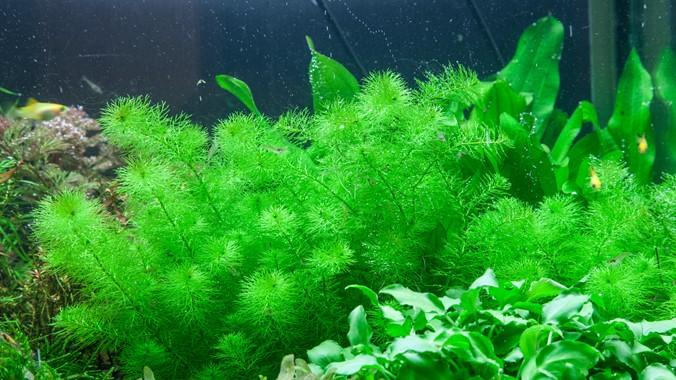
Sold as “Guyana” by a handful of South American exporters, this fine-leaved milfoil is one of the lightest-looking stems you can grow submersed, with each whorl splitting into hair-thin pinnae that catch the light like spun glass. Our Myriophyllum Guyana care guide is drawn from five years of rearing the plant in high-tech display tanks at Gensou Aquascaping in 5 Everton Park, where it now features regularly in Dutch-style groupings and midground contrast blocks. The species is fussier than Myriophyllum mattogrossense but rewards discipline with a feathery texture few other stems match. Expect melt on import and a patient recovery curve before the plant settles into a rhythm.
Identifying True Myriophyllum Guyana
Vendors lump several similar milfoils under “Guyana”, so confirm identity by leaf density: genuine plants carry eight to twelve pinnae per whorl, tightly packed, with the lower third of the stem slightly paler than the crown. M. mattogrossense has fewer, stiffer leaflets; M. tuberculatum (red) reddens top-down. If your specimen melts back to woody stubs immediately after shipping, the tissue is almost certainly correct — imported milfoils sulk for a fortnight before resprouting.
Lighting Requirements
Target PAR at the canopy of 60-90 µmol, which translates to medium-high LED output over a 60 cm tank at 30 cm depth. Under-lit, the plant leans, loses lower whorls and turns a drab olive. Push lighting too hard without matching CO2 and you get GSA on the older leaves within a week. Review our aquascape lighting spectrum guide if you are tweaking a planted fixture from scratch.
CO2 and Flow
This is not a soft-water stem that tolerates neglect. Maintain 30 ppm CO2 throughout photoperiod and ensure even flow reaches every whorl — dead spots develop fine hair algae on the pinnae within days. A 60 cm tank benefits from a circulation pump pointed across the Myriophyllum bed rather than directly at it; the foliage should shimmer, not thrash. Drop checker should sit a consistent lime green by hour two of lights.
Water Parameters
Guyana milfoil runs best in soft, slightly acidic water: GH 3-5, KH 1-3, pH 6.2-6.8, temperature 22-26°C. Singapore tap water from PUB is already soft but chloraminated, so dechlor heavily before water changes — the fine leaflets are sensitive to chloramine residues. If your tank sits above 28°C through April and May, upper whorls get stringy and internodes stretch. A small chiller or a clip fan over the sump keeps the plant compact.
Substrate and Nutrition
Guyana is a column feeder first, root feeder second. An aquasoil base such as ADA Amazonia provides plenty of ammonium for establishment, after which a daily liquid macro regime takes over. Keep nitrate at 15-20 ppm and phosphate at 1-2 ppm; dipping below triggers pinhole damage on the older whorls. Iron matters disproportionately — a chelated Fe dose of 0.1 ppm three times a week keeps the top 3 cm vibrant. See our estimative index EI dosing planted tank breakdown for a full schedule.
Planting Technique
Insert stems singly, 2 cm apart, rather than bundling five into one tweezer grip. Bundled milfoils rot from the centre because flow cannot reach the core. Plant only the lower 1.5 cm into the soil; deeper burial crushes the fine leaflets and accelerates stem-base decay. Remove any shipping weights before planting.
Trimming and Propagation
Treat Guyana like a stem that does not regenerate from a clean stump — it does, but slowly. Instead of topping, harvest the top 8-10 cm, replant the cuttings and pull the old stubs after a week. The refreshed group looks better within ten days than a trimmed-and-waiting bed does in a month. Cuttings root freely; expect visible white rootlets within 72 hours in warm tanks.
Aquascape Placement
Use the plant as a midground contrast to broader-leaved neighbours — Pogostemon stellatus, Limnophila aromatica or Ludwigia palustris all foil it nicely. A block of 15-20 stems creates a cloud effect that draws the eye without dominating. Avoid placing it behind very dense growers; shaded lower whorls defoliate fast.
Common Problems
Pinhole damage on older leaflets usually points to potassium deficit — raise K to 15-20 ppm. Melting centres indicate poor flow, not disease; redirect a powerhead and the plant recovers. Brown crust algae along stems means lighting is outpacing CO2; dial one or the other rather than scrubbing. Our nutrient deficiency diagnosis guide walks through the visual cues.
Livestock Compatibility
Shrimp love grazing the fine pinnae, and small tetras will not damage the plant. Avoid goldfish, silver dollars or large plecos, which shred milfoils in a single night. Otocinclus are fine; Amano shrimp are ideal cleanup for the whorls.
Sourcing and Local Availability in Singapore
Tissue-cultured cups from Tropica or 2Hr Aquarist appear irregularly at Clementi C328 and a couple of Thomson shops, usually at $14-18 per cup. Imported emersed-grown bundles from Green Chapter or Petmart run $8-12 and adapt slower but establish larger groups cheaper. Check the stem bases for soft rot before buying — any mushiness means the whole bundle will melt. Reliable shops will open a fresh cup on request.
Related Reading



