
Opaline Gourami Care Guide: Marbled Three Spot Variant
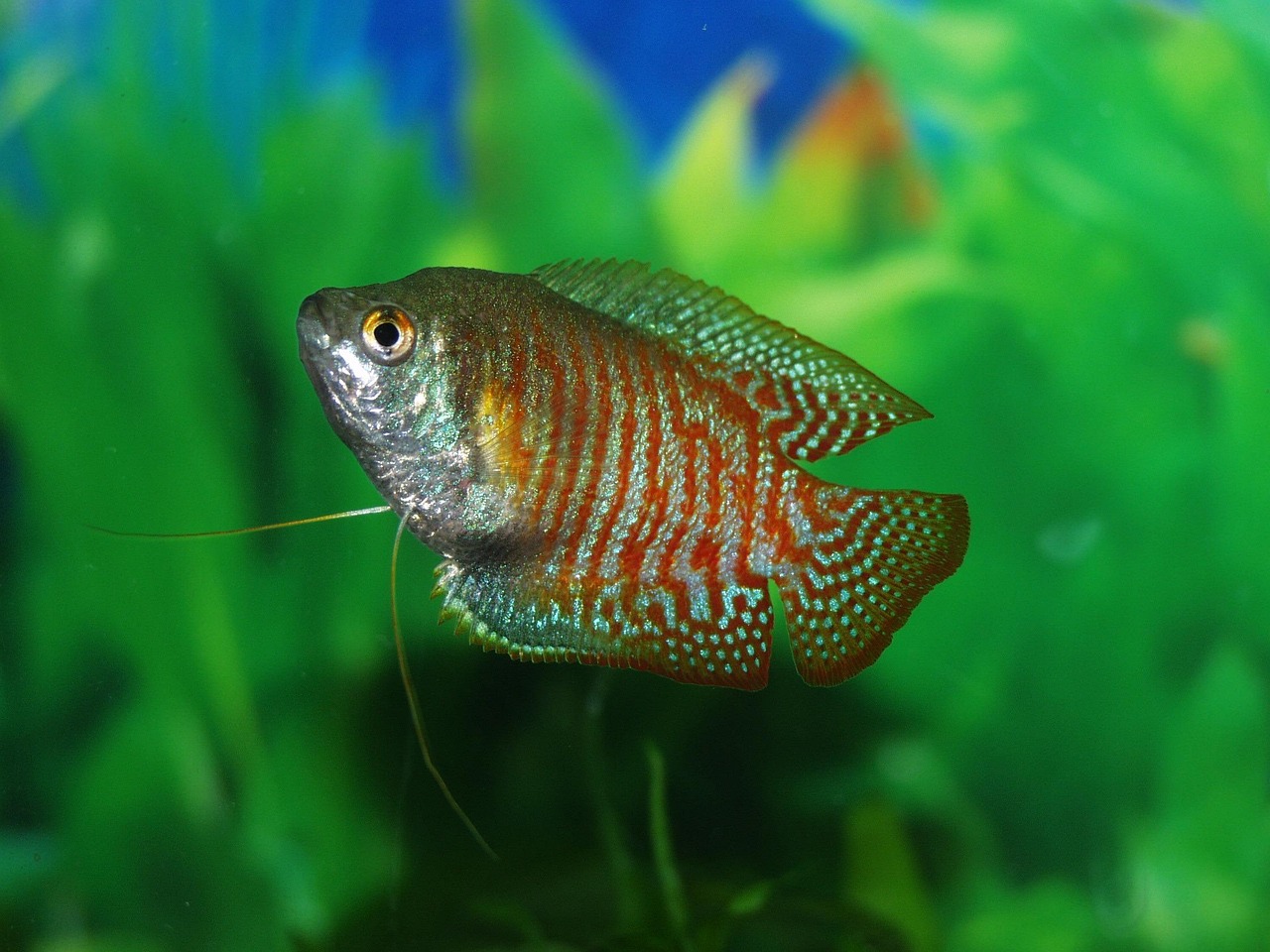
Opaline gouramis glide through planted tanks like pieces of polished marble, their swirling silver-blue patterns making the fish look hand-painted. This opaline gourami care guide from Gensou Aquascaping in Singapore covers the practical details of housing this colour morph of Trichopodus trichopterus. Because opaline is genetically identical to wild three spot stock, care is nearly the same, but behaviour varies subtly between strains; modern opalines selected for colour are often more aggressive than their wild ancestors. Plan tank mates accordingly.
Quick Facts
- Scientific name: Trichopodus trichopterus, opaline colour morph
- Origin: captive-bred worldwide; wild ancestor from Southeast Asia
- Adult size: 12-15 cm
- Water: pH 6.5-8.0, GH 2-15
- Temperature: 24-30°C
- Minimum tank: 150 litres for a group
- Lifespan: 5-7 years
What Makes Opaline Different
Opaline is a marbled colour mutation that masks the standard two body spots under swirling silver-blue patterns. Each fish carries a unique marbling pattern, and the intensity deepens with age and good diet. Unlike the wild form, opaline has been intensively line-bred since the 1970s, which has concentrated both desirable colour traits and some less welcome behavioural tendencies toward aggression.
Tank Setup
A 150-litre planted tank with a 120 cm footprint suits a small group. Use a substrate of fine gravel or aquasoil, plant heavily with Vallisneria, Cryptocoryne, and Amazon sword, and include driftwood for territory boundaries. Floating plants such as Salvinia soften lighting and provide bubble-nest anchors. Keep surface agitation gentle for labyrinth breathing.
Water Chemistry
Singapore tap water works directly after dechlorination at pH 7.2 and GH 3. Opaline tolerates a wide parameter range, which makes it a useful centrepiece fish for community tanks where parameters drift slightly. Weekly 25-30 percent water changes maintain water quality and stimulate natural colour development.
Managing Aggression
This is the critical care difference from other gouramis. Line-bred opaline males often develop strong territorial drives, particularly toward other gouramis, long-finned fish, and smaller surface-dwellers. Keep a single male with 2-3 females to absorb aggression, or a group of females only for a peaceful display. Never house two males in tanks under 250 litres unless sight breaks are extensive.
Feeding
Omnivorous and enthusiastic. A quality pellet forms the base, supplemented with frozen mysis, bloodworm, and plant matter. Blanched vegetables weekly reduce constipation risk. Adult opalines eat hydra, small snails, and planaria readily, which makes them handy pest control in combination with their ornamental value. Two small meals a day prevents bloating.
Tank Mates
Pair opaline with robust companions. Angelfish, silver dollars, medium barbs such as Puntius denisonii, large rasboras, and peaceful cichlids work well. Avoid bettas, fancy guppies, and small tetras with flowing fins. Bristlenose pleco and corydoras catfish make good bottom-dwelling contrast species.
Breeding Opaline
Breeding follows the three spot gourami pattern. Raise temperature to 28°C, drop water level, add floating plants. The male builds a substantial bubble nest and courts the female aggressively. Spawning produces 500-1000 eggs. Remove the female after spawning as the male becomes hostile. Fry hatch in 24 hours and free-swim on day 3, accepting infusoria then baby brine shrimp.
Colour Development
Juvenile opalines appear pale with faint marbling. Full pattern develops between 4 and 8 months on a varied diet with regular live or frozen food. Colour-enhancing foods containing spirulina and astaxanthin deepen blue tones. Poor diet or chronic stress produces washed-out adults regardless of genetics.
Singapore Availability
Opaline gouramis are stocked at nearly every LFS in Singapore, priced $4-8 for juveniles. Select fish with clean fins, active behaviour, and visible pattern even in young specimens. Avoid tanks with obvious disease; opaline is susceptible to mycobacteriosis in crowded wholesale conditions, so quarantine for 14 days is sensible.
Related Reading
Three Spot Gourami Care Guide
Moonlight Gourami Care Guide
Pearl Gourami Care Guide
Dwarf Gourami Care Guide
Kissing Gourami Care Guide



