
Moonlight Gourami Care Guide: Trichopodus Microlepis
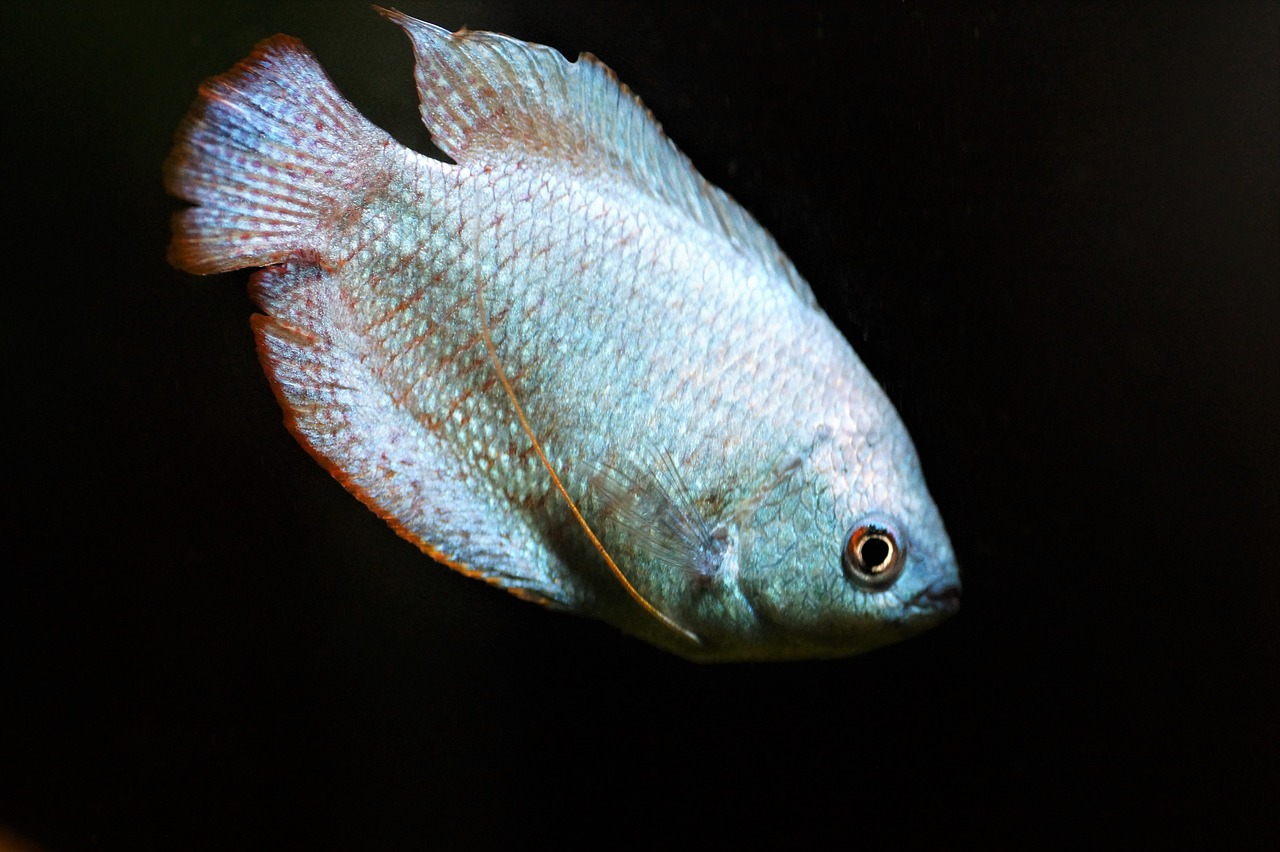
Few large gouramis blend peaceful temperament with genuine elegance the way the moonlight gourami does, its silver scales catching light like a sheet of mother-of-pearl across a well-lit planted tank. This moonlight gourami care guide from Gensou Aquascaping in Singapore lays out the setup, diet, and breeding details for Trichopodus microlepis, a species often overlooked in favour of its flashier cousins. Moonlights reward patient keepers who want a calm, sizeable fish that will not terrorise tank mates the way opalines sometimes do.
Quick Facts
- Scientific name: Trichopodus microlepis (Günther, 1861)
- Origin: lowland Mekong and Chao Phraya basins, Thailand and Cambodia
- Adult size: 13-15 cm
- Water: pH 6.0-7.5, GH 2-10
- Temperature: 26-30°C, warmer than most gouramis
- Minimum tank: 150 litres for a group
- Lifespan: 4-6 years
Appearance and Identification
Moonlight gouramis are uniformly silver-white with no markings, a feature that gives them their common name. Scales are distinctively small (microlepis means “small scale”), giving a smoother finish than the three spot lineage. Males develop orange-red ventral feelers and a slightly pointed dorsal fin during breeding; females remain plain and slightly plumper.
Tank Setup
A 150-litre planted tank with a 120 by 45 cm footprint suits a group of 4-6 fish. Moonlights prefer heavily planted displays with dimmer lighting than three spot gouramis. Use soft substrate, add driftwood for structural interest, and include floating plants to diffuse overhead light. Surface cover is important both for labyrinth breathing and for reducing stress in this shy species.
Water Parameters
Target pH 6.5-7.2 and GH 3-8. Moonlights prefer slightly softer water than opaline or three spot gourami, and tannin supplementation via a few catappa leaves improves colouration and reduces stress. Temperature should sit between 26-30°C; moonlights come from warmer lowland waters than most gouramis and dislike cooler conditions. Singapore ambient temperature is ideal without a heater.
Peaceful Temperament
This is the moonlight’s standout trait. Unlike opalines, males of this species are genuinely peaceful toward tank mates and each other. Groups of 4-6 with a natural sex ratio coexist without serious aggression. They make excellent companions for medium community fish including angelfish, pearl gouramis, peaceful cichlids, corydoras, and larger tetras such as congo tetras.
Diet
Omnivorous with a slight preference for live and frozen foods over dry pellets. Feed a rotation of high-quality pellets, frozen bloodworm, daphnia, and mysis, with blanched vegetables twice weekly. Moonlights eat slowly and can be outcompeted by aggressive feeders; introduce faster community fish only after the gouramis are confidently feeding from the surface.
Breeding
Bubble-nesters like the rest of the genus. Condition pairs on live food for two weeks. Raise temperature to 28-29°C and drop water level to 25 cm. The male constructs a massive bubble nest, sometimes 20 cm across, often incorporating plant fragments for reinforcement. Spawning produces 500-1500 eggs. The male guards the nest aggressively against the female, who must be removed after spawning.
Fry Rearing
Eggs hatch in 24-36 hours at 28°C. Fry free-swim on day 3-4 and need infusoria for the first week, then baby brine shrimp and crushed flake. Humid air above the waterline is essential for labyrinth organ development; cover the rearing tank with cling film for the first 3-4 weeks. Growth is steady at 5-8 mm per month given good food and water quality.
Common Issues
Moonlights are sensitive to poor water quality and ammonia spikes more than other Trichopodus. Maintain weekly water changes of 25-30 percent. Fin damage from rough tank mates or sharp decor can lead to secondary columnaris infection, identified by white cottony patches on the skin. Treat early with a broad-spectrum antibacterial and improved water quality.
Sourcing in Singapore
Moonlight gouramis appear at larger LFS and specialists around $8-15 for juveniles; adult breeders run $20-35. Check for uniform silver colour without patches or dulling, which can indicate internal parasites. Quarantine for 10-14 days and observe feeding before introducing to a display tank. Healthy moonlights greet their keeper at the glass within a week of settling in.
Related Reading
Three Spot Gourami Care Guide
Opaline Gourami Care Guide
Pearl Gourami Care Guide
Dwarf Gourami Care Guide
Honey Gourami Care Guide



