Paludarium Build Guide: Step-by-Step Half-Land Half-Water Setup
A paludarium build guide combines everything aquascapers love — lush plants, flowing water, natural hardscape — and extends the canvas above the waterline into a living terrestrial landscape. The word itself merges the Latin palus (marsh) with aquarium, and the result is a self-contained ecosystem where fish swim below while mosses, ferns and even small amphibians thrive on land above. At Gensou Aquascaping, 5 Everton Park, Singapore, we have built paludariums ranging from desktop nano setups to 120 cm showpieces, and Singapore’s warm, humid climate makes them surprisingly easy to maintain.
Planning Your Layout
Before buying materials, decide on the water-to-land ratio. A 60:40 split (60 percent water, 40 percent land) is a good starting point — it gives aquatic life enough swimming room while providing a meaningful terrestrial zone. Sketch the land mass position: most builders place it along one side or the rear, sloping down into the water. A central island looks dramatic but reduces usable water volume and complicates filtration.
Tank choice matters. Tall, front-opening terrariums (like the Exo Terra range, available locally for SGD 150-350) simplify maintenance on the land portion. A standard 60 cm rimless aquarium works too, provided you leave the top open for plant growth and air circulation.
Building the Land Structure
The land section needs a rigid base that will not collapse over time. Expanded polystyrene foam (EPS), carved to shape and sealed with aquarium-safe silicone, is the most popular DIY approach. Layer the foam in steps to create terraces, then coat the visible surfaces with silicone and press coco fibre or dried sphagnum moss into it for a natural look.
Alternatively, use egg-crate light diffuser panels (SGD 5-8 per sheet from hardware stores) stacked and zip-tied into a frame, then filled with filter foam and topped with mesh and substrate. This method allows water to flow through the structure, improving drainage and reducing stagnant zones.
Substrate Layers
The aquatic zone follows planted-tank norms: 4-5 cm of aquasoil or capped soil over a thin layer of volcanic rock for drainage. The terrestrial zone needs a different approach. From bottom to top: a 2 cm drainage layer of LECA balls, a mesh separator to prevent soil sinking, then 3-5 cm of ABG mix (tree fern fibre, charcoal, sphagnum moss, coco fibre and orchid bark in equal parts). ABG mix retains moisture without waterlogging and supports a healthy microfauna population.
Water Feature and Filtration
A small water pump — 300-600 litres per hour is sufficient for a 60 cm paludarium — can drive a trickle waterfall over the land structure, adding movement and sound. Route the pump outlet through silicone tubing hidden behind the foam structure, letting water cascade over rocks and into the aquatic zone. This circulation also oxygenates the water and keeps the terrestrial substrate moist.
For biological filtration, a compact internal filter or sponge filter in the aquatic section handles the fish bioload. The land section itself acts as a giant biofilter as water percolates through the substrate layers.
Terrestrial Plants for Singapore Climate
Singapore’s 28-32 °C ambient temperature and 75-90 percent indoor humidity are perfect for tropical paludarium plants. Selaginella species (spikemoss) form lush carpets on damp land areas. Fittonia (nerve plant) adds striking white or pink-veined foliage. Miniature orchids, small bromeliads and Begonia species suited to terrarium culture are available at local nurseries around Thomson Road.
Mosses tie everything together. Java moss, Christmas moss and Taxiphyllum species transition seamlessly from the waterline onto rocks and wood in the land zone. Mist them lightly if your paludarium sits in an air-conditioned room where humidity drops below 60 percent.
Aquatic Plants and Fish
The submerged portion of your paludarium build guide should prioritise shade-tolerant species, since the land structure and terrestrial plants block overhead light. Anubias, Bucephalandra, Java fern and Cryptocoryne species are reliable performers. Attach epiphytes to hardscape using super glue gel rather than burying their rhizomes.
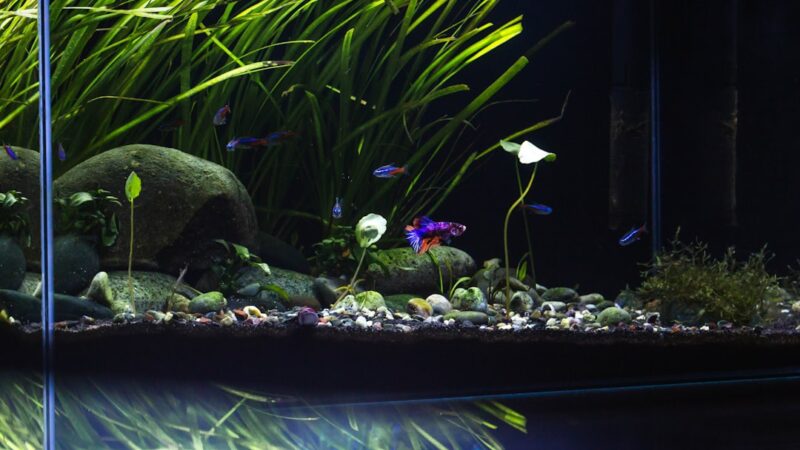
Stock lightly — the aquatic volume is smaller than a standard tank of the same footprint. A school of six to eight chili rasboras (Boraras brigittae) or ember tetras suits a 60 cm paludarium. Dwarf shrimp add colour and help control biofilm on submerged surfaces. Avoid boisterous or large fish that might splash water onto delicate terrestrial mosses excessively.
Lighting Both Zones
A single overhead LED pendant rarely covers both zones evenly. Many builders use a combination: a dedicated aquarium LED for the water section and a compact grow light or clip-on LED for the land portion. Run aquatic lights for 8 hours and terrestrial lights for 10-12 hours to mimic natural conditions. Full-spectrum LEDs in the 6,500 K range work for both zones. Expect to spend SGD 60-150 on lighting depending on tank size.
Maintenance and Long-Term Care
Weekly water changes of 20-30 percent keep the aquatic zone healthy. Always treat PUB tap water with a chloramine-neutralising conditioner before adding it. Top up evaporated water every few days — open-top paludariums lose moisture faster than sealed terrariums, though Singapore’s humidity slows the rate compared to drier climates.
Trim terrestrial plants monthly to prevent them from dominating and blocking light. Clean the waterfall pump intake every two weeks to avoid clogging. Seed the land substrate with springtails and tropical isopods (available from local hobbyist groups on Carousell for SGD 5-15 per culture) — they break down decaying plant matter and create a self-sustaining cleanup crew.
A well-maintained paludarium becomes a living artwork that evolves over months. For hardscape materials, ABG substrate components and plant recommendations tailored to your build, visit Gensou Aquascaping at Everton Park.
Related Reading