Philippine Stream Biotope Aquascape: Tropical Island Waterways
The Philippines sits just north of Singapore, sharing similar tropical conditions — yet its freshwater streams harbour a unique assemblage of endemic species found nowhere else on earth. A philippine stream biotope aquascape brings this underrepresented habitat into your home, showcasing fast-flowing highland brooks and lowland forest creeks teeming with colourful gobies, ricefish and native plants. Gensou Aquascaping in Singapore finds this biotope especially appealing for local hobbyists because our water parameters and climate align closely with Philippine freshwater conditions.
Philippine Freshwater Habitats
The archipelago’s streams range from cool highland torrents on Luzon and Mindanao to warm, slow-moving lowland creeks on Palawan and Cebu. Water is typically soft to moderately hard (GH 3-8), slightly alkaline in limestone karst regions or neutral to acidic in volcanic areas. Substrates vary from fine volcanic gravel to rounded river pebbles and sand. Dense riparian vegetation shades many streams, creating dappled light conditions that are straightforward to replicate in an aquarium.
Tank Setup and Dimensions
A 60-90 cm tank works well for a stream biotope. Shallow, long tanks (30 cm height) emphasise the horizontal flow character of a stream better than tall formats. Use a powerhead or wavemaker to create gentle to moderate current along the length of the tank — 5-10 times turnover per hour simulates a lowland creek. Highland stream setups can push this higher, but ensure your fish have calm resting spots behind rocks or driftwood.
Substrate and Hardscape
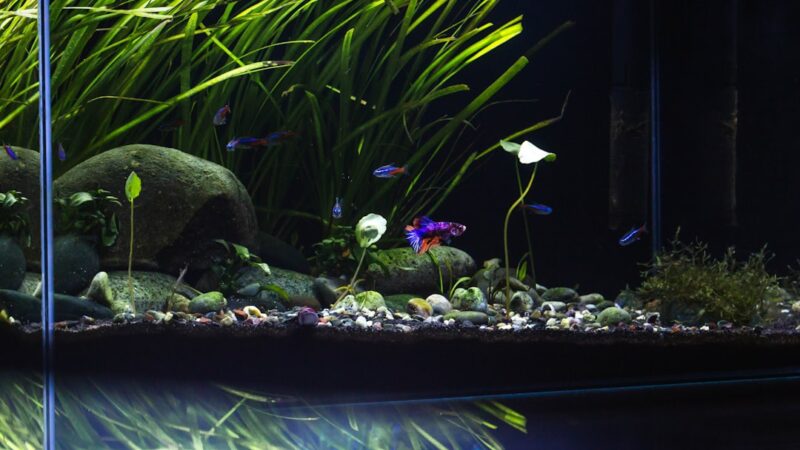
Mix fine gravel (2-4 mm) with scattered smooth river pebbles in grey, brown and cream tones. Volcanic rock adds dark, textured focal points — lava rock is widely available at Singapore aquarium shops for $2-5 per kg. Arrange stones in elongated clusters running parallel to the current direction, mimicking how water sorts debris in a real stream. Add a few pieces of driftwood wedged between rocks as though deposited by seasonal floods. Avoid overly manicured placement; Philippine streams look wild and organic.
Native Plant Species
Several widely available aquarium plants originate from the Philippines. Rotala rotundifolia grows along Philippine stream banks and thrives in aquarium conditions. Cryptocoryne usteriana and C. aponogetifolia, both Philippine endemics, produce dramatic broad leaves that sway beautifully in current. Java fern (Microsorum pteropus) — while more broadly distributed — is found on Philippine stream rocks and attaches naturally to hardscape. Vallisneria nana provides grassy background texture. These species tolerate moderate light and benefit from Singapore’s warm ambient temperatures.
Authentic Fish Choices
Philippine freshwater gobies are the stars of this biotope. Stiphodon species (neon gobies) are algae-grazing stream dwellers with brilliant blue and orange colouration — males in breeding dress are stunning. Rhinogobius species perch on rocks and display territorial behaviours endlessly entertaining to watch. Philippine ricefish (Oryzias spp.) school near the surface and breed readily. For bottom interest, Caridina shrimp native to Philippine streams add subtle movement and help control algae.
Keep Stiphodon gobies in groups of 4-6 with more females than males. They need mature biofilm on rocks for grazing — seed the tank at least 4-6 weeks before adding them.
Water Parameters
Aim for pH 6.8-7.5, GH 4-8, KH 3-6 and temperature 24-28°C. Singapore tap water falls within this range with minimal adjustment. If your target species come from highland streams, consider running a small fan across the water surface to bring temperature down to 24-25°C during the hottest months — a modest investment compared to a full chiller. Excellent oxygenation is essential; surface agitation from the powerhead or an additional air stone ensures dissolved oxygen stays above 6 ppm.
Creating Natural Flow Patterns
Position your powerhead at one end of the tank, angled slightly downward. Place a sponge pre-filter over the intake to protect small gobies and shrimp. The current should visibly move plant leaves and create a gentle downstream drift. Vary the flow by placing rocks strategically — water accelerating through narrow gaps between stones and slowing in wider pools behind them creates microhabitats that different species will naturally select. This dynamic movement is what elevates a philippine stream biotope aquascape from a static display to a living ecosystem.
Maintenance and Long-Term Care
Stream biotopes stay clean naturally thanks to good water movement, but weekly 20-25% water changes remain important. Clean powerhead intakes monthly to maintain flow rate. Allow biofilm to develop on rocks — resist the urge to scrub them spotless, as gobies and shrimp depend on this food source. Trim plants as needed to prevent them from blocking current paths. With consistent care, this biotope rewards you with active, colourful livestock and a distinctive aquascape that stands apart from the usual Southeast Asian stream tank.
Related Reading