
Pictus Catfish Care Guide: The Spotted Speedster
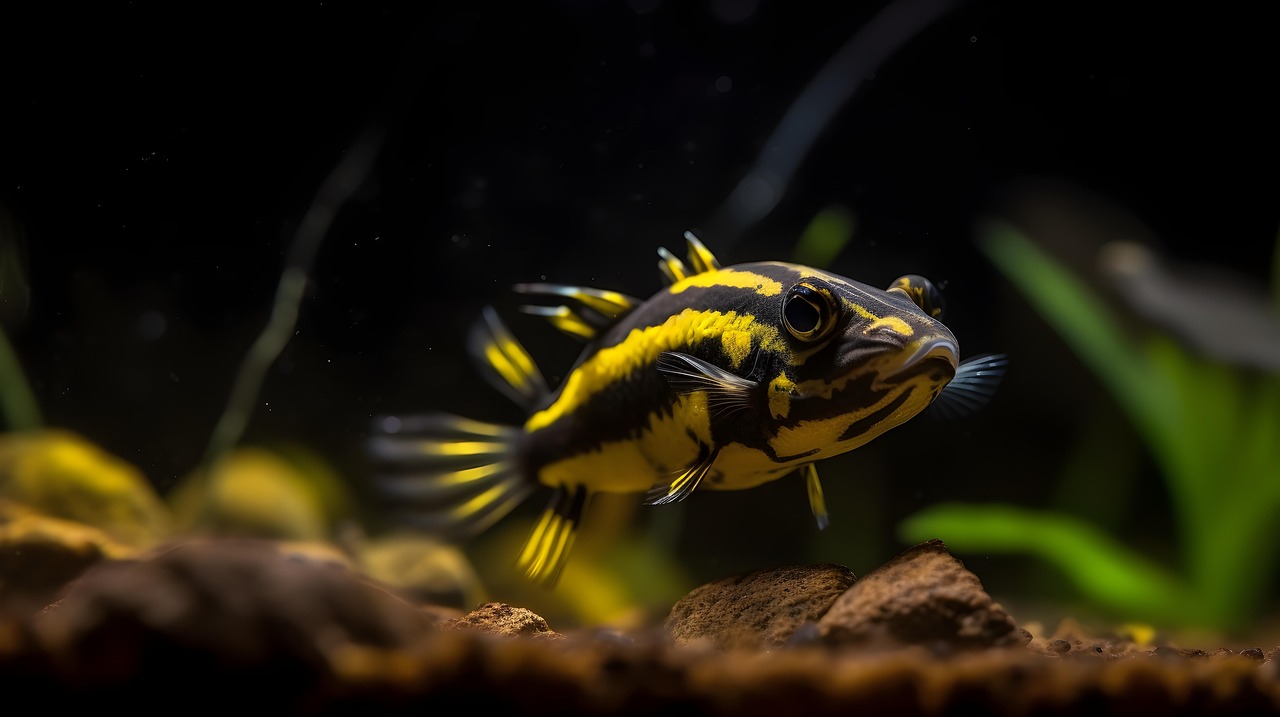
Few freshwater catfish can match the pictus catfish for sheer visual appeal and entertaining behaviour. With its sleek, silver body covered in bold black spots and impressively long barbels that sweep back like whiskers in the wind, Pimelodus pictus is a firm favourite among hobbyists who want something more dynamic than a pleco sitting on the glass. This pictus catfish care guide covers everything you need to know to keep this fast-moving species thriving in your home aquarium. This guide sits inside our broader Tropical Fish Species Master Index reference.
Here at Gensou, our aquascaping studio located at 5 Everton Park in Singapore, we have worked with pictus catfish in numerous community setups over the past two decades. They are rewarding fish, but they do come with specific requirements that differ from the typical “beginner catfish.” Read on to learn whether they are the right fit for your tank.
Species Overview and Origin
The pictus catfish hails from the warm, murky waters of the Amazon and Orinoco river basins in South America. It was first described by Franz Steindachner in 1876 and has been a staple of the aquarium trade since the 1960s. In the wild, it inhabits sandy-bottomed rivers and flooded forests, often forming large shoals that forage together at dusk and dawn.
Taxonomy at a Glance
| Detail | Information |
|---|---|
| Scientific name | Pimelodus pictus |
| Common names | Pictus catfish, pictus cat, angel cat |
| Family | Pimelodidae |
| Origin | Amazon and Orinoco basins, South America |
| Adult size | 11–13 cm (4.5–5 inches) |
| Lifespan | 8–10 years |
| Temperament | Peaceful but predatory towards very small fish |
| Care level | Intermediate |
There are two forms commonly available in the trade: a large-spotted variety and a small-spotted (or “fine-spotted”) variety. Both require identical care, and the differences are largely cosmetic. The large-spotted form is more commonly found in Singapore’s local fish shops.
Tank Setup and Water Parameters
Pictus catfish are active, fast swimmers. They need significantly more space than their modest adult size might suggest. A tank of at least 200 litres (approximately 55 US gallons) is recommended for a small group, and longer tanks are preferred over tall ones to provide swimming room.
Recommended Water Parameters
| Parameter | Ideal Range |
|---|---|
| Temperature | 22–26 °C (72–79 °F) |
| pH | 5.8–7.0 |
| General hardness (GH) | 2–10 dGH |
| Carbonate hardness (KH) | 2–8 dKH |
| Ammonia / Nitrite | 0 ppm |
| Nitrate | < 20 ppm |
Singapore’s treated tap water typically falls around pH 7.0, which is at the upper end of the pictus catfish’s comfort zone. If your water is consistently above 7.0, adding driftwood, Indian almond leaves, or blending with RO water can gently lower the pH into the preferred range.
Substrate and Décor
A fine sand substrate is ideal. The pictus catfish’s long, sensitive barbels are prone to damage on sharp or coarse substrates, which can lead to bacterial infections. Provide plenty of driftwood, large smooth rocks, and PVC caves for hiding spots. Despite being active swimmers, pictus catfish like to tuck themselves into sheltered areas during the brightest part of the day.
Lighting
Dim to moderate lighting suits this species best. If you are running a planted tank with higher light levels, ensure there are shaded retreats created by floating plants (such as Salvinia or Amazon frogbit) and dense mid-ground planting.
Filtration and Current
A strong, efficient filter is essential. Pictus catfish produce a moderate bioload and appreciate a noticeable current that simulates the riverine habitats they originate from. A canister filter paired with a circulation pump works well for larger setups. Ensure the intake is guarded — pictus catfish are slender enough to get trapped in unprotected filter intakes.
Lid Security
This is a critical point often overlooked by new keepers. Pictus catfish are notorious jumpers, particularly when startled or during the first few days in a new tank. A tight-fitting lid with no gaps is absolutely essential. Even small openings around filter pipes or wiring should be blocked with foam or mesh.
Feeding and Diet
Pictus catfish are enthusiastic, opportunistic omnivores with a definite preference for meaty foods. In the wild, they hunt small fish, insect larvae, crustaceans, and worms. Replicating this protein-rich diet in captivity is straightforward.
Suggested Diet
- Sinking carnivore pellets — A high-quality pellet should form the dietary backbone.
- Frozen foods — Bloodworm, brine shrimp, mysis shrimp, and chopped prawn are all excellent.
- Live foods — Blackworm, earthworm pieces, and live brine shrimp trigger natural hunting behaviour and provide enrichment.
- Freeze-dried foods — Tubifex and krill are accepted, though frozen or live options are nutritionally superior.
Feed once daily, ideally in the evening or just after lights-out when pictus catfish are most active. They are fast, aggressive feeders that will outcompete slower tank mates, so consider target-feeding shy species separately.
Behaviour and Temperament
The pictus catfish is, in many ways, the opposite of the sedentary pleco. It is a restless swimmer that patrols the lower and middle water columns, especially during low-light periods. During the day it may rest in caves or beneath driftwood, but it rarely stays still for long.
Social Nature
In the wild, pictus catfish are shoaling fish. Keeping them in groups of four or more brings out their best behaviour — they are visibly calmer, more confident, and less prone to glass-surfing (a repetitive swimming pattern often linked to stress). A solitary pictus can become withdrawn and skittish.
Pectoral Spine Warning
One important safety note: pictus catfish possess sharp, serrated pectoral spines that they lock into an erect position when stressed or handled. These spines can puncture skin and, more critically, can become tangled in aquarium nets. Always use a rigid container or plastic bag when moving pictus catfish — never a traditional mesh net. The spines also carry a mild venom that causes a painful, bee-sting-like sensation if you are pricked.
Nocturnal Tendencies
While not strictly nocturnal, pictus catfish are decidedly crepuscular. Their activity peaks around dawn and dusk. Installing a moonlight LED or a dimmer on your main light can help you observe their fascinating evening explorations without disrupting their natural rhythm.
Compatible Tank Mates
Choosing tank mates for pictus catfish requires consideration of two factors: their speed and their predatory instincts. While generally peaceful, they will eat any fish small enough to fit in their mouths — and their mouths are larger than you might expect.
Good Tank Mates
- Medium-sized tetras (Congo tetra, black skirt tetra, Buenos Aires tetra)
- Larger rasboras (scissortail rasbora, giant danio)
- Peaceful cichlids (angelfish, keyhole cichlid, Bolivian ram)
- Other medium-sized catfish (Corydoras in large groups, bristlenose pleco)
- Rainbowfish (Boesemani, turquoise)
- Larger gouramis (pearl gourami, moonlight gourami)
Tank Mates to Avoid
- Neon tetras, ember tetras, and other small fish under 3 cm — These will be viewed as food.
- Cherry shrimp and other dwarf shrimp — Expensive snacks for a hungry pictus.
- Slow-moving, long-finned fish — Fancy guppies and bettas may be harassed.
- Aggressive or territorial cichlids — Large, aggressive species will stress and injure pictus catfish.
- Snails — While pictus catfish are not dedicated snail eaters, small snails may still be consumed.
Breeding Pictus Catfish
Breeding pictus catfish in a home aquarium is extremely difficult and, to date, there are no widely verified reports of successful captive breeding by hobbyists. Virtually all specimens in the trade are wild-caught from South America.
Why Breeding Is So Challenging
- Sexual dimorphism is minimal — Males and females look nearly identical, making pairing difficult. Mature females may appear slightly rounder when gravid, but this is often subtle.
- Spawning triggers are unknown — In the wild, breeding likely coincides with seasonal flooding events that are nearly impossible to replicate in captivity.
- Space requirements — Commercial breeding would likely require very large tanks or ponds to simulate natural conditions.
For now, the best approach for hobbyists interested in pictus catfish conservation is to provide excellent long-term care, reducing demand for replacement wild-caught individuals.
Common Health Concerns
Pictus catfish are relatively hardy but share the scaleless-fish vulnerability to certain medications and water-quality issues.
Ich (White-Spot Disease)
The most common ailment. Because pictus catfish are scaleless, they are often the first fish in a tank to show symptoms. Raise the temperature to 30 °C gradually and treat with a half-dose of malachite green or formalin-based medication. Avoid copper-based treatments entirely.
Barbel Erosion
Shortened or damaged barbels are almost always caused by rough substrates or chronically poor water quality. Switch to fine sand and maintain pristine water conditions; barbels can regenerate over time if the underlying cause is addressed.
Stress and Glass-Surfing
Repetitive swimming along the glass (glass-surfing) indicates stress. Common causes include insufficient group size, a tank that is too small, excessive light, or poor water parameters. Address the root cause rather than treating symptoms.
Frequently Asked Questions
How big do pictus catfish get?
Pictus catfish typically reach 11–13 cm (4.5–5 inches) in captivity. Occasionally, well-fed individuals in spacious tanks may reach up to 14 cm. Despite their moderate size, they require a large tank due to their active swimming behaviour.
Can I keep a pictus catfish in a 100-litre tank?
It is not recommended. A single pictus catfish might survive in 100 litres, but it would not thrive. These are shoaling fish that need space to swim at speed. A 200-litre (55-gallon) tank is the practical minimum for a group of four.
Are pictus catfish nocturnal?
They are crepuscular rather than strictly nocturnal — most active at dawn and dusk. However, in dimly lit tanks or during feeding, they are often active throughout the day. Installing moonlight LEDs allows you to observe their impressive evening activity.
Will pictus catfish eat my shrimp?
Yes. Pictus catfish are opportunistic predators, and dwarf shrimp (cherry shrimp, Amano shrimp) are at high risk. Even larger shrimp may be harassed. If you want to keep shrimp, house them in a separate tank or choose a different catfish species.
Related Reading
- Pictus Catfish Care Guide: Silver Spots and Long Barbels
- African Glass Catfish Care Guide: Transparent and Social
- Agamyxis Catfish Care Guide: The Spotted Talking Catfish
- Asian Bumblebee Catfish Care Guide: Striped Nocturnal Hunter
- Asian Stone Catfish Care Guide: Masters of Camouflage
Conclusion
The pictus catfish is a beautiful, active, and engaging species that brings genuine excitement to a freshwater community tank. Its silver-and-black spotted pattern, flowing barbels, and rapid swimming make it a centrepiece bottom-dweller. However, its need for a spacious tank, specific water chemistry, and careful tank-mate selection means it is best suited to keepers with some experience under their belt.
If you are planning an aquarium that can accommodate pictus catfish — or any species with particular requirements — the team at Gensou is here to help. With more than 20 years of aquascaping expertise in Singapore, we design tanks that look stunning and function as healthy ecosystems. Contact us for a consultation, browse our shop for quality equipment and supplies, or explore our custom aquarium design services.



