
Puffer Fish Aquarium Complete Guide: Species and Tank Size
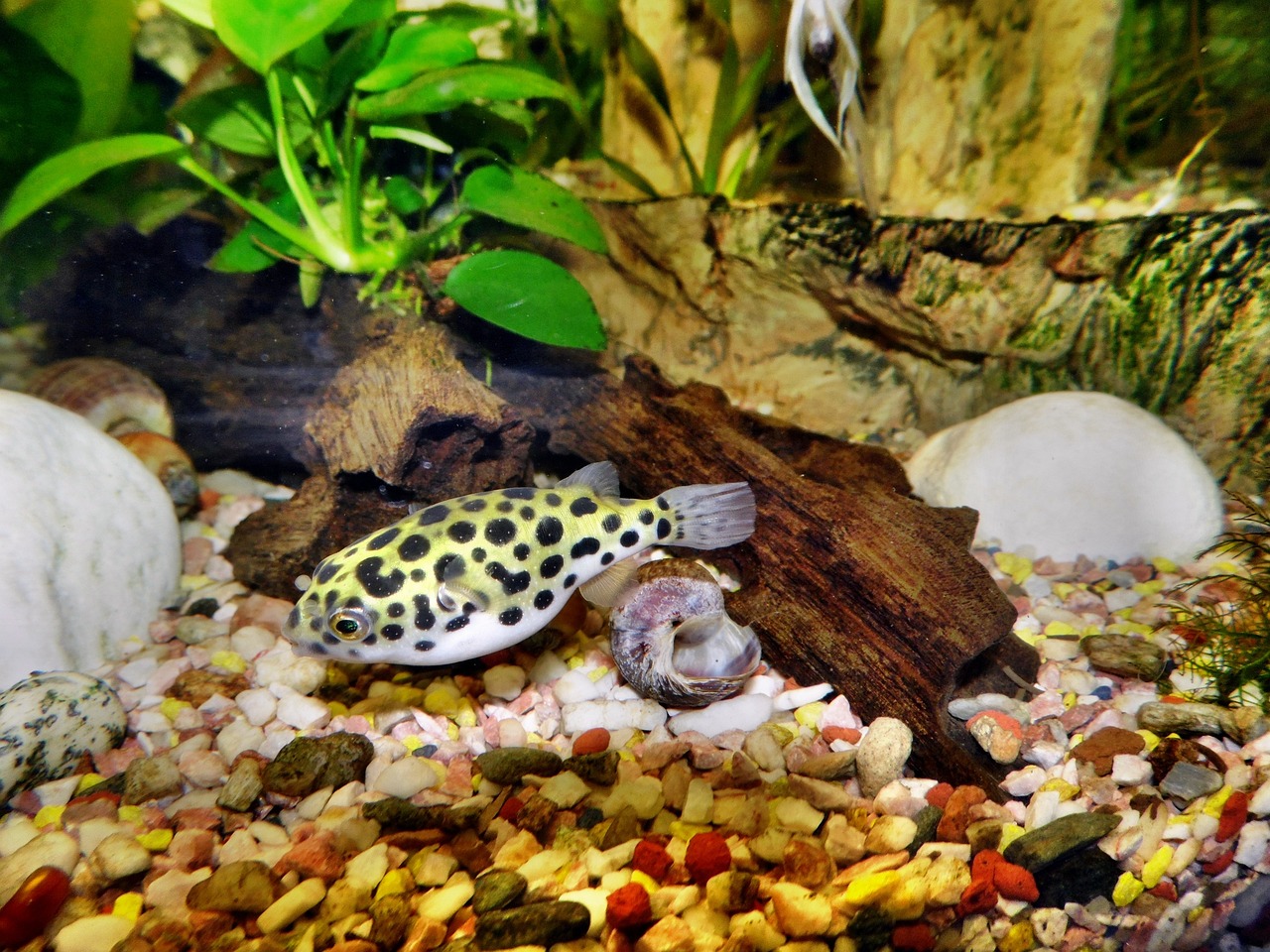
Puffers are the cats of the aquarium world — intelligent, opinionated, and capable of biting anything they find interesting. They recognise their keeper, beg at feeding time, and occasionally kill each other over real estate disputes. This puffer fish aquarium complete guide from Gensou Aquascaping at 5 Everton Park covers the species realistically available in Singapore, the freshwater-versus-brackish split that trips up most beginners, tank sizes by species, and the hard truth that no puffer plays well with fin-bearing tank mates.
Freshwater Versus Brackish Puffers
Only a handful of puffer species are genuinely freshwater for life. The pea puffer (Carinotetraodon travancoricus) tops the list at 2-3cm adult size. Larger South American puffers (Colomesus asellus) are also fully freshwater. Most species sold as “freshwater puffers” at Asian aquarium shops — figure-8, green spotted, ceylon — are actually brackish or marine species that suffer slow organ failure in pure freshwater over 12-24 months. Ask specifically about specific gravity requirements before buying.
The Pea Puffer — Nano Option
Pea puffers are the only genuinely community-viable puffer in the mainstream hobby, and even they kill shrimp and nip fins. A trio (one male, two females) fits a 40-litre planted tank. Water parameters: 24-28°C, pH 6.5-7.5, GH 4-12. They need live or frozen foods almost exclusively — snails, bloodworm, daphnia, baby brine. Petopia and C328 stock them at SGD 8-15 each. Browse fish and livestock when a batch arrives; they sell fast.
Figure-8 Puffer — Low-End Brackish
Figure-8 puffers (Dichotomyctere ocellatus) grow to 8cm and need specific gravity 1.005-1.008 (low-end brackish). A single specimen needs 75 litres; a pair requires 120 litres and often still fights. They accept tank mates grudgingly — bumblebee gobies and knight gobies cohabit if given enough cover. Source marine salt through the water care range and use a refractometer for accuracy. Hydrometers drift within weeks in humid Singapore conditions.
Green Spotted Puffer — Mid-Range Brackish
Green spotted puffers (Dichotomyctere nigroviridis) start life brackish and transition toward full marine as adults. Juveniles at 3-4cm need specific gravity 1.008-1.012; adults at 12-15cm thrive at 1.018-1.023 — effectively a reef-level salinity. Plan a 200-litre brackish-to-marine upgrade path from day one. Petopia and C328 stock juveniles at SGD 12-20, but the ongoing salt, equipment and eventual marine-specific filtration make this a long-term commitment.
Mbu and Fahaka — Giant Freshwater Puffers
Mbu puffers (Tetraodon mbu) reach 65-75cm in a lifetime and need 2000-litre custom tanks. Fahaka puffers (Tetraodon lineatus) reach 40-45cm and demand 500 litres minimum. Both are absolutely species-only — they eat any tank mate. Feeding costs run SGD 200+ monthly for a mature mbu (snails, crayfish, mussels, krill). Unless you are committing to a room-sized display tank with industrial filtration, admire these species in public aquariums.
South American Puffer — Schooling Exception
South American puffers (Colomesus asellus) are the odd puffer out — they school in groups of 5+, stay freshwater for life, and reach only 8cm. They still nip slow-moving fins, but in a 150-litre planted tank with a dedicated shoal they behave closer to a boisterous barb than a conventional puffer. Live snail feeding remains non-negotiable; without regular snail crunching, their beaks overgrow and require manual trimming.
Diet and Beak Maintenance
All puffer beaks grow continuously. Without hard-shelled prey — pest snails, live clams, small crayfish exoskeletons — beaks overgrow until the fish cannot close its mouth and starves. Culture ramshorn or Malaysian trumpet snails in a separate 20-litre tank as a feeder colony. Frozen bloodworm and mysis are dietary staples but do not wear beaks. Freeze-dried krill is a poor substitute. Stock live snails from the livestock section periodically.
Water Quality Sensitivities
Puffers are scaleless (pea puffer) or carry only partial scaling, making them acutely sensitive to ammonia spikes, medications and poor water quality. Nitrate above 20 ppm triggers visible stress. Weekly 30% water changes are mandatory. Avoid copper-based medications entirely — they are lethal. Use oversized filtration, and during any treatment move the puffer to a bare hospital tank rather than dosing the display.
Tank Mate Reality Check
No puffer is truly community-safe. Pea puffers kill shrimp and bully small tetras. Figure-8 puffers nip any long-finned tank mate. GSPs eventually kill everything that is not another GSP. The only consistent success is species-only, and even then you need cover, sightline breaks and careful sex ratios. Accept this reality before buying or expect to lose tank mates one by one.
Related Reading



