Puffer Fish Tank Setup Guide: Brackish and Freshwater
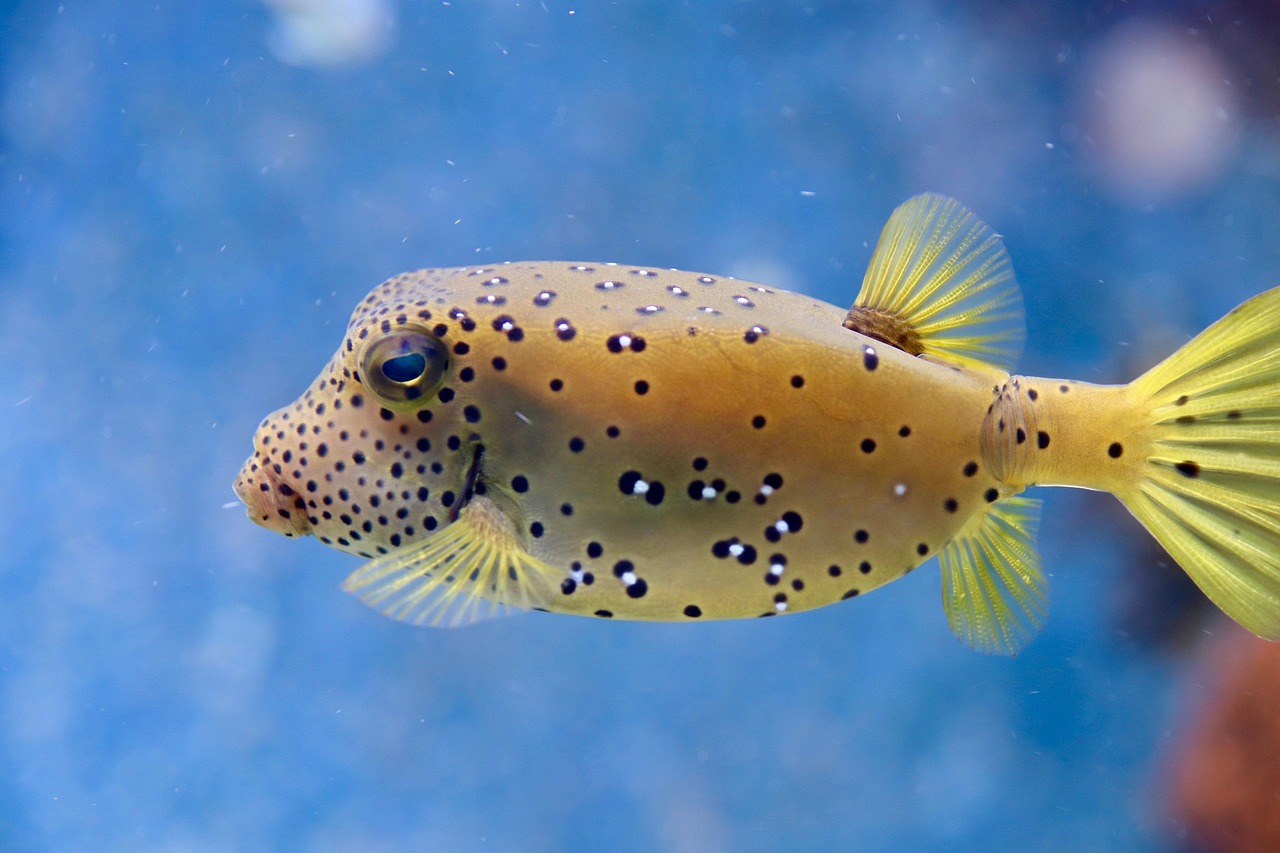
Setting up a puffer tank is not a scaled-down version of a community tank — salinity, filtration capacity, feeding logistics and hardscape choices all shift depending on whether you are keeping freshwater pea puffers or brackish figure-8s. Get the setup wrong and the fish is already compromised before it arrives. This puffer fish tank setup guide from Gensou Aquascaping at 5 Everton Park walks through both freshwater and brackish configurations, including the salinity transition schedule GSP keepers need to plan from day one.
Decide the Species Before Buying the Tank
Buying the tank first and the species second is the classic Singapore beginner mistake. A pea puffer trio fits a 40-litre planted setup; a figure-8 pair needs 120 litres and salinity; a green spotted puffer demands a 200-litre progressively marine system. The tank dimensions, substrate, filtration, lighting and décor all flow from that species choice. Do not compromise — a “dwarf” species will not downsize into an inadequate tank.
Freshwater Setup — Pea Puffer Focus
For pea puffers, a 40-60 litre planted tank works well. Use a fine sand or pea gravel substrate, dense planting for cover and sightline breaks, and driftwood for cave territory. Water parameters: 24-28°C, pH 6.5-7.5, GH 4-12. Filtration should be gentle — a sponge filter or low-flow internal works better than a turbulent canister. Puffers hunt in calm water; strong current exhausts them. Browse the filtration range for quiet sponge and hang-on-back options.
Brackish Setup — Figure-8 Focus
Figure-8 puffer tanks run at specific gravity 1.005-1.008. Mix marine salt (Tropic Marin, Instant Ocean or equivalent) with dechlorinated tap water at roughly 10-12g per litre and measure with a refractometer for accuracy. Substrate: aragonite sand to buffer pH to 7.8-8.2. Hardscape: inert rocks or coral skeleton pieces; avoid driftwood because it leaches tannins and depresses pH. Purchase aquarium-grade salt from the water care range.
Marine-Transition Setup — GSP Focus
Green spotted puffers start at specific gravity 1.008-1.012 as juveniles and need 1.018-1.023 by adulthood. Plan the transition over 18-24 months, raising salinity by 0.001-0.002 per month with water changes using progressively saltier replacement water. By adult size you are running a marine-capable system — protein skimmer, live rock for biological filtration, and full reef-grade salt mix. Budget SGD 600-1000 for the eventual marine upgrade on top of the initial freshwater starter investment.
Filtration Capacity — Oversize Always
Puffers produce extraordinary bioload. Meaty diets of snails, bloodworm and krill leave concentrated waste. Rate filtration at 150-200% of tank volume per hour. For a 120-litre figure-8 tank, a canister rated 400-500 L/h (like an Eheim 2215 or equivalent) is the minimum. Clean mechanical media weekly — biological media only at water changes, and only half at a time. The goal is zero ammonia, zero nitrite, nitrate under 20 ppm.
Substrate and Hardscape for Puffer Behaviour
Puffers dig, hunt in crevices and rest on flat surfaces. Sand substrate lets them sift for snails without tearing mouths on sharp gravel edges. Arrange caves from slate or ceramic pieces — each puffer needs one visual territory. Avoid dense planting in brackish setups because most aquarium plants die at specific gravity above 1.005. Plastic or silk plants are acceptable in brackish tanks; in freshwater pea puffer setups use real plants from the live plants catalogue.
Lighting — Low to Moderate
Puffers prefer dim to moderate lighting. Bright reef-style LEDs stress them and bleach colouration. For pea puffers in planted tanks, use a mid-range LED (30-50 PAR at substrate) to support plant growth without overwhelming the fish. For brackish setups, minimal lighting suffices since plants are absent. A 6-8 hour photoperiod with a ramp-up and ramp-down cycle reduces stress.
Cycling and Quarantine Protocol
Cycle the tank fully before adding any puffer. Ammonia dosing (4 ppm) for 4-6 weeks establishes robust biological filtration. Puffers are scaleless or lightly scaled and cannot tolerate ammonia spikes. Quarantine new arrivals in a bare 30-litre tank with sponge filter for 21 days to screen for internal parasites — common in wild-caught figure-8s and GSPs. Praziquantel-treated feeder snails address most parasitic issues pre-emptively.
Singapore Water Considerations
PUB tap water is soft (GH 2-4), slightly acidic (pH 7.0-7.4), and chloramine-treated. For freshwater pea puffers, dechlorinate with Seachem Prime — nothing more needed. For brackish setups, the softness works in your favour because you can build hardness precisely by choosing salt and buffer quantities. Always age newly mixed brackish water 24 hours before use to let salinity equilibrate and CO2 gas off. Test with a calibrated refractometer, not a hydrometer.
Related Reading

emilynakatani
Still Have Questions About Your Tank?
Drop by Gensou Aquascaping — most walk-in questions get answered in under 10 minutes by someone who has set up hundreds of tanks.
5 Everton Park #01-34B, Singapore 080005 · Open daily 11am – 8pm