Thailand Stream Biotope Aquascape: Betta Country in Your Tank
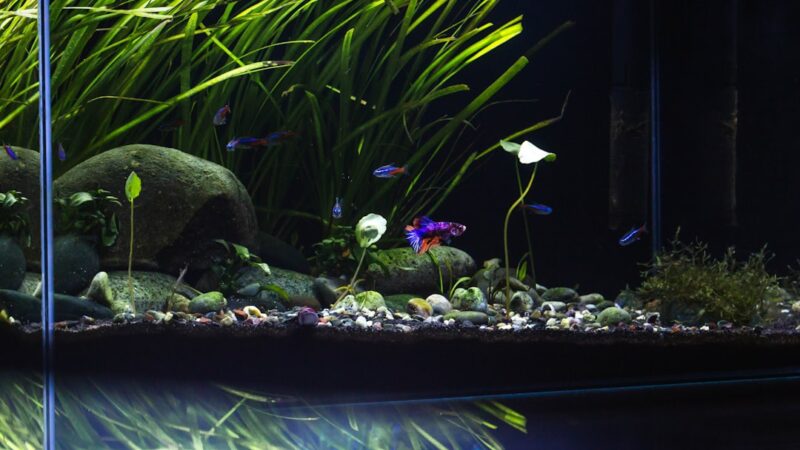
Shallow, leaf-strewn streams cutting through Thai forest floor — this is the world wild bettas actually come from, far removed from the tiny plastic cups you see in chain pet stores. A Thailand stream biotope aquascape recreates those slow-moving waterways with sandy substrate, emersed marginal plants, and the gentle current that wild Betta species thrive in. At Gensou Aquascaping in Singapore, we have set up Thai-inspired biotopes for clients who want something authentically Southeast Asian on display at home.
The Thai Stream Environment
Thailand’s lowland streams and rice paddy margins share key characteristics: shallow depth (often under 30 cm), soft to moderately hard water (GH 2-8), pH between 6.0 and 7.5, and temperatures of 24-30°C. The substrate is typically a mix of clay, sand, and decomposing organic matter. Overhanging terrestrial vegetation creates dappled shade, and the flow is slow to moderate — nothing like a mountain torrent.
Tank Size and Dimensions
A shallow, wide tank suits this biotope best. Rimless tanks measuring 60 x 30 x 25 cm or 90 x 45 x 30 cm replicate the stream profile beautifully. Depth matters less than footprint here — wild bettas patrol horizontal territory, not vertical space. A 60 cm shallow tank holds roughly 40 litres and weighs about 45 kg fully set up, well within the limits of standard HDB furniture.
Substrate and Hardscape
Mix fine sand with a scattering of small rounded pebbles and a few larger river stones. Avoid sharp-edged rock that could tear delicate betta fins. Add one or two small pieces of driftwood laid horizontally to mimic fallen branches. Leaf litter — dried ketapang or Indian almond leaves — completes the stream bed and releases tannins that condition the water naturally. The overall impression should be of a shallow, gently cluttered waterway.
Plants Native to Southeast Asia
Cryptocoryne species are the stars here: C. wendtii, C. cordata, and C. crispatula all occur in Thailand and thrive in low-tech setups. Plant them in clusters along the midground. For surface cover, Salvinia cucullata — a Thai native — provides shade that bettas appreciate. Emersed marginals like Hygrophila siamensis growing out of the water add vertical interest and reinforce the stream bank illusion. CO2 injection is unnecessary; these species grow well under moderate lighting alone.
Wild Betta Species to Consider
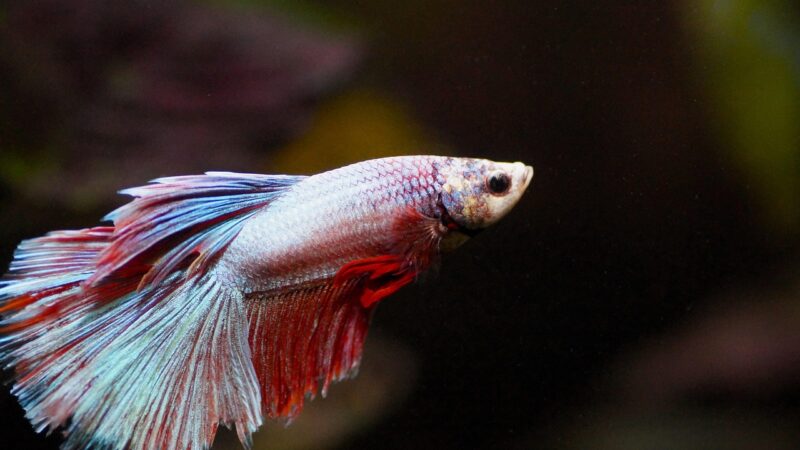
Rather than the domesticated Betta splendens, consider wild-type species for biotope authenticity. Betta smaragdina (emerald betta) from Isan, Betta imbellis (peaceful betta) from southern Thailand, and Betta mahachaiensis from the brackish coastal marshes near Bangkok are all available from specialist breeders in Singapore. Prices range from $15-$40 per pair on Carousell. Wild bettas are less aggressive than show strains and can sometimes be kept in pairs or small groups in well-planted tanks with ample sight breaks.
Tankmates From the Region
Keep company geographically appropriate. Trigonostigma espei (lambchop rasbora) and Boraras urophthalmoides are both Thai natives that coexist peacefully with wild bettas. Pangio kuhli loaches add bottom-level activity, and Thai micro crabs (Limnopilos naiyanetri) are an unusual addition that stays under 1 cm. Avoid fast-moving or nippy species — barbs, for instance — as they stress bettas and disrupt the calm ambience.
Filtration and Flow
Gentle flow is critical. A small sponge filter or a nano hang-on-back filter turned to its lowest setting produces the barely perceptible current of a Thai lowland stream. Strong flow stresses wild bettas and pushes floating plants to one corner. If you use a canister filter, add a spray bar and point it at the back glass to diffuse output. Target a turnover rate of 3-4 times tank volume per hour, no more.
Bringing It All Together
The beauty of a Thailand stream biotope aquascape lies in its restraint and regional authenticity. Singapore’s climate naturally provides the warmth these species need — no heater required in most HDB setups. Keep the lighting moderate, the water soft, and the stocking conservative. What you get is a living slice of Southeast Asian nature, quietly thriving a few metres from your sofa, with far more character than any generic community tank.
Related Reading