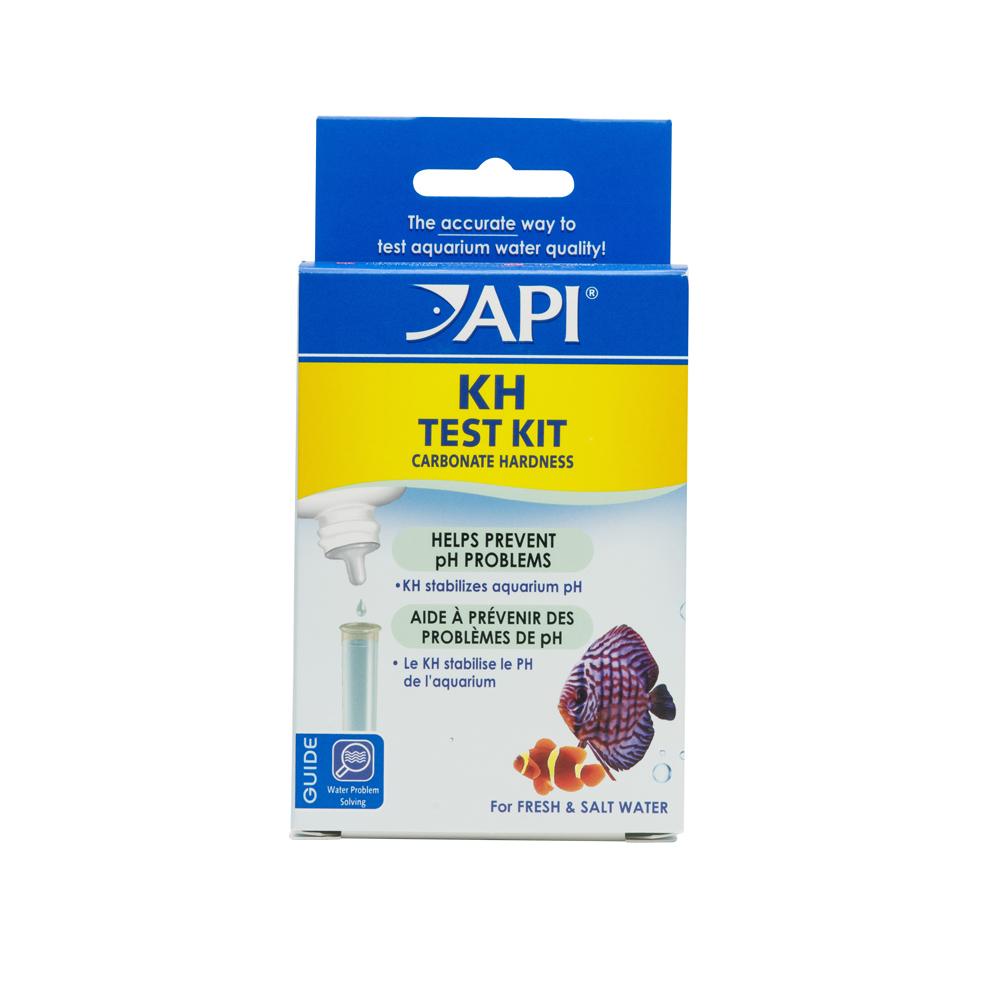

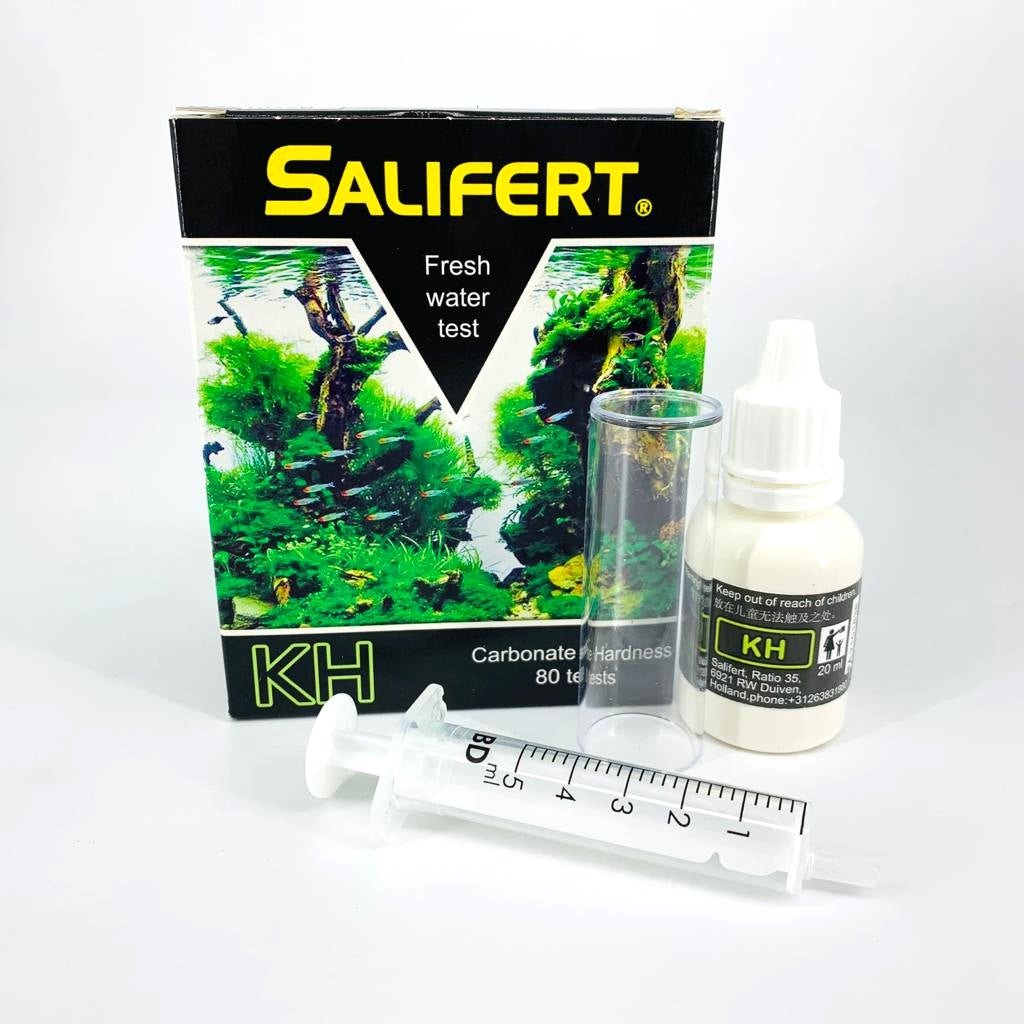
SALIFERT Carbonate Hardness Profi Test kit for freshwater (Alkalinity,
Description
Product:
KH is measured in dKH (degrees of KH) or ppm (parts per million), where 1 dKH equals 17.9 ppm. It is the measure of the amount of carbonates and bicarbonates in your aquarium.
Some substrates, rocks, and corals can alter your aquarium KH level. As such, consideration must be given before adding such materials. KH affects the buffering capacity of your water. KH helps neutralize acids and prevents pH fluctuations. Sudden large pH fluctuations can cause health issues and even death for your life stock.
Typically, freshwater aquariums should be between 4-8 dKH (or 70-140 ppm).
Some substrates, rocks, and corals can alter your aquarium KH level.
Instructions:
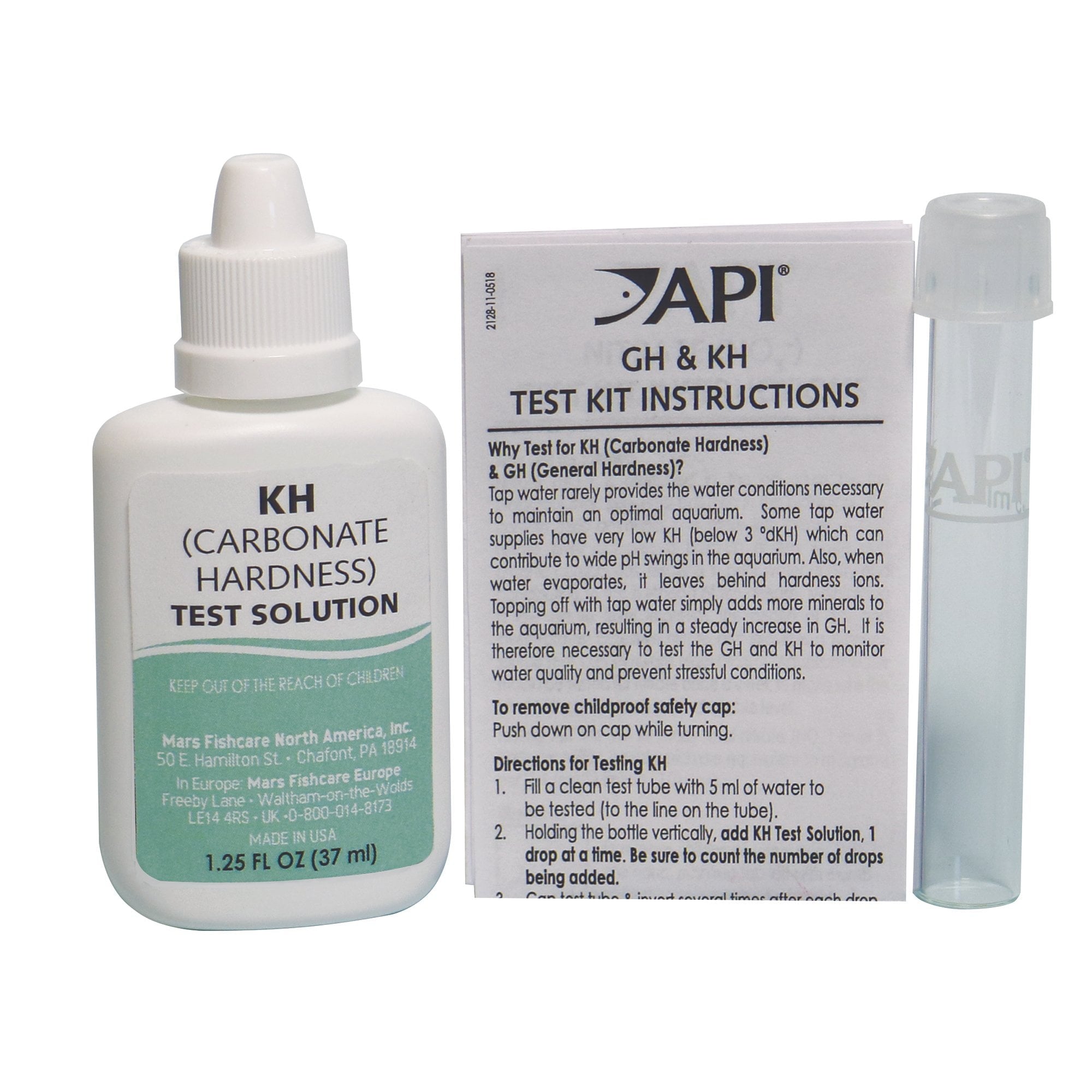
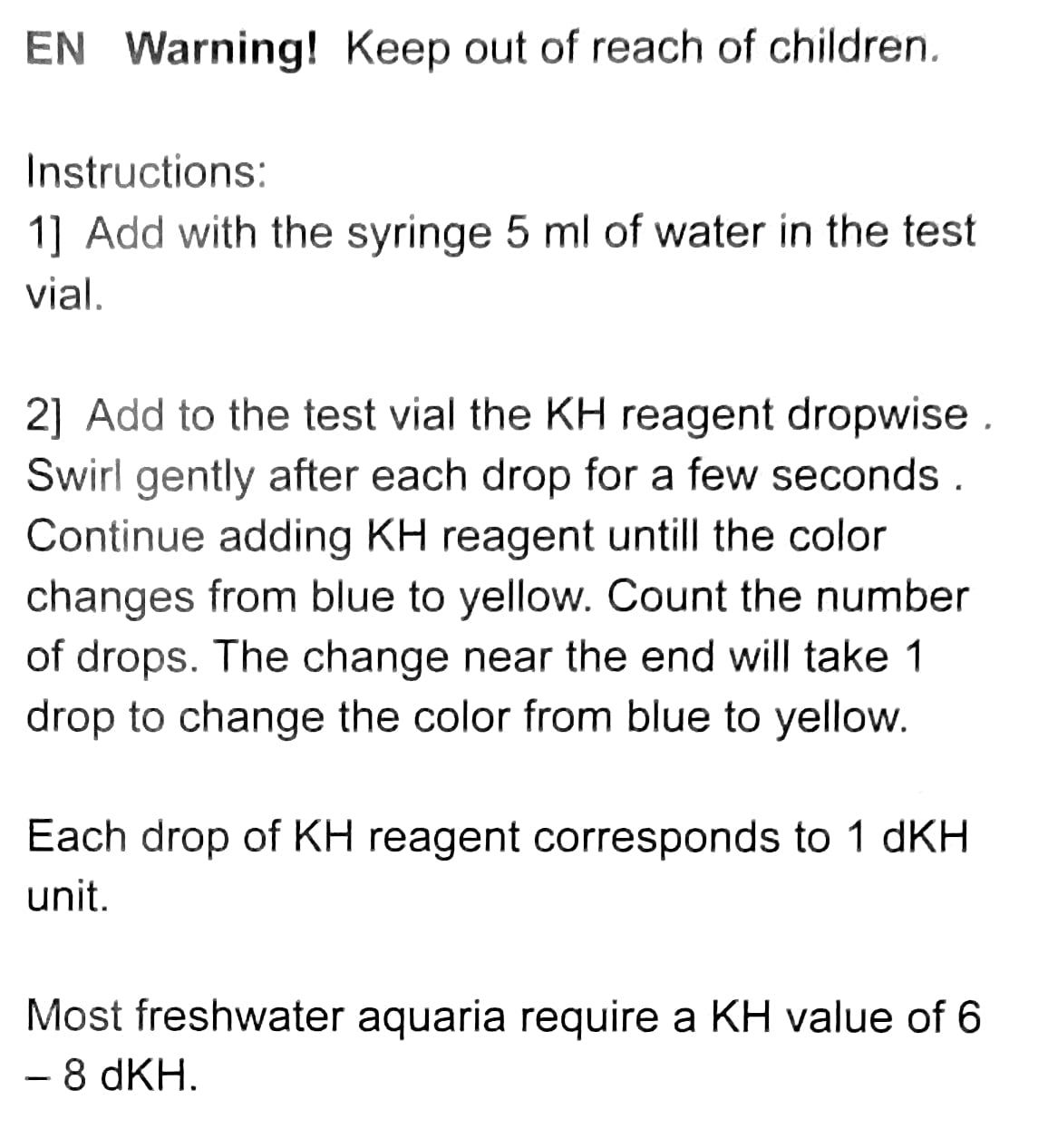
Add 5ml of aquarium water in to the test vial.
Add the KH reagent by the drops. Swirl gently after each drop and observe for color change from blue to yellow. Keep a count of the number of drops till color change.
Match the number of drops counted against the value in the chart.
Each drop of KH reagent corresponds to 1dKH unit.
Most fresh water aquaria require a KH value of 6 – 8 dKH.
Note:
Keep out of the reach of children! Only for aquarium hobby use.
The use of protective gloves and eye protection is recommended.
Please read the instructions carefully before using the product.
Salifert:
Salifert is a Netherlands base company that produces top of the line test kits as well as tank additives and foods for marine and reef aquariums.
Salifert is well established and popular with hobbyist for their accurate and affordable test kits.
The Salifert Freshwater KH Test for Stable pH
Carbonate hardness, or KH, is the buffer that stops your pH from swinging, and it deserves attention in Singapore because our soft tap water often carries low KH. A low buffer leaves a tank prone to sudden pH drops, especially in planted setups injecting CO2 or tanks with a heavy bioload. This Salifert kit lets you measure KH in dKH so you know whether your water can hold pH steady between water changes.
The test is a simple drop-count titration read against good light. Knowing your KH helps you decide whether to leave a soft-water blackwater tank as-is for tetras and rasboras, or buffer up for fish and snails that prefer harder water. It also pairs directly with CO2 dosing, where KH and pH together tell you how much CO2 is actually in solution.
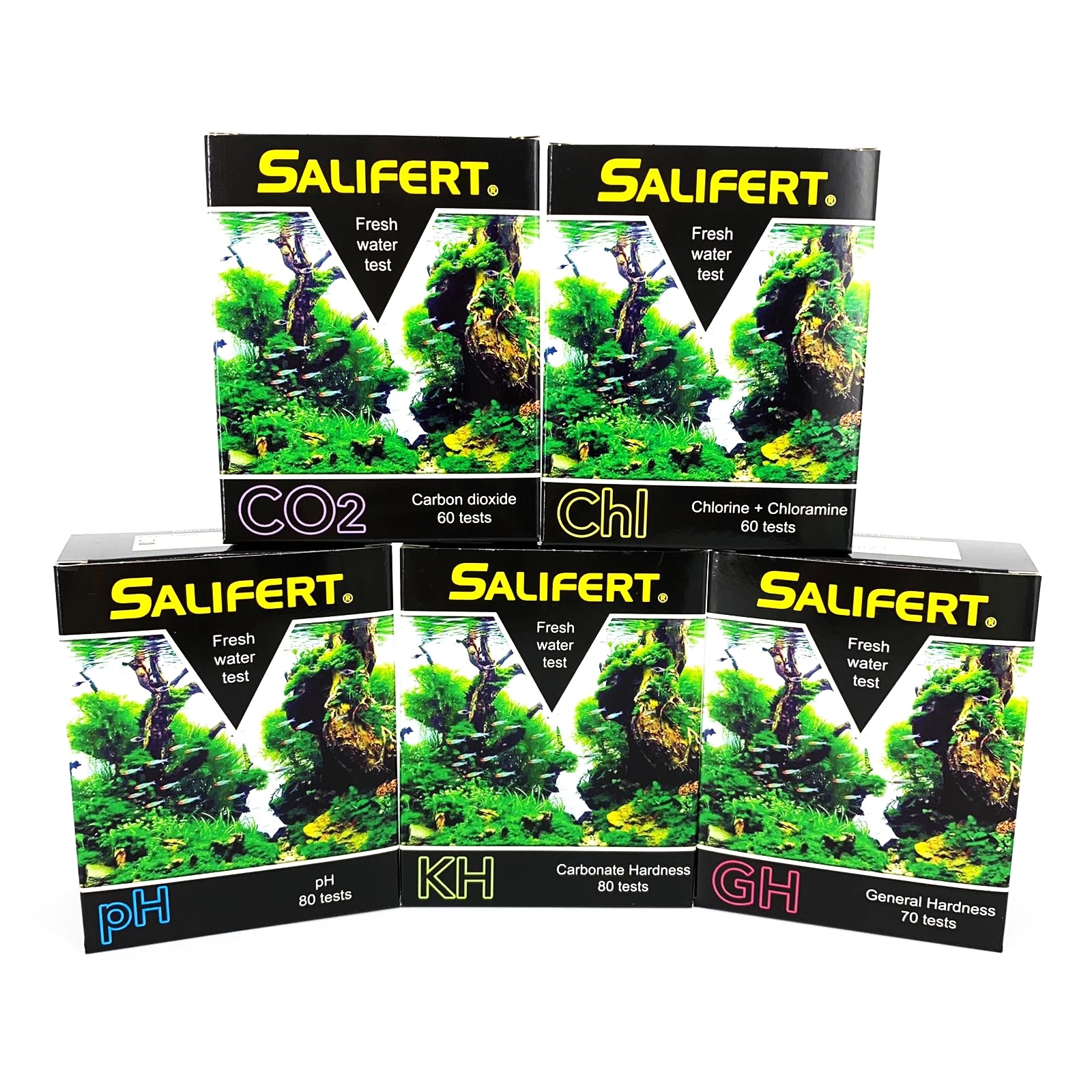
See the full Salifert range in our water testing and treatment category. To act on your reading, see our KH and GH explainer and how to raise KH guide.