

Wild Discus Singapore Import Care Guide: Heckel Brown Green Blue
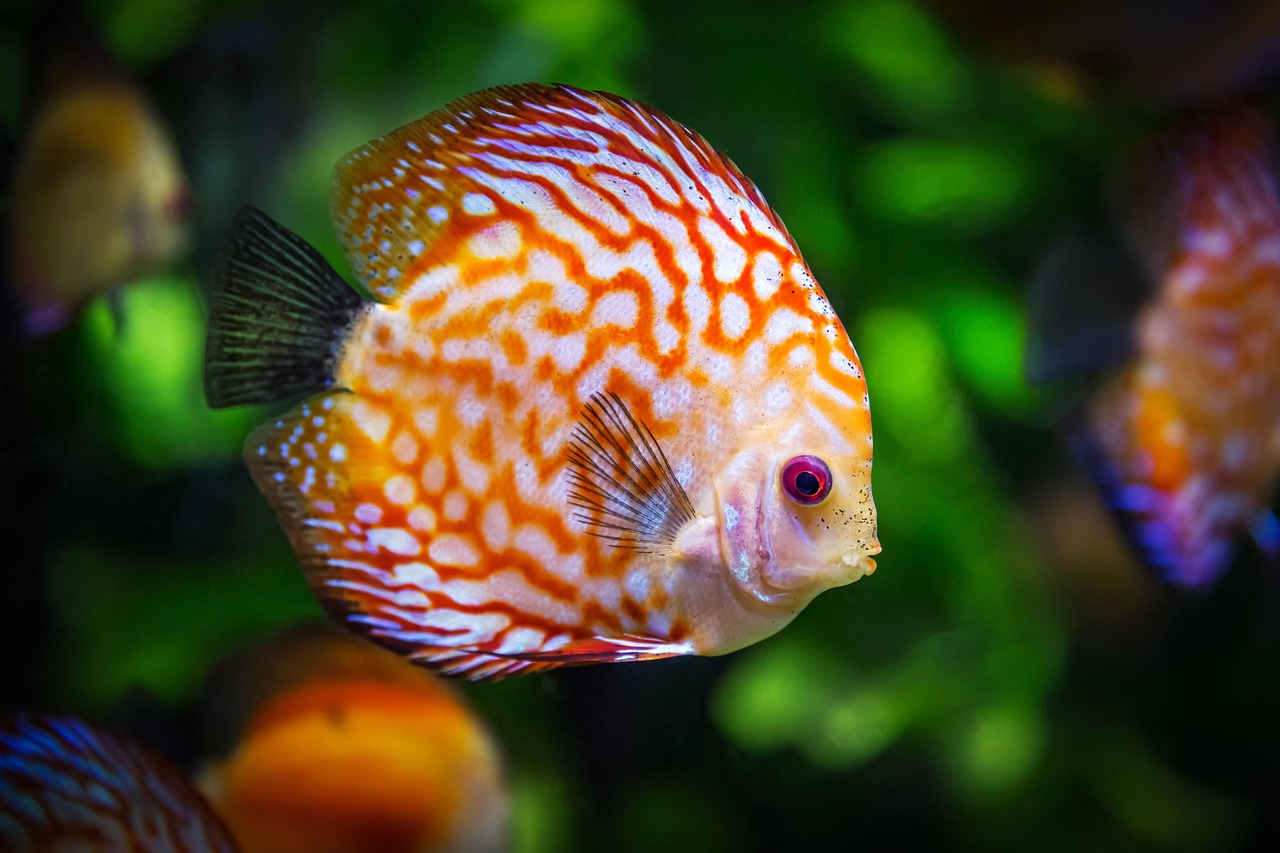
Wild discus carry a presence captive-bred fish never quite match — a pattern of fine vermiculations, a base colour that shifts with mood, and a bearing that says these are blackwater hunters from the Amazon basin. Wild discus Singapore imports arrive through specialist channels in small numbers, priced from SGD 200 for browns up to SGD 800+ for premium Heckels. This guide from Gensou Aquascaping at 5 Everton Park breaks down the four major wild morphs, the chemistry needed to keep them alive, and the importers who actually do the species justice.
The Four Wild Morphs
Taxonomically the genus Symphysodon contains three accepted species — S. discus (Heckel), S. aequifasciatus (brown and blue) and S. tarzoo (green). Heckels show a thick fifth vertical bar; browns are the most common collected from the main Amazon channel; greens come from Tefé and Lake Coari with horizontal striping; blues come from the Putumayo with more iridescent body patterning.
Heckel Discus from Rio Negro
Heckels demand the strictest blackwater of any discus — pH 4.5-5.5, GH below 2, KH 0-1, and dim amber-tinted water. They arrive seasonally from Brazilian collectors via Iwarna and a handful of Carousell specialists at SGD 400-800 per fish for 12-15cm specimens. Royal blue Heckels with strong fifth-bar emphasis and clean turquoise vermiculations top the price range.
Brown Discus
The entry point into wild discus. Browns from the Amazon main channel show subtle red-brown tones with horizontal turquoise streaks across the dorsal and anal fins. They tolerate slightly less extreme water than Heckels — pH 5.5-6.5 works — and price runs SGD 200-350. A mature group of six in a planted blackwater tank looks understated and timeless.
Green Discus from Tefé
Green discus carry the most variable patterning of the wild morphs, with red spotting across an olive-green base. Royal greens from Lake Coari command SGD 350-600. They prefer slightly higher pH than Heckels at 5.8-6.5 and tolerate temperatures into 30°C, which suits Singapore ambient.
Blue Discus from Putumayo
Blue wild discus show heavy iridescent striping across the entire body, distinct from captive-bred turquoise lines. Wild blues from the Colombian Putumayo and Peruvian tributaries land in Singapore at SGD 300-500. They need pH 5.5-6.5, GH 1-3 and consistent 28-30°C.
Tank Setup
Wild discus need height. A 200-litre tank 60cm tall accommodates a group of four to six adults. Bare bottom is the usual choice for husbandry; a planted tank with sand and driftwood works once the fish are settled. Use the aquarium tank range for tall display dimensions. Skip rockwork that raises pH.
Blackwater Chemistry
Wild discus will not breed and rarely thrive in PUB tap water at GH 2-4, KH 1-2 because the carbonate buffer prevents the pH crash that triggers spawning behaviour. Run a 100 per cent RODI base and remineralise lightly with a GH booster only — leave the KH at zero. Indian almond leaves, alder cones, and peat moss in the canister deepen the tannin tea. Browse the decoration and substrate range for catappa products.
Filtration and Flow
A canister filter rated for at least three times tank volume per hour, filled with peat moss, alder cones and biological media, runs the show. Wild discus loathe strong flow — baffle the outlet across glass to spread current. The aquarium pump range includes models suitable for blackwater systems. Weekly 30 per cent water changes with prepared blackwater are non-negotiable.
Diet and Acclimation
Wild fish refuse pellets for weeks. Start with live blackworm, frozen bloodworm, brine shrimp and beef heart. Drip acclimate over 90 minutes minimum, quarantine for 30 days with Praziquantel for flukes and Levamisole for nematodes, and only introduce to the display once feeding aggressively. Stress kills more wild discus than disease.
Sourcing in Singapore
Iwarna runs the most consistent wild discus pipeline. Specialist Carousell sellers under handles like “wild_discus_sg” run smaller drops directly from Brazilian and Colombian collectors. Avoid generic shops claiming “wild” — most sell F1 captive-bred at wild prices. Ask for collection-point provenance before paying.
Related Reading



