
Rosy Barb Care Guide: Hardy, Colourful and Active
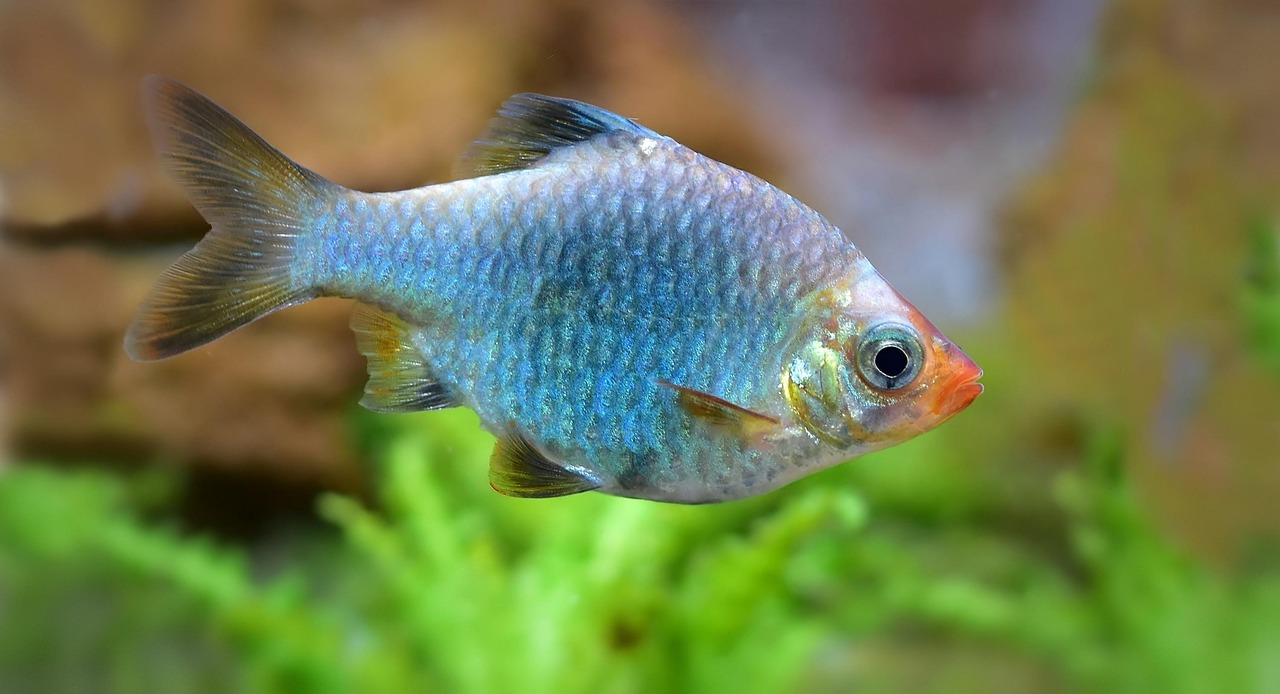
Table of Contents
- Introduction
- Species Overview and Origin
- Tank Setup and Water Parameters
- Feeding and Diet
- Behaviour and Temperament
- Compatible Tank Mates
- Breeding Rosy Barbs
- Frequently Asked Questions
- Conclusion
Introduction
If you want a fish that brings non-stop energy, vivid colour and bulletproof hardiness to your tank, this rosy barb care guide is for you. Pethia conchonius has been a staple in the freshwater hobby for decades, and for good reason — few fish combine ease of care with such dazzling visual impact. For aquarists in Singapore, the rosy barb is an excellent choice that thrives in our warm tropical conditions with minimal fuss. This guide sits inside our broader Tropical Fish Species Master Index reference.
Our team at Gensou, based at 5 Everton Park, has over 20 years of experience helping Singaporean hobbyists choose and care for the right species. The rosy barb remains one of our most frequently recommended fish for medium to large community setups.
Species Overview and Origin
The rosy barb originates from the subtropical rivers, lakes and ponds of northern India, Bangladesh and Nepal. It inhabits a wide range of habitats, from cool mountain streams to warm lowland pools, which accounts for its remarkable adaptability in captivity.
Males in breeding condition develop an intense rosy-red to copper colouration across the entire body, while females are more golden-olive with less red. Several selectively bred variants exist, including long-finned and neon rosy barbs, all sharing the same care requirements.
Key Taxonomic Facts
- Scientific name: Pethia conchonius (Hamilton, 1822)
- Family: Cyprinidae
- Common names: Rosy barb, red barb
- Maximum size: 8–10 cm
- Lifespan: 5–6 years
- Origin: Northern India, Bangladesh, Nepal
Tank Setup and Water Parameters
Rosy barbs are active swimmers that need room to move. They are best kept in a group, which means you should plan for a larger tank than you might initially expect.
Recommended Water Parameters
| Parameter | Ideal Range | Notes |
|---|---|---|
| Temperature | 18–25 °C | Tolerates up to 28 °C; Singapore temperatures are at the upper limit |
| pH | 6.0–8.0 | Very flexible; PUB tap water is suitable without modification |
| GH | 5–19 dGH | Handles soft to hard water with ease |
| KH | 4–10 dKH | Stable KH is more important than a specific value |
| Ammonia / Nitrite | 0 ppm | Ensure the nitrogen cycle is established |
| Nitrate | < 30 ppm | Regular water changes recommended |
A Note on Singapore’s Warm Climate
Rosy barbs are subtropical fish that naturally prefer cooler water than what most tropical species require. Singapore’s ambient temperatures of 27–31 °C sit at or slightly above their comfort zone. To keep them healthy:
- Place the tank in an air-conditioned room where temperatures stay around 24–26 °C.
- If the tank is in a non-air-conditioned space, ensure excellent aeration and surface agitation. Warmer water holds less dissolved oxygen, so good gas exchange is essential.
- Avoid placing the tank in direct sunlight or near heat-producing equipment.
- Consider a small aquarium fan or chiller clip-on unit during the hottest months.
Tank Size and Layout
A group of six rosy barbs needs a minimum of 120 litres (roughly a 90 cm tank). Their active swimming behaviour demands length over height. A 120 cm tank is ideal for a larger group and allows room for aquascaping.
- Substrate: Sand or fine gravel. Rosy barbs are not fussy about substrate type.
- Plants: Use robust, fast-growing species such as Vallisneria, Hygrophila and Java fern. Rosy barbs may nibble on delicate soft-leaved plants, so avoid expensive carpeting species unless you are prepared for some grazing.
- Hardscape: Driftwood, rocks and smooth river stones provide natural cover and visual interest.
- Filtration: A canister or hang-on-back filter rated for the tank volume. Moderate current is appreciated.
- Lighting: Standard aquarium lighting. Rosy barbs are not light-sensitive.
Feeding and Diet
Rosy barbs are true omnivores and enthusiastic eaters. They will accept almost anything you offer, making feeding one of the simplest aspects of their care.
Recommended Foods
- Staple: High-quality tropical flakes or pellets. Choose a formula with both animal and plant-based ingredients.
- Live foods: Bloodworms, daphnia, brine shrimp and tubifex worms. Live foods enhance colouration significantly, especially in males.
- Frozen foods: Frozen bloodworms, brine shrimp and mysis shrimp — all easily sourced from local fish shops in Singapore.
- Vegetable matter: Blanched peas, spinach, zucchini and spirulina wafers. This plant component is important and helps prevent the fish from grazing excessively on aquarium plants.
Feed twice daily in portions the fish can consume within two to three minutes. In Singapore’s warm water, decomposition of uneaten food accelerates, so clean up promptly.
Behaviour and Temperament
Rosy barbs are lively, active and social. They are constantly on the move, chasing each other playfully and exploring every corner of the tank.
Behavioural Characteristics
- Schooling: Keep a minimum of six. In smaller groups, they can become nippy or stressed. A larger school of 8–12 distributes any minor aggression evenly.
- Activity level: High. They are among the most active barbs in the hobby, making them a joy to watch but potentially stressful for very timid tank mates.
- Fin nipping: Rosy barbs are generally well behaved, but they may occasionally nip at slow-moving, long-finned species. Keeping them in a sufficiently large group minimises this behaviour.
- Plant interaction: They will nibble on soft-leaved plants, particularly if their diet lacks vegetable matter. Offer regular plant-based foods to redirect this behaviour.
Male vs Female Differences
| Trait | Male | Female |
|---|---|---|
| Colouration | Intense rosy-red to copper | Golden-olive with less red |
| Body shape | Slimmer, more streamlined | Rounder, deeper-bodied |
| Fin colour | Black-tipped dorsal and anal fins | Paler fins, less distinct markings |
| Behaviour | More active, displays to females | Calmer, less confrontational |
Compatible Tank Mates
Rosy barbs are community-friendly when kept in the right conditions. Their size and energy mean they pair best with equally robust species.
Good Tank Mates
- Other barbs (cherry barbs, Odessa barbs, gold barbs)
- Larger tetras (black skirt tetras, Buenos Aires tetras, Congo tetras)
- Rainbowfish (Boesemani, praecox)
- Corydoras catfish
- Bristlenose plecos
- Swordtails and larger livebearers
- Peaceful medium-sized gouramis (pearl gourami, moonlight gourami)
Tank Mates to Avoid
- Slow, long-finned species (fancy guppies, long-finned bettas) — nipping risk
- Very small, timid fish (celestial pearl danios, micro rasboras) — may be stressed by the barbs’ energy
- Large aggressive cichlids
- Dwarf shrimp (may be eaten; adults might survive, but fry will not)
Breeding Rosy Barbs
Rosy barbs are one of the easiest egg-scattering species to breed. In a well-maintained community tank, spawning may happen spontaneously — though raising fry requires a separate setup.
Breeding Process
- Conditioning: Feed the breeding group heavily with live and frozen foods for 1–2 weeks. Select the most colourful males and the plumpest females.
- Breeding tank: A 60–80 litre tank with a temperature of 24–26 °C, slightly acidic to neutral pH (6.5–7.0) and spawning mops or dense clumps of Java moss on the bottom.
- Spawning: Introduce 2–3 pairs in the evening. Spawning typically occurs at first light the following morning. Males chase females vigorously, and eggs are scattered among the plants or mops.
- Egg count: A single female can release 200–300 eggs per spawn.
- Post-spawning: Remove the adults immediately. Rosy barbs are notorious egg eaters.
- Hatching: Eggs hatch in 24–48 hours at 25 °C. Fry become free-swimming after 3–5 days.
- Fry feeding: Start with infusoria or commercially available liquid fry food, then graduate to baby brine shrimp within a week.
Frequently Asked Questions
Can I keep rosy barbs in Singapore without a chiller?
Yes, but with precautions. Rosy barbs tolerate temperatures up to 28 °C, which means they can manage in an air-conditioned room (24–26 °C) without issues. In non-air-conditioned spaces where temperatures regularly exceed 28–30 °C, ensure excellent aeration and consider a clip-on fan to lower the water temperature by a few degrees through evaporative cooling.
Will rosy barbs eat my aquarium plants?
They may nibble on soft-leaved plants, especially if their diet lacks vegetable matter. To minimise plant damage, feed spirulina flakes or blanched vegetables regularly and choose tough plant species such as Java fern, Anubias and Vallisneria.
How many rosy barbs should I keep?
A minimum of six, with a higher ratio of females to males (2:1 is ideal). Keeping them in a larger group of 8–12 distributes any boisterous chasing and reduces the risk of fin nipping towards other species.
Are rosy barbs suitable for planted aquascapes?
They can work in planted tanks, but you need to choose hardy plants. Delicate carpeting plants like Hemianthus callitrichoides may not survive the barbs’ grazing. Epiphytes such as Java fern and Anubias attached to hardscape are the safest choices.
Related Reading
- How to Breed Cherry Barbs: From Courtship to Free-Swimming Fry
- Cherry Barb vs Gold Barb: Colour, Size and Temperament Compared
- How to Breed Denison Barbs: Torpedo Barb Spawning in Captivity
- Denison Barb Care Guide: The Torpedo of Planted Tanks
- Odessa Barb Care Guide: The Underrated Red Gem
Conclusion
The rosy barb is a classic for a reason. It is hardy, colourful, active and easy to breed — ticking almost every box a freshwater hobbyist could want. While Singapore’s warm climate sits at the upper limit of its temperature range, a bit of planning around tank placement and aeration ensures this species can thrive beautifully in local conditions.
Thinking about adding rosy barbs to your aquarium? Gensou has been Singapore’s trusted aquascaping partner for over 20 years. Visit us at 5 Everton Park to see our current stock, browse our online shop for fish, plants and equipment, or get in touch for tailored advice. Planning a brand-new setup? Our custom aquarium service can design a tank that brings out the best in every species you choose.
Aquarists drawn to the rosy barb often appreciate other warm-toned nano fish, so you may enjoy our rosy loach Petruichthys care guide for keeping these shy, shoaling loaches.



