
Glass Bloodfin Tetra Care Guide: Transparent With a Red Tail
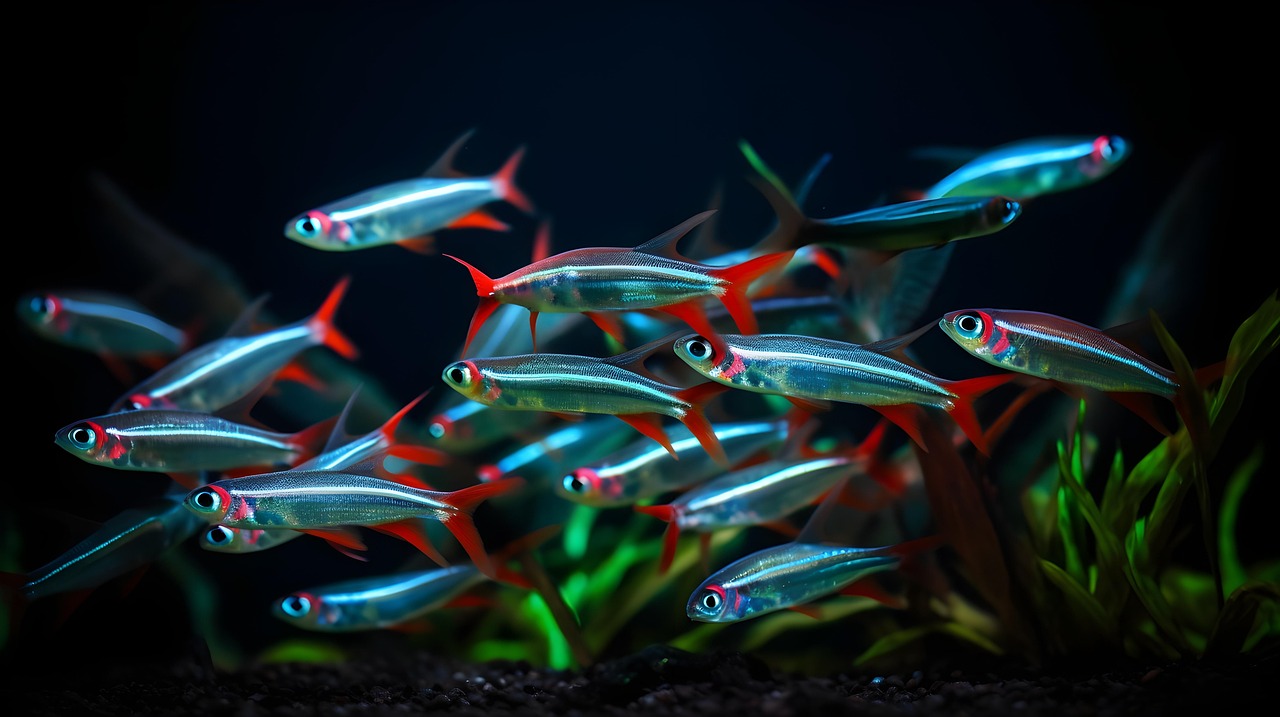
The glass bloodfin tetra (Prionobrama filigera) is a sleek, transparent fish with a striking red tail that catches light as it darts through the tank. Its see-through body reveals its internal organs, making it a fascinating species to observe. This glass bloodfin tetra care guide from Gensou Aquascaping at 5 Everton Park covers everything you need for these active, hardy schooling fish.
Glass Bloodfin Overview
Glass bloodfins originate from the Amazon and Madeira river basins in South America. They grow to 5–6 cm and live for four to six years. The body is almost completely transparent with a silvery sheen, and the caudal fin is a vivid blood red — the contrast is their defining feature. Males are slimmer with more intense red colouration, while females are plumper, especially when carrying eggs.
Tank Requirements
A school of eight to twelve glass bloodfins needs at least a 75-litre tank. They are fast, active swimmers that cover a lot of ground, so a longer tank is preferable to a tall one. Maintain the temperature between 18 °C and 28 °C — they tolerate one of the widest temperature ranges of any tropical tetra. Target a pH of 6.0–8.0 and GH of 5–20 dGH. This exceptional adaptability makes them suitable for almost any freshwater setup.
Diet and Feeding
Glass bloodfins accept all standard aquarium foods. Offer quality flake or micro pellets as the staple, supplemented with frozen daphnia, brine shrimp and bloodworm. They feed actively at the surface and mid-water, making them efficient at catching floating foods. Feed twice daily. Their transparent body means you can actually watch food passing through their digestive tract — an unexpected biology lesson.
Tank Mates
These tetras are peaceful and mix well with most community species. Good companions include other tetras, rasboras, Corydoras, barbs, livebearers, dwarf cichlids and peaceful gouramis. Their speed makes them difficult targets for mild fin nippers. Avoid housing them with large predatory fish. A school of glass bloodfins alongside a school of a contrasting species like ember tetras creates a beautiful two-tone display.
Aquascaping
Their transparent bodies are best appreciated against a dark background and dark substrate. Dense planting at the back and sides frames the school beautifully while leaving open swimming space in the centre. Moderate water flow encourages active schooling behaviour. They are not plant destructive and coexist well with all aquatic plant species.
Breeding
Glass bloodfins are egg scatterers that breed readily. Soft, acidic water and conditioning with live foods trigger spawning. The pair performs an active spawning chase, scattering eggs among fine-leaved plants. Eggs hatch in 24–30 hours. Fry are tiny and need infusoria or liquid fry food for the first week before graduating to baby brine shrimp. Remove adults after spawning to prevent egg predation.
Common Health Issues
Glass bloodfins are among the hardiest tetras available. Their wide parameter tolerance means they rarely suffer from environmental stress. Ich is the primary risk after transport or temperature shock. Their robust health, combined with their unique appearance and long lifespan, makes them an excellent underrated choice for community tanks.
Related Reading



