
Penguin Tetra Care Guide: Black Stripe With a Waddle
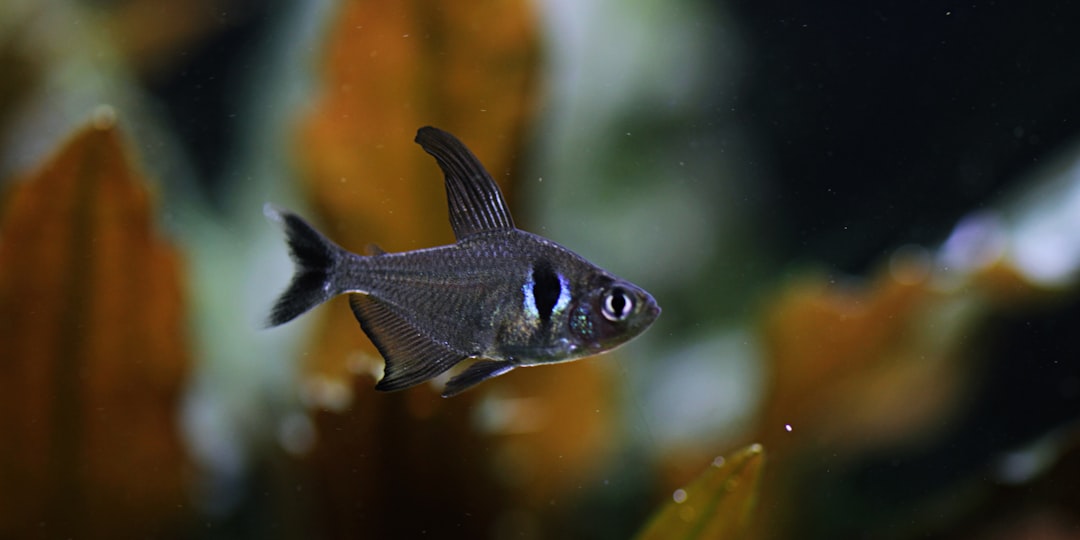
This penguin tetra care guide introduces a charming schooling fish that earns its name from a distinctive swimming style. At Gensou Aquascaping, located at 5 Everton Park, Singapore, we recommend the penguin tetra (Thayeria boehlkei) as an excellent community fish that adds both movement and character to planted aquariums.
Species Overview and Origin
The penguin tetra originates from the Amazon Basin, particularly in the upper reaches of the Araguaia and Amazon river systems in Brazil and Peru. It reaches a maximum length of around 6 centimetres. The most recognisable feature is the bold black stripe that runs from the mid-body down through the lower lobe of the caudal fin, giving the tail an asymmetric appearance. This stripe, combined with the fish’s habit of swimming at an oblique angle with the tail tilted downwards, creates the characteristic waddle that inspired its common name. The body is otherwise silver with a subtle golden sheen along the upper flanks.
Tank Size and Setup
Penguin tetras are active schooling fish that require a minimum tank volume of 80 litres for a group of eight to ten individuals. Larger groups in bigger tanks produce a far more impressive display. Use a dark substrate to make their silver bodies and black stripes stand out. Plant the background and sides with stem plants and attach Anubias or Java fern to driftwood for a natural Amazonian feel. Leave generous open swimming space in the midwater zone, as penguin tetras spend most of their time hovering and darting in the middle column.
Water Parameters
These tetras adapt well to a range of conditions. Maintain temperatures between 24 and 28 degrees Celsius, a pH of 6.0 to 7.5, and general hardness of 3 to 15 dGH. Singapore’s treated tap water typically falls within these ranges, making penguin tetras a practical choice for local hobbyists. A gentle to moderate filter flow suits them, and weekly water changes of 20 to 25 per cent keep conditions stable. They are sensitive to ammonia and nitrite spikes, so ensure your tank is fully cycled before introducing them.
Diet and Feeding
Penguin tetras are unfussy omnivores. A high-quality micro pellet or flake food serves as an excellent staple. Supplement with frozen or live foods such as bloodworms, daphnia and brine shrimp to enhance colouration and vitality. They feed readily at the surface and mid-water levels. Offer food two to three times daily in small amounts that the school can consume within two minutes. Variety in the diet keeps the fish healthy and encourages natural foraging behaviour throughout the tank.
Temperament and Tank Mates
Penguin tetras are peaceful and sociable, making them ideal community fish. They coexist well with similarly sized tetras, rasboras, small barbs, Corydoras catfish, dwarf gouramis and small peaceful cichlids such as rams. Avoid keeping them with large or aggressive species that may view them as prey. A school of ten or more produces the best visual effect and reduces stress among individuals. Their oblique swimming posture is most pronounced when they are relaxed and comfortable in a well-planted environment with subdued lighting.
Health and Common Concerns
Penguin tetras are hardy fish with few specific health problems. Like most tetras, they are susceptible to ich during temperature fluctuations and neon tetra disease in rare cases. Maintain stable water parameters and avoid sudden changes during water changes. In Singapore, where tap water temperature can vary between seasons, match replacement water closely to tank temperature before adding it. A balanced diet and clean water are the most effective preventive measures against disease.
Breeding Penguin Tetras
Breeding penguin tetras is achievable in a dedicated spawning setup. Prepare a small tank of 30 to 40 litres with soft, acidic water at a pH around 6.0 to 6.5 and a temperature of 26 to 27 degrees Celsius. Add fine-leaved plants or a spawning mop to catch the eggs. Condition a pair with live foods for one to two weeks. The female scatters eggs among the plants, and the adults should be removed immediately after spawning to prevent egg predation. Eggs hatch within 24 to 36 hours, and fry become free-swimming in about four days. Feed fry with infusoria initially, then newly hatched brine shrimp.
Why Choose Penguin Tetras
Penguin tetras offer a unique combination of visual interest and ease of care that suits both beginners and experienced aquarists. Their distinctive swimming posture sets them apart from other schooling tetras, and their peaceful nature makes tank mate selection straightforward. Visit Gensou Aquascaping at 5 Everton Park, Singapore, for quality advice on building a community tank featuring these delightful fish. With good care, penguin tetras typically live for five to six years, providing years of animated movement in your aquarium.
Related Reading



