
Colombian Blue and Red Tetra Care Guide: Kerri Tetra Brilliance
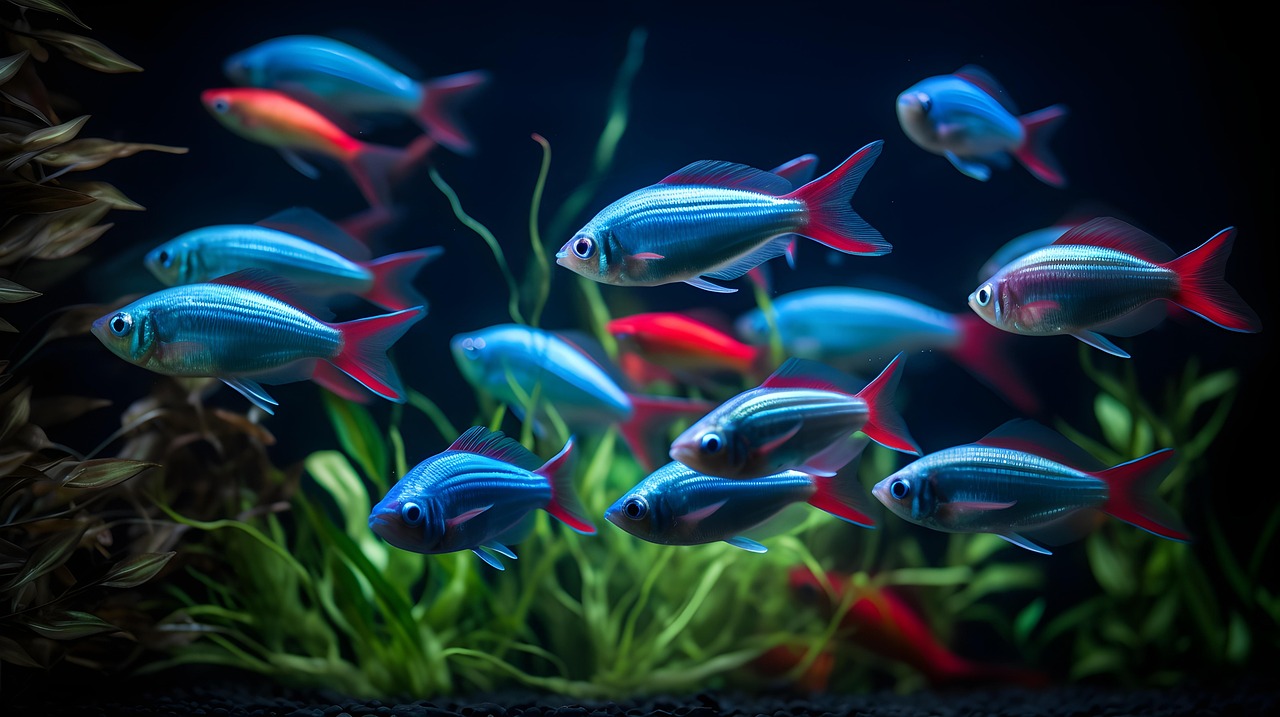
Often sold under a confusing tangle of common names, the Colombian blue red tetra care guide you are reading demystifies one of the hobby’s most underrated schooling fish. Hyphessobrycon columbianus, also called the Colombian tetra or red-blue Colombian tetra, displays a shimmering silver-blue body with a vivid red tail and fins that intensify with age and good care. Gensou Aquascaping in Singapore finds this species an excellent choice for community planted tanks, offering bold colour, hardy constitution and active schooling behaviour at a budget-friendly price.
Origin and Identification
Hyphessobrycon columbianus was formally described in 2002 from the Rio Acandi in northwestern Colombia. It is sometimes confused with the similarly named kerri tetra (Inpaichthys kerri), though the two are distinct genera with different body shapes and care needs. The Colombian tetra reaches 6-7 cm, making it larger and stockier than many popular tetra species. Males develop more intense blue iridescence along the flanks, while females tend slightly rounder in the belly. Both sexes display the characteristic red caudal, anal and dorsal fin colouration that gives this fish its common name.
Tank Setup
A school of eight to twelve Colombian tetras needs at least 120 litres, though a 150-litre planted tank showcases their colour and behaviour best. Provide a mix of stem plants along the back for cover and open midwater space for schooling. These are active swimmers that appreciate a tank length of 80 cm or more. Dark substrates such as aquasoil or black sand intensify their blue sheen. Moderate flow from a canister or hang-on-back filter replicates their natural riverine habitat without creating excessive turbulence.
Water Parameters
Colombian tetras are adaptable and tolerate a pH range of 6.0-7.5, making Singapore’s soft, slightly acidic PUB tap water nearly ideal straight from the tap after dechlorination. Maintain temperature between 24 °C and 28 °C. Singapore’s ambient warmth usually handles this without a heater, though a clip-on fan is worth having on standby for particularly hot weeks. General hardness of 3-12 GH suits them fine. Weekly water changes of 25-30% keep nitrates low and colours vibrant. These fish handle minor parameter fluctuations better than many tetras, which contributes to their reputation as a hardy community choice.
Diet and Nutrition
Feeding Colombian tetras is straightforward. They accept a quality flake or micro pellet as the primary diet with enthusiasm. Supplement with frozen bloodworms, brine shrimp and daphnia two to three times weekly to boost colour and condition. Live foods such as mosquito larvae, which are easy to culture in Singapore’s humid climate, trigger impressive feeding frenzies. Feed twice daily in small portions that the school consumes within two minutes. Males competing for food during feeding time often flash their most intense colours, making meals a visual highlight.
Temperament and Community Pairing
Colombian tetras are generally peaceful but can show mild fin-nipping tendencies, particularly in small groups where hierarchy tensions lack diffusion. Keeping ten or more almost entirely eliminates this issue, as the fish focus their social energy within the school. Suitable tankmates include corydoras, bristlenose plecos, rasboras, dwarf gouramis, and other medium-sized tetras. Avoid slow-moving, long-finned species such as bettas or fancy guppies, since the occasional nip becomes more likely with trailing targets. They coexist well with Neocaridina shrimp in a densely planted setup, though very small juvenile shrimp may be eaten.
Colour Enhancement
Several factors push Colombian tetra colour from pleasant to spectacular. A varied diet rich in carotenoids, found naturally in brine shrimp and quality colour-enhancing pellets, deepens the red in fins and tail. Subdued lighting with tannin-stained water brings out the metallic blue body sheen. Dark backgrounds and substrates create contrast that makes the fish pop. Stress reduction through stable water parameters, appropriate group size and ample cover ensures the fish feel secure enough to display their full pigmentation. Shops on Shopee and Lazada sell colour-enhancing foods that work well as supplements at around $8-$15 per container.
Breeding
Breeding is achievable in a dedicated 40-litre tank with soft, acidic water at pH 6.0-6.5 and a temperature of 26 °C. Condition a pair with live and frozen foods for two weeks, then introduce them to a tank furnished with fine-leaved plants or spawning mops. Females scatter 200-400 eggs that hatch in about 24-36 hours. Remove adults immediately after spawning, as they readily eat their own eggs. Fry become free-swimming on day four and accept infusoria, then newly hatched brine shrimp. Growth is relatively fast, with juveniles showing their first colour at around 3 cm.
Health and Lifespan
Colombian tetras live 5-7 years with proper care. Their hardiness means disease is uncommon when water quality is maintained. Ich can appear after temperature shocks or stressful transport, so always acclimatise new arrivals slowly and quarantine for at least a week. Fin rot occasionally develops if nitrates climb too high. In Singapore, these tetras typically sell for $2-$4 each, making them affordable to buy in proper school-sized groups from the start. A well-kept school of a dozen Colombian tetras in a planted tank is genuinely one of the most rewarding sights in the freshwater hobby.
Related Reading



