
Cochu Blue Tetra Care Guide: Electric Blue Amazon Rarity
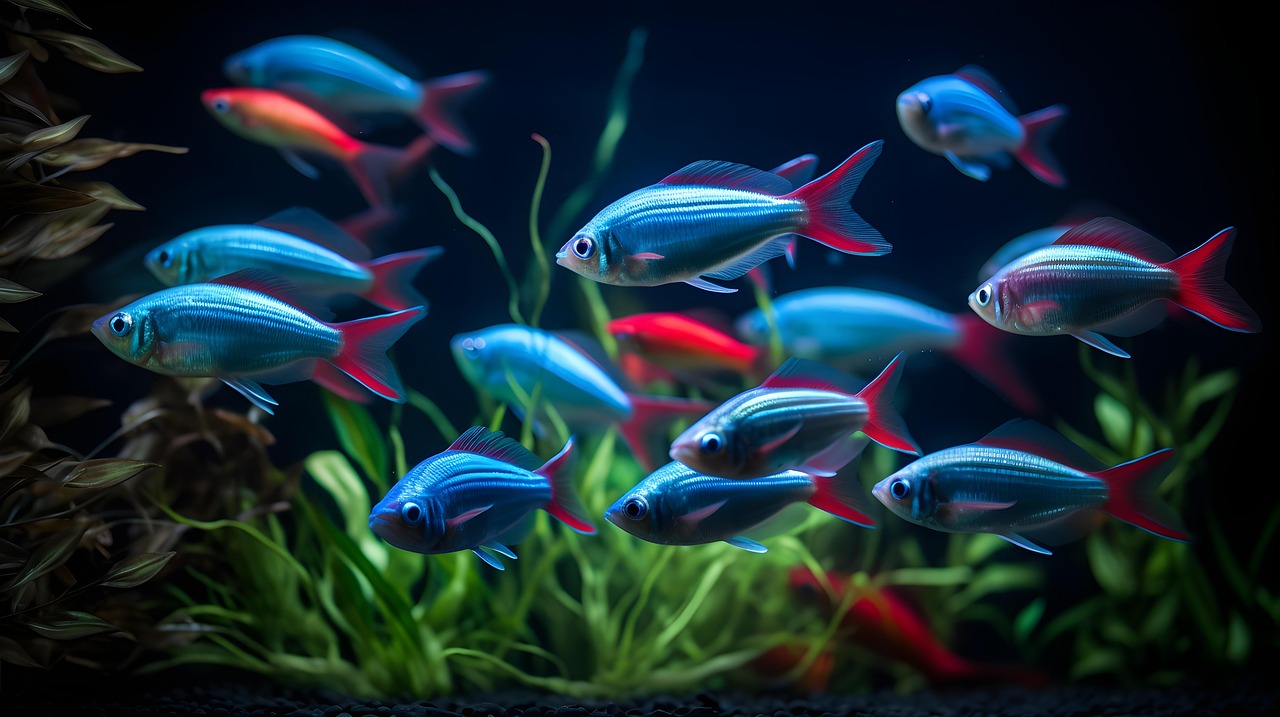
Among the hundreds of tetra species available in the hobby, few possess the ethereal blue shimmer of Boehlkea fredcochui — the cochu blue tetra. This cochu blue tetra care guide from Gensou Aquascaping at 5 Everton Park, Singapore, explains how to keep these electric blue schoolers healthy and vibrant. Native to the upper Amazon basin in Peru, they remain somewhat uncommon in the trade, which makes finding them all the more rewarding. Their striking metallic blue body and active nature bring real energy to a well-planted community tank.
Species Profile
Cochu blue tetras grow to around 4-5 cm and have a slender, torpedo-shaped body. The defining feature is a brilliant electric blue lateral stripe that runs from the gill plate to the caudal peduncle, overlaid on a silver-blue body. Males tend to be slimmer with slightly more intense colouration, while females show a rounder belly when conditioned. They are active, mid-water swimmers that rarely sit still during daylight hours.
Tank Requirements
Provide at least 100 litres for a school of eight to twelve fish. These tetras are fast swimmers that appreciate a tank with some length — a 90 cm or longer footprint is ideal. Plant the sides and back densely, leaving an open swimming corridor in the centre. Driftwood and a scattering of Indian almond leaves create a natural blackwater aesthetic that brings out their blue pigmentation against the amber-tinted water. Moderate flow from the filter mimics their riverine habitat.
Water Conditions
Cochu blue tetras prefer soft, acidic water: pH 5.5-7.0 and GH 2-8. Singapore’s PUB tap water, once dechlorinated, already falls close to these parameters — one of the reasons South American tetras generally do so well here. Keep temperatures between 24-28 °C. These fish are less tolerant of poor water quality than hardier tetras, so stay on top of weekly 25-30% water changes and ensure ammonia and nitrite always read zero.
Feeding
In the wild, cochu blue tetras feed on small insects, larvae and zooplankton. Replicate this with a varied diet of quality micro pellets, frozen cyclops, daphnia and baby brine shrimp. They accept flake food readily but show more vibrant colour and activity on a diet that includes regular frozen and live foods. Feed small amounts two to three times daily. Their fast metabolism means they benefit from frequent small meals rather than one large feeding.
Temperament and Tank Mates
Here is where cochu blue tetras differ from many peaceful community tetras: they can be mildly nippy. Long-finned species like bettas, angelfish and fancy guppies may have their fins targeted, especially in smaller groups. Keeping a school of ten or more significantly reduces this tendency by directing the nipping behaviour within the school. Safe tank mates include Corydoras, bristlenose plecos, rasboras, loaches and robust tetras like congo or lemon tetras. Avoid very small or slow-moving fish.
Enhancing Their Blue Colour
Lighting and environment heavily influence how vivid the blue appears. Subdued overhead lighting with a dark substrate — black sand works particularly well — creates the contrast needed for their metallic stripe to glow. Tannin-stained water from driftwood and leaf litter deepens the effect further. Under harsh white LEDs against pale gravel, they look washed out and unremarkable. A bit of thought in your cochu blue tetra care setup pays enormous visual dividends.
Breeding
Breeding cochu blue tetras in captivity is possible but not straightforward. They are egg scatterers requiring very soft water (GH below 3, pH 5.5-6.0) and dim conditions. A separate 30-litre tank with Java moss or fine-leaved plants catches the eggs. Remove adults after spawning. Fry are tiny and need infusoria or commercially available liquid fry food for the first week before graduating to micro worms and baby brine shrimp. Rearing can be slow, but captive-bred specimens tend to be hardier than wild-caught fish.
Sourcing in Singapore
Cochu blue tetras are not always in stock at mainstream shops, but specialist importers bring them in periodically. Prices range from $3-$8 per fish depending on size and source. Monitor Carousell listings and hobbyist forums for availability alerts. When buying, select active individuals with a clear, bright blue stripe — dull specimens may be stressed or in poor health. With patience in sourcing and attention to this cochu blue tetra care guide, you will enjoy one of the hobby’s most underrated gems.
Related Reading



