How to Aquascape a Guppy Breeding Tank: Fry Safety and Beauty
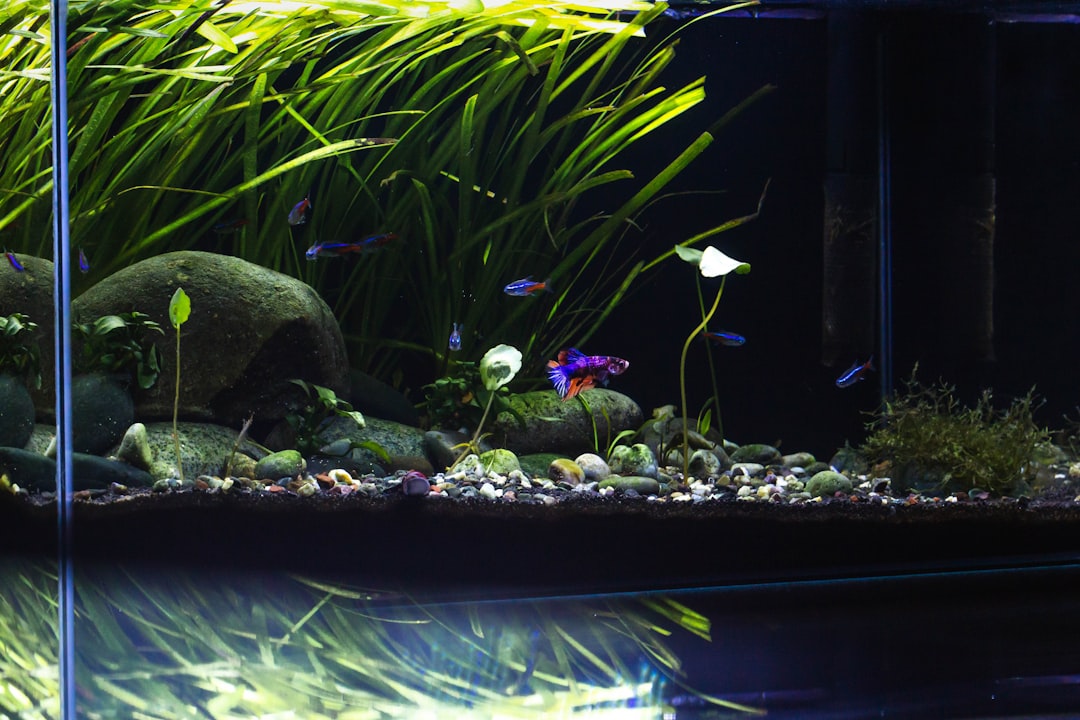
Guppy breeding tanks are often ugly — bare bottoms, plastic breeding traps, and tangled airline tubing. But it does not have to be that way. A well-planned aquascape for a guppy breeding tank protects newborn fry, supports healthy adults, and still looks attractive enough for a living room display. Gensou Aquascaping at 5 Everton Park, Singapore, has helped breeders design setups that balance productivity with aesthetics across all skill levels.
Why Fry Need Cover, Not Traps
Plastic breeding boxes stress pregnant females, restrict movement, and require you to predict the exact delivery time. A better approach is designing the aquascape itself as fry protection. Dense plant cover at the bottom and surface gives newborn guppies hundreds of tiny hiding spots where adults cannot follow. Survival rates of 60-80% are achievable in a well-planted tank without any breeding trap at all — comparable to box-based methods, with zero intervention required.
Tank Size and Layout
A 45-60 cm tank (30-60 litres) suits a breeding colony of one male to three females. Divide the layout into three zones: an open midground for swimming and displaying, dense foreground cover for fry, and surface cover for immediate post-birth hiding. Keep hardscape minimal — one small stone or a piece of driftwood for visual anchor — and let plants dominate. The aquascape should feel lush and overgrown rather than manicured.
Best Foreground Plants for Fry Cover
Dense, fine-leaved plants at substrate level create a maze that fry navigate easily but adults cannot penetrate. Micranthemum ‘Monte Carlo‘ forms thick mats with tiny leaf gaps perfect for 5 mm fry. Java moss heaped into mounds along the front glass provides instant shelter. Riccia fluitans weighted down with mesh creates a carpet with air-trapping texture that fry instinctively seek. Plant thickly from day one — in a breeding tank, bare patches cost lives.
Surface Plants for First-Hour Survival
Guppy fry swim upward immediately after birth and need surface cover within seconds. Salvinia minima, Amazon frogbit (Limnobium laevigatum), and water lettuce (Pistia stratiotes) form floating mats with trailing root networks where fry hide. A 50% surface coverage is the target — enough to shelter fry but not so dense that it blocks all light to submerged plants below. Thin floaters weekly in Singapore’s warm conditions, as they multiply rapidly.
Mid-Level Stem Plants
Fill the background with fast-growing stems like Rotala rotundifolia, Hygrophila polysperma, or Cabomba caroliniana. These absorb nitrates from the heavy bioload of a breeding colony — adult females and growing fry produce substantial waste. Dense stems also break sightlines, giving harassed females escape routes from persistent males. Trim weekly and replant the tops to maintain density; in a breeding tank, overgrowth is a feature, not a problem.
Substrate and Filtration
Fine sand or bare bottom both work, depending on your priority. Sand supports rooted plants and looks natural; bare bottom makes it easier to spot fry and siphon waste. If using a filter, cover the intake with a pre-filter sponge — newborn guppies at 5-7 mm are small enough to be sucked into unprotected intakes. Sponge filters are the safest option for breeding tanks: no intake risk, gentle flow, and biological filtration all in one unit. Run a small air pump at low output to avoid surface agitation that disrupts floating plants.
Lighting and Growth Balance
Moderate lighting (40-60 PAR at substrate level) for 8 hours daily supports the dense planting without encouraging excessive algae. Guppy fry feed on biofilm and microorganisms that develop naturally in planted tanks — a light dusting of algae on surfaces is actually beneficial as supplemental fry food. Avoid intense lighting that promotes green water; while not harmful, it makes monitoring fry difficult.
Maintaining the Breeding Aquascape
Harvest fry at 2-3 weeks old, once they are large enough to avoid predation in a grow-out tank. Perform 20-30% water changes twice weekly — breeding colonies produce high bioloads, and water quality directly affects fry survival and colour development. Prune plants every week to prevent complete light blockage, but never trim more than a third at once. A productive guppy breeding tank aquascape is a living, slightly wild system — let it breathe, and it rewards you with healthy, vibrant fry that develop their best colour potential.
Related Reading