
How to Breed Threadfin Rainbowfish: Mop Spawning in Soft Water
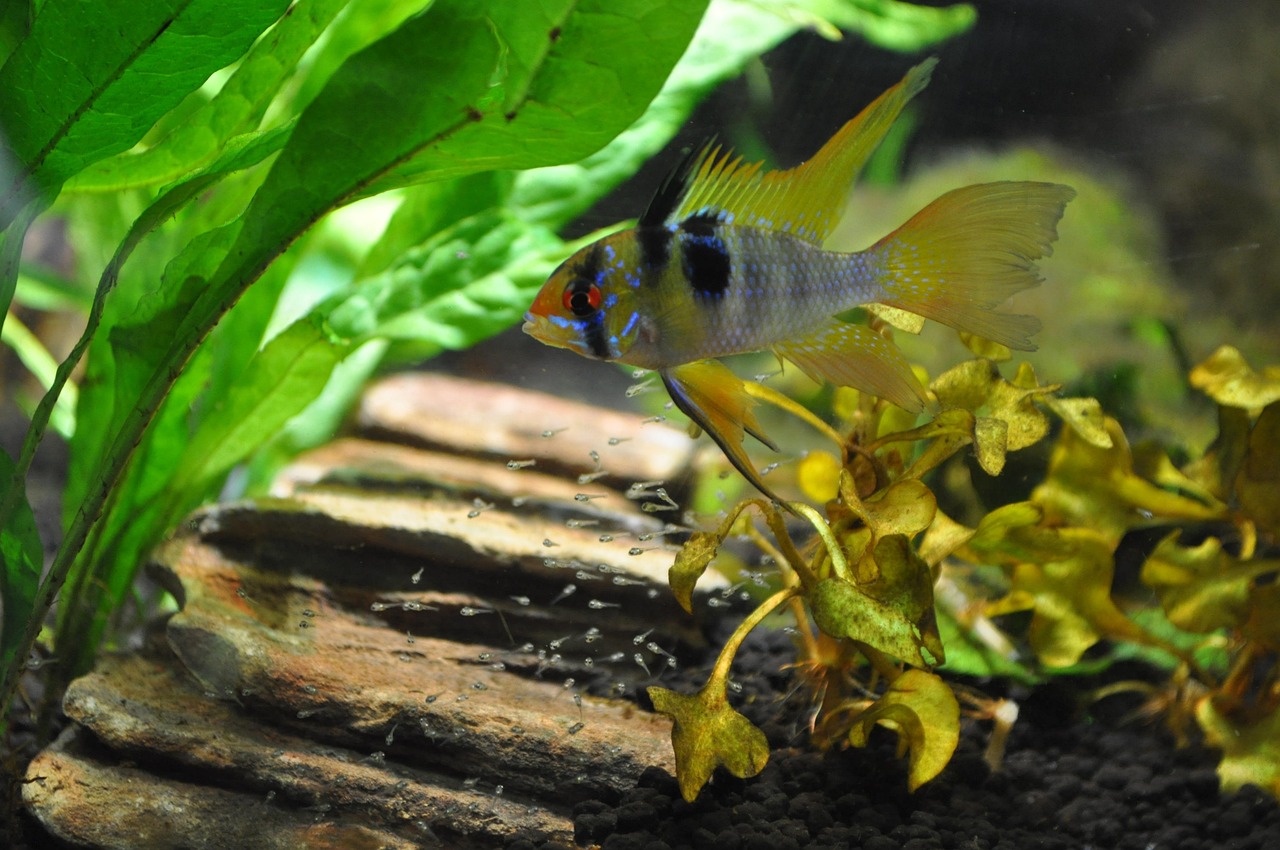
Threadfin rainbowfish are among the most ethereal-looking nano fish in the hobby — the male’s extended dorsal and anal fin rays trail behind him like silk threads, and a small group hovering over fine-leaved plants is a genuinely arresting sight. Successfully breeding threadfin rainbowfish requires attention to water chemistry, appropriate spawning substrate, and careful fry management, but the effort is well rewarded. At Gensou Aquascaping in Everton Park, Singapore, we consider Iriatherina werneri an achievable project for hobbyists comfortable with soft-water nano setups.
Water Chemistry: Non-Negotiable Soft Parameters
Threadfins originate from slow, soft, acidic waters in New Guinea and northern Australia. Breeding success drops sharply outside a narrow window: pH 6.0–6.8, GH 1–4, TDS 80–150 ppm, temperature 26–28°C. Singapore’s PUB tap water sits at GH 2–4 — conveniently soft — but chloramine must be fully neutralised before use. A quality dechlorinator that also neutralises chloramine (not just chlorine) is essential. Many hobbyists add a small quantity of peat moss or Indian almond leaves to the breeding tank to tint the water lightly and lower pH naturally.
Spawning Mops: The Simplest Egg Collector
Fine wool or synthetic yarn tied into a mop and anchored at the bottom or floated at the surface both work. The female scatters individual adhesive eggs into the fibres throughout the day — threadfins are continuous spawners rather than broadcast spawners. Java moss works equally well and has the advantage of also serving as a fry refuge. Check the mop or moss every morning by holding it up to a light source; fertile eggs appear clear to slightly amber, infertile ones turn white within 24 hours.
Conditioning the Breeding Pair
Feed live foods for one to two weeks before attempting to breed. Artemia nauplii, micro worms, and vinegar eels are ideal; threadfins have very small mouths and struggle with standard dried foods. Males in breeding condition will display intensely to females — spreading those remarkable fin rays in a shimmering fan. A well-fed female develops a visibly rounded abdomen. Keep two or three females per male to distribute the male’s attention and reduce female stress.
Harvesting and Incubating Eggs
Remove the mop to a separate 5–10 litre hatching container daily, or every second day. Fill this container with water from the breeding tank — matching parameters exactly prevents osmotic shock to the eggs. Gentle aeration helps oxygenate without creating strong current. Eggs hatch in 7–10 days at 27°C. The larvae are extremely small — some of the smallest fry in the hobby — and require appropriate first foods from day one of free-swimming.
Feeding Fry: The Most Critical Stage
Newly free-swimming threadfin fry need infusoria or commercial liquid fry foods (such as Hikari First Bites dissolved very fine) for the first 10–14 days. Their mouths measure under 0.3 mm. Artemia nauplii are too large initially but become usable after two weeks. Maintaining a green water culture or an infusoria culture as a continuous food supply is the single most reliable approach. Feed small amounts four to five times daily and remove uneaten material with a pipette to prevent water quality spikes.
Growing Out the Fry
By week four, juveniles begin to resemble miniature adults. Males start developing their characteristic fin extensions at six to eight weeks. At this stage, live Artemia nauplii and micro pellets become the dietary staple. Juvenile threadfins grow slowly — expect three to four months before they reach adult size of 3–4 cm. Partial water changes of 10% every two days maintain water quality during this period. Avoid aggressive flow; threadfins are weak swimmers at all life stages.
Common Breeding Pitfalls
The most frequent cause of breeding failure is water that is too hard — TDS above 200 ppm reduces hatching rates significantly. If you are drawing straight from the tap in Singapore, test your TDS with a meter before filling the breeding tank. A second common issue is feeding fry too coarsely too early; even baby brine shrimp at day one will starve fry that cannot yet open their mouths wide enough to consume them. Finally, avoid any tank mates in the breeding tank — even peaceful nano fish will consume eggs from the mop or compete with fry for food.
Related Reading
- How to Breed Amano Shrimp: The Challenging but Rewarding Process
- How to Breed Assassin Snails: Slow but Steady Reproduction
- How to Breed Bamboo Shrimp: Larval Stages and Brackish Requirements
- How to Breed Betta Imbellis: Peaceful Wild Betta Spawning
- How to Breed Blue Bolt Shrimp: Taiwan Bee Colour Selection



