How to Aquascape for Threadfin Rainbowfish: Delicate Fins Need Calm Flow
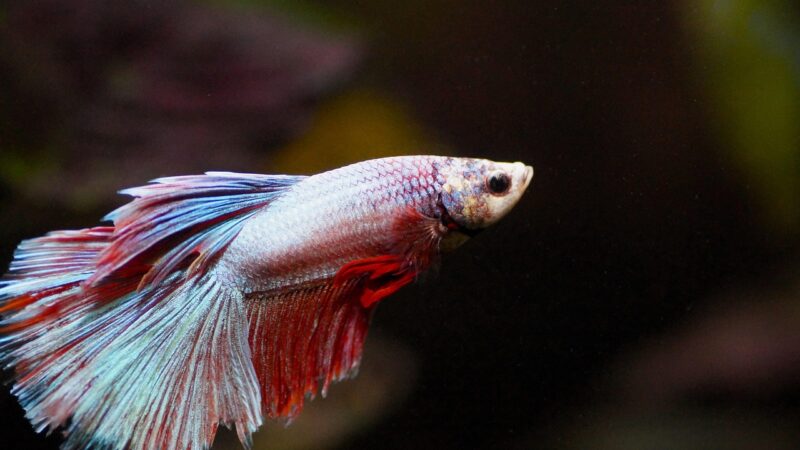
Threadfin rainbowfish are among the most delicate and visually exquisite nano fish available to aquarists — their gossamer, thread-like fins trail behind them in still water like silk in a breeze, making them both a joy to watch and surprisingly vulnerable to inappropriate tank design. A purpose-built aquascape for Iriatherina werneri must prioritise calm flow, soft planting, and a layout that showcases those extraordinary fins rather than battering them against current. This guide from Gensou Aquascaping at 5 Everton Park, Singapore covers every design decision that matters for a successful threadfin rainbowfish aquascape.
Understanding Why Flow Is the Primary Concern
Iriatherina werneri originates from the slow, heavily vegetated waters of New Guinea and northern Australia — backwaters and floodplain lagoons with virtually no current. Their elaborate fin extensions are sexual display structures that serve no hydrodynamic purpose and are, in fact, a liability in anything stronger than the gentlest flow. In a typical canister-filtered tank with a standard outlet nozzle, the current alone can permanently damage fin filaments and cause chronic stress.
Design your filtration around this constraint from the start. A flow rate of 3–5 times tank volume per hour is adequate — lower than the 8–10x rate commonly recommended for community tanks. Diffuse the return flow through a spray bar with downward-angled nozzles, or use a sponge filter as the primary filtration method in smaller setups. Lily pipe outlets with a wide surface break also distribute flow without creating directional current.
Tank Size and Shape
Threadfins are true nano fish — adults reach 3–4 cm — but they benefit from horizontal swimming space and a mid-water column to display in. A tank in the 40–60 cm range with moderate depth (25–35 cm) is appropriate. Taller, narrower tanks are less suitable because threadfins are mid-water swimmers that do not explore deep substrate zones frequently. A wider footprint lets them school and display in the middle third of the water column, which is where their fins look best.
Planting for Visual Impact and Shelter
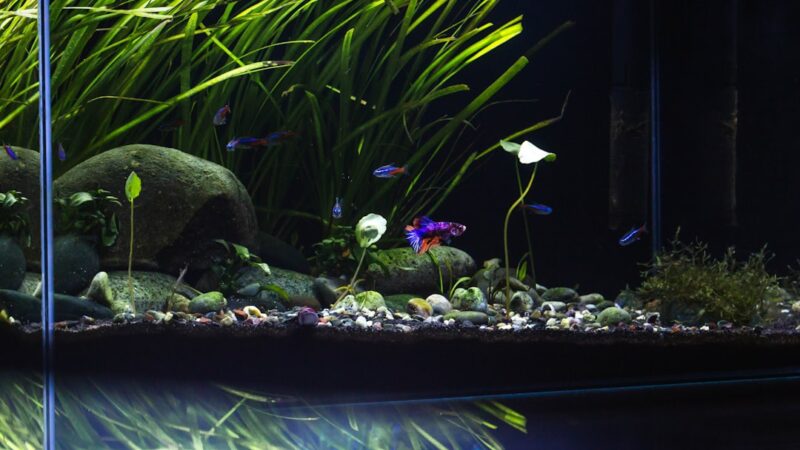
Dense background planting creates the essential sense of depth and provides shelter that reduces stress. Rotala rotundifolia, Hygrophila polysperma, and Ceratophyllum demersum (hornwort) are all excellent choices — they grow thickly, provide shelter without forming a solid barrier, and tolerate the soft water threadfins prefer. Floating plants such as frogbit (Limnobium laevigatum) or Amazon frogbit are particularly valuable: they soften light, reduce surface agitation, and replicate the sheltered, shaded conditions of the fish’s native environment.
Foreground planting should be relatively open to allow display space. Fine-textured carpeting plants like Helanthium tenellum or Lilaeopsis brasiliensis work well — they do not create obstruction at mid-water level and their fine-textured appearance complements the delicate aesthetic of the fish.
Hardscape: Subtle and Non-Obstructive
Threadfins navigate rather than interact with hardscape — they are not bottom dwellers that shelter under rocks or dig into substrate. Keep hardscape minimal. A few small smooth stones, a short piece of driftwood placed at mid-tank depth, or twisted branches near the back corners are sufficient. The fish should be the primary visual element, not the hardscape. Avoid sharp-edged rocks like seiryu stone, as threadfin fins can be caught and torn on sharp surfaces in tight spaces.
Water Parameters and Matching Them to Singapore Conditions
Threadfins need soft, slightly acidic to neutral water: GH 2–8, KH 1–4, pH 6.5–7.5, temperature 24–28°C. Singapore PUB tap water sits comfortably within this range at GH 2–4 and pH around 7.0–7.2, making them well-suited to keeping here without water modification. In Singapore’s climate, no heater is required for most of the year — ambient room temperature in an air-conditioned home sits at 25–27°C, which is ideal.
Avoid any salt supplementation — threadfins are strictly soft freshwater fish. Even the low-level salt doses sometimes recommended for disease prevention will harm them at concentrations that other fish tolerate easily.
Tank Mates: Choose Very Carefully
Tank mate selection is critical. Threadfin fins are irresistible to fin-nippers — even species not typically labelled as nippers, like rummy nose tetras or serpae tetras, may take a nip at the flowing filaments. Safe companions include Otocinclus catfish, dwarf corydoras, pygmy corydoras (Corydoras pygmaeus), small Boraras species, and small Neocaridina shrimp. Keep the community deliberately small and peaceful. A tank of 10–15 threadfins with a group of pygmy corydoras and a few Otocinclus is a beautifully curated micro-community that asks nothing difficult of the keeper.
Feeding in Low-Flow Conditions
Threadfins have very small mouths and feed on micro-sized live and dry foods. Baby brine shrimp (Artemia nauplii), micro worms, and appropriately sized commercial nano foods (particles under 0.3 mm) are accepted. In a low-flow tank, food needs to be distributed where the fish are swimming — they will not rush to a feeding spot the way more active fish do. Target feeding with a pipette or turkey baster to place food near the mid-water school works well. Remove uneaten food after 30 minutes to keep water quality stable.
The Reward of Getting It Right
A threadfin rainbowfish tank that is correctly designed — calm, planted, softly lit, with compatible company — is one of the most meditative and beautiful small aquascapes possible. Males spar constantly with their fins fully extended, flaring at each other in displays that are entirely harmless but visually spectacular. At Gensou Aquascaping, this is a setup we recommend to anyone who wants something genuinely distinctive in a 40–60 cm footprint.
Related Reading
- How to Aquascape for Forktail Rainbowfish: Pseudomugil Nano Display
- How to Aquascape for Rainbowfish: Open Water and Bold Colour
- Australian Rainbowfish Biotope Aquascape: Down Under in Your Tank
- New Guinea Rainbowfish Biotope Aquascape: Colour From the Islands
- New Guinea Rainbowfish Biotope Aquascape: Tropical River Basin
If a planted aquascape has you considering other peaceful schooling rainbows, the dwarf neon makes a brilliant companion to threadfins — our praecox rainbowfish care guide covers feeding, water parameters and shoaling needs.

emilynakatani
Still Have Questions About Your Tank?
Drop by Gensou Aquascaping — most walk-in questions get answered in under 10 minutes by someone who has set up hundreds of tanks.
5 Everton Park #01-34B, Singapore 080005 · Open daily 11am – 8pm