
Platinum Halfmoon Betta Care Guide: Tail Types and Fin Health
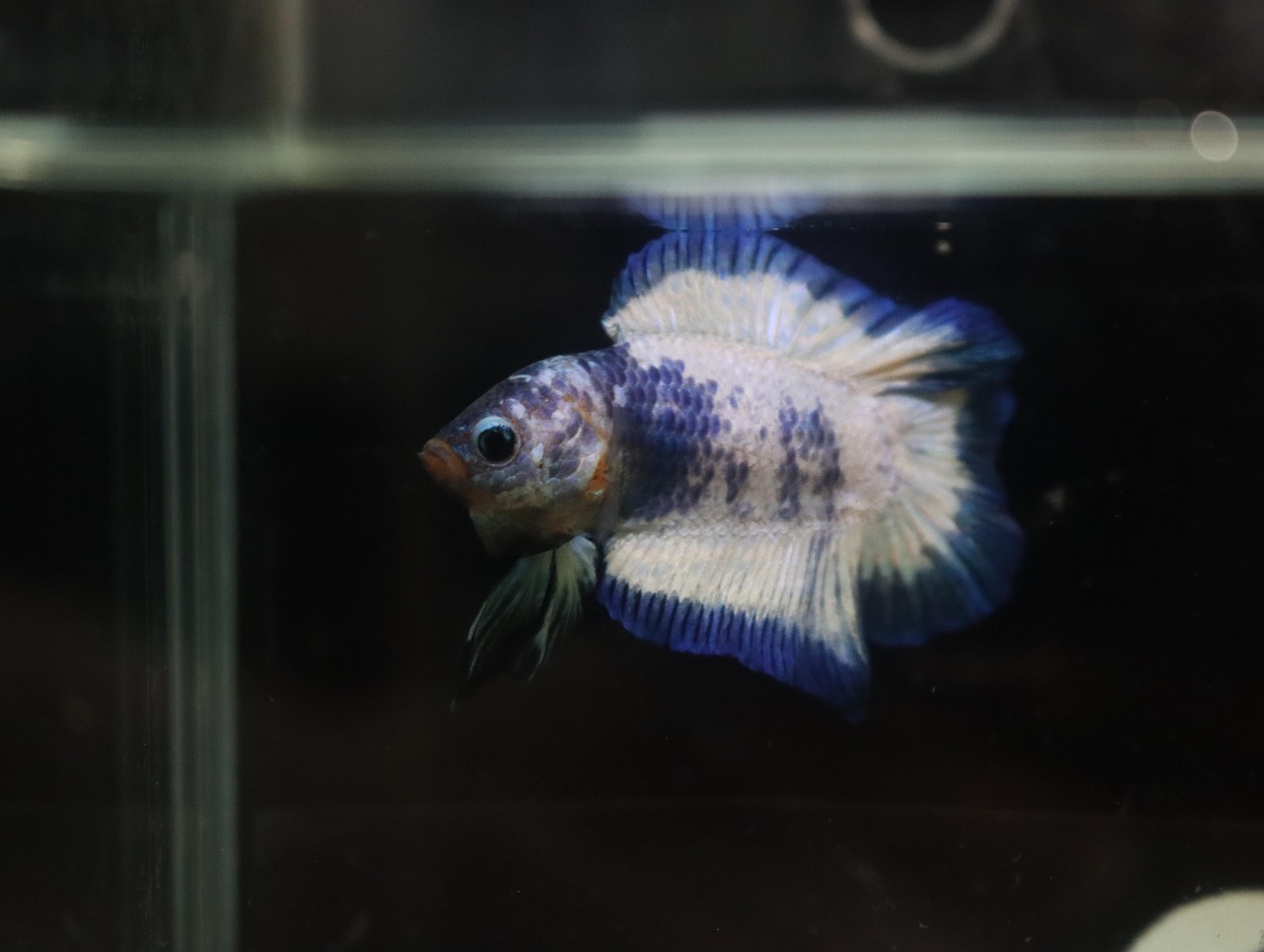
A platinum halfmoon betta in peak condition is one of the most visually striking fish in the freshwater hobby. The combination of a solid white or silver metallic body and a tail that fans a perfect 180-degree arc demands respect — and careful husbandry to maintain. This platinum halfmoon betta care guide addresses the specific challenges that come with this tail type and colour form, from avoiding fin damage to keeping that extraordinary metallic sheen intact. Gensou Aquascaping at 5 Everton Park has worked with bettas for over two decades, and the principles here apply whether you’re keeping your first halfmoon or expanding a small breeding project. This guide sits inside our broader Tropical Fish Species Master Index reference.
Understanding the Halfmoon Tail Type
The halfmoon designation refers to the shape of the caudal fin spread when the fish is fully flaring — ideally forming a D-shaped, 180-degree arc. This is achieved through selective breeding for elongated fin rays and greater membrane surface area. The trade-off is structural: halfmoon fins are more fragile than shorter tail types like the plakat, more prone to tearing, and more susceptible to fin rot if water quality dips even briefly.
Platinum colouration — a solid white or silvery metallic body with little or no dark patterning — comes from selective breeding for iridescent scale layers that reflect light uniformly. High-quality platinum bettas should look like polished chrome under good aquarium lighting; any yellowing or patchy appearance suggests poor genetics or inadequate care.
Tank Setup
A minimum of 15–20 litres is needed, though 30 litres provides far better water stability and room for enrichment plants and decor. Despite common misconceptions, bettas are not adapted to tiny still containers — they come from rice paddies and shallow streams where water surface area is large and oxygen exchange occurs continuously.
Avoid sharp decor. Every sharp edge in the tank is a potential fin tear on a halfmoon betta. Choose smooth driftwood, rounded rocks, and silk or real aquatic plants. Plastic plants with serrated leaf edges are a common cause of fin damage. Floating plants — salvinia, water lettuce, frogbit — are particularly well suited; bettas rest under their roots and feel secure with overhead cover.
Water Parameters and Filtration
Target temperature 26–29°C, pH 6.5–7.5, and soft to moderately hard water. Singapore’s ambient temperatures of 28–30°C mean a heater is rarely needed, but a thermometer is essential — internal tank temperatures can spike in a small volume during the hottest months. Bettas are labyrinth fish and breathe atmospheric air directly, so ensure the space between the water surface and the tank lid is warm; cold dry air causes respiratory distress.
Filtration should produce low flow. Halfmoon fins are large enough to catch current and exhaust the fish constantly if the flow is too strong. A small sponge filter or a canister filter with output directed at the tank wall to diffuse flow keeps the water clean without stressing the fish. Perform 30% water changes twice weekly — fin rot appears quickly in deteriorating water and can destroy an expensive halfmoon’s tail in days.
Feeding
Bettas are carnivores. In the wild they eat insects, larvae, and small crustaceans. A quality high-protein pellet (40%+ crude protein, fish-based rather than plant-based) forms the diet staple, supplemented with frozen bloodworms, daphnia, and brine shrimp two to three times weekly. Feed a small amount once or twice daily — bettas have a stomach roughly the size of their eye, and overfeeding is the fastest route to constipation, swim bladder issues, and water quality problems.
Fast your betta one day per week. This is standard practice among experienced breeders and helps prevent digestive issues common in captive fish fed too richly.
Fin Health — Prevention and Treatment
Fin health is the defining challenge with halfmoon bettas. Prevention is everything. Maintain pristine water, eliminate sharp decor, and monitor fins daily during early ownership. Minor fin splits from snagging usually heal within a week in clean water without any treatment needed.
Fin rot — bacterial erosion that progresses from the fin edges inward — requires prompt action. Caught early, daily water changes alone can reverse it. More advanced cases respond to a course of antibacterial medication; products containing kanamycin or erythromycin are effective. Never use aquarium salt as a fin rot treatment for bettas — it provides no therapeutic benefit against bacterial fin rot and stresses the fish unnecessarily.
Enrichment and Behaviour
Platinum halfmoon bettas are intelligent, curious fish. Provide enrichment: rotate decor occasionally, introduce new plants, and allow the fish to observe the room outside the tank. A small mirror placed against the glass for two to three minutes daily encourages natural flaring exercise — but remove it immediately after; prolonged mirror sessions cause chronic stress.
Males must be housed alone or with entirely non-betta tank mates. Good companions include small corydoras, otocinclus, or a small group of ember tetras. Avoid fin-nipping species such as tiger barbs or serpae tetras, which will destroy a halfmoon’s tail within hours. With careful maintenance and attention to the specifics of this tail type, a platinum halfmoon betta will remain in prime condition for two to four years — visit Gensou Aquascaping Singapore at 5 Everton Park for quality specimens and advice on suitable tank setups.
Related Reading



