
Sunset Thicklip Gourami Care Guide: Trichogaster Labiosa Colours
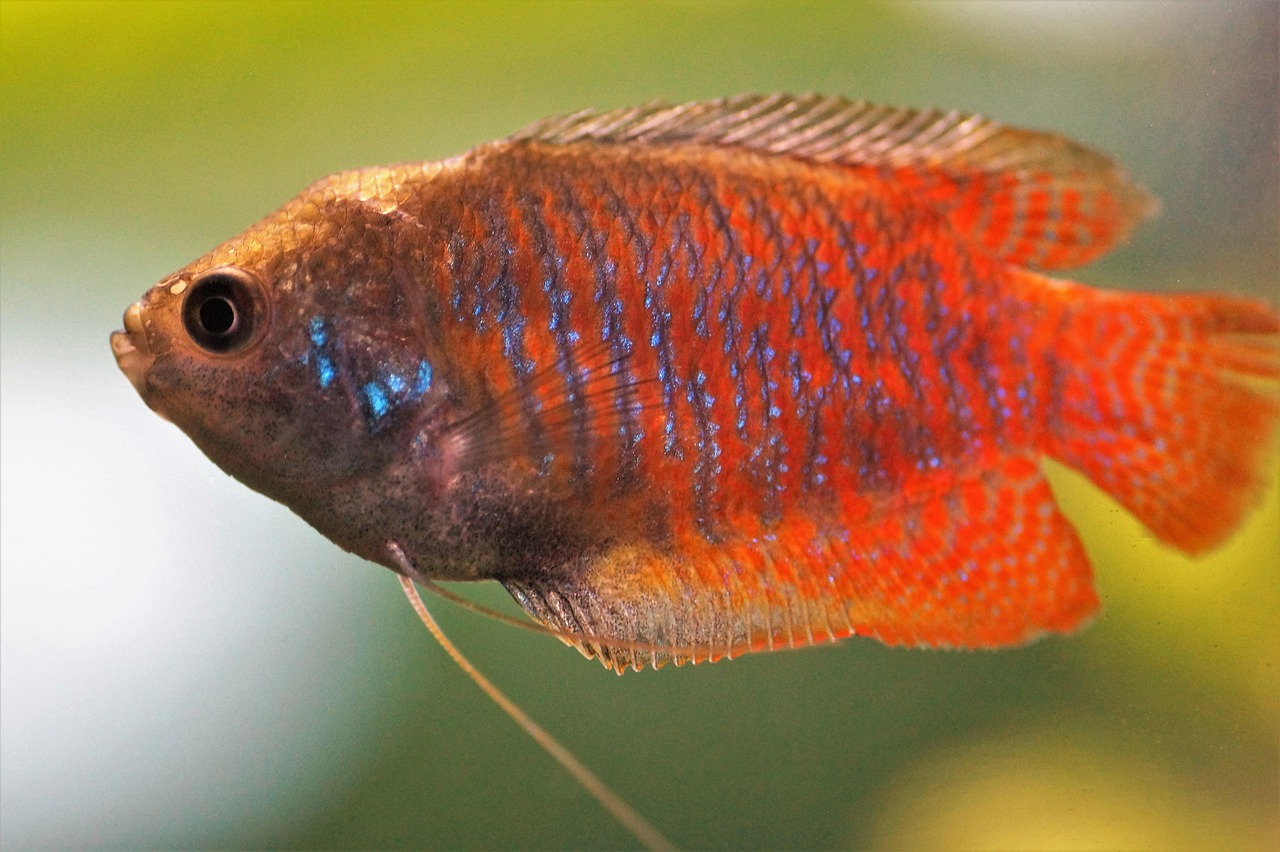
The sunset thicklip gourami ranks among the most underrated centrepiece fish for planted community tanks. This sunset thicklip gourami care guide from Gensou Aquascaping Singapore draws on over 20 years of hands-on experience to help hobbyists across the island get the best from Trichogaster labiosa. With proper care, their sunset thicklip gourami colours intensify into a stunning gradient of orange, gold, and red that rivals any dwarf gourami morph.
Species Profile
Trichogaster labiosa — sometimes listed under the older name Colisa labiosa — originates from slow-moving waters in Myanmar. The “sunset” colour form is a selectively bred variant prized for its rich orange-red body and turquoise dorsal edging. Adults typically reach 7–9 cm in home aquariums.
One key advantage over the more popular dwarf gourami (Trichogaster lalius) is disease resistance. Thicklip gouramis are far less prone to iridovirus (DGIV), a devastating pathogen that plagues commercially bred dwarf gouramis. For Singapore hobbyists tired of losing dwarf gouramis to mystery illnesses, this species is a welcome alternative.
Tank Requirements
A single pair does well in a 60-litre tank. Groups or community setups call for 80 litres or more. Dense vegetation, floating plants, and subdued lighting bring out confident behaviour and richer pigmentation. Tall stem plants like Rotala rotundifolia and floating Salvinia create the dappled cover they prefer.
Water movement should be gentle — a sponge filter or an adjustable hang-on-back turned low works perfectly. Gouramis are labyrinth fish that breathe atmospheric air, so keep a gap between the water surface and any cover lid. In HDB flats, a rimless 60-cm tank on a sturdy cabinet makes an ideal home.
Water Parameters
Singapore’s PUB tap water suits thicklip gouramis well after dechloramination. Aim for pH 6.0–7.5, GH 4–12 dGH, and temperature 24–28 °C. Our tropical ambient temperatures of 28–32 °C mean a chiller may occasionally help during prolonged heatwaves, but most of the year the tank sits comfortably in range without intervention.
Perform 25 % water changes weekly. Consistency matters more than perfection — stable parameters at pH 7.0 beat fluctuating between 6.2 and 7.4.
Feeding for Optimal Colour
Colour-enhancing pellets with astaxanthin form a solid base diet. Supplement with frozen bloodworms twice a week and blanched peas or cucumber slices for fibre. Thicklip gouramis have hearty appetites — limit feeding to what they consume in two minutes, twice daily, to avoid obesity.
Live foods such as daphnia and brine shrimp stimulate natural foraging and condition fish for breeding. These are readily available from hobbyist sellers on Shopee and Carousell for around $3–$5 per portion.
Behaviour and Compatible Tank Mates
Males can be mildly territorial, especially during breeding. Keeping one male with two or three females reduces aggression. Unlike some gouramis, thicklip males rarely cause serious harm — disputes are mostly postural.
Peaceful community fish pair well: harlequin rasboras, kuhli loaches, corydoras, and cherry barbs all make excellent companions. Avoid fin-nippers like tiger barbs and overly boisterous species. Shrimp coexist safely if given ample plant cover, though very small juveniles may be picked off.
Breeding Behaviour
Males build bubble nests at the surface, usually anchored under floating plants. Courtship involves the male displaying his flanks with intensified colour. After a wrapping embrace, eggs float into the nest where the male guards them fiercely.
Eggs hatch within 24–36 hours at 27 °C. Fry become free-swimming after another two days and need infusoria or liquid fry food initially. Remove the female after spawning to prevent conflict with the guarding male.
Common Health Concerns
Bacterial infections can occur in poorly maintained tanks. Watch for clamped fins, loss of appetite, or white patches. Early treatment with a broad-spectrum antibacterial medication usually resolves issues quickly. Quarantine all new arrivals for two weeks before adding them to established setups.
Skin flukes occasionally appear on imported stock. A brief formalin dip or praziquantel treatment addresses this effectively.
Why Choose the Sunset Thicklip Gourami
Hardy, colourful, and personality-rich — the sunset thicklip gourami deserves far more attention from Singapore’s planted-tank community. Following this sunset thicklip gourami care guide will help you enjoy years of vibrant colour and engaging behaviour. At Gensou Aquascaping, we consider Trichogaster labiosa one of the finest gourami options for local conditions.
Related Reading
- How to Breed Chocolate Gouramis: Mouthbrooding and Blackwater Tips
- Chocolate Gourami Care Guide: Beautiful but Demanding
- Chocolate Gourami Tank Mates: Peaceful Companions for Soft Water
- How to Breed Honey Gouramis: Bubble Nests and Fry Care
- Honey Gourami vs Dwarf Gourami: Temperament, Size and Hardiness



