
Tomato Frog Care Guide: Dyscophus Antongilii Husbandry
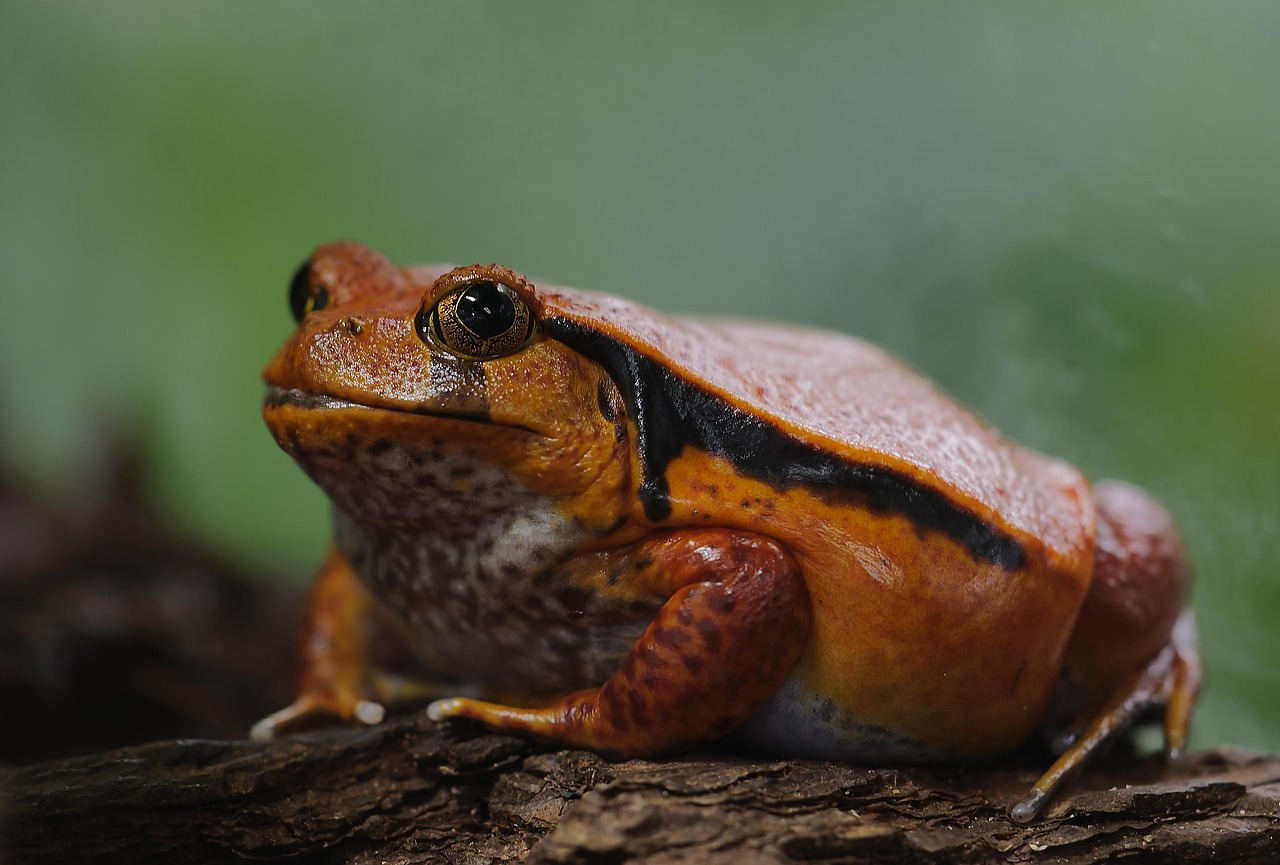
Tomato frogs are the striking red-orange terrestrial frogs from Madagascar that spend most of their lives half-buried in damp substrate. This tomato frog care guide from Gensou Aquascaping in 5 Everton Park covers Dyscophus antongilii (CITES-listed, less often traded) and the more commonly available Dyscophus guineti, which share identical husbandry. They are heavy-bodied sit-and-wait predators that reward simple, correctly built enclosures and punish overcomplication.
Quick Facts
- Scientific name: Dyscophus antongilii and Dyscophus guineti
- Adult size: females 10 cm, males 6-7 cm
- Temperature: 22-27 °C, no heater needed in Singapore
- Humidity: 65-80 %, substrate always moist
- Tank: 60×45×30 cm for a single adult, taller unnecessary
- Diet: gut-loaded crickets, dubia roaches, earthworms, occasional pinkies for large females
- Lifespan: 6-10 years
Terrestrial, Burrowing Lifestyle
Tomato frogs do not climb. They want floor space, thick substrate, and a hide. Setups aimed at arboreal species waste the vertical dimension on an animal that will spend 80 % of its life buried or perched on leaf litter. A long, shallow tank works better than a tall cube. Substrate needs to be at least 10 cm deep to allow full burrowing; loose coco fibre mixed with leaf litter and a little sphagnum moss holds the shape of a burrow without collapsing.
Vivarium Build
A shallow water dish large enough for the frog to sit in but not drown occupies one corner. Sturdy hides — cork bark curves, half-buried coconut shells — give daytime security. A single broad-leaved plant like pothos provides visual cover, though tomato frogs flatten delicate plants quickly. Bioactive setups work well; springtails and isopods keep substrate clean under heavy-bodied frog traffic.
Temperature and Humidity
Room temperature in Singapore sits at or slightly above the ideal range. Avoid hot spots above 29 °C by siting the vivarium away from direct sun and away from electronics. Humidity targets of 65-80 % are easy to hit with a daily light misting, particularly in flats without aircon. Never let the substrate dry out completely — tomato frogs dehydrate fast once buried in dry soil.
Lighting
These are nocturnal, sit-and-wait predators with no requirement for UVB. Ambient room light or a low-output plant LED on a 12-hour cycle is enough. Bright lighting stresses them; if they refuse to emerge at night with lights off, reconsider placement and light intensity.
Feeding
Gut-loaded crickets and medium-to-large dubia roaches are staples. Earthworms are eagerly taken and nutritionally excellent. Large adult females occasionally accept pinky mice, but monthly at most — kidney damage from over-frequent rodent feeding has been documented. Dust with calcium twice weekly and a multivitamin once weekly. Feed adults every 4-5 days; juveniles every 2-3 days. Watch body condition — tomato frogs become obese easily and should show a visible waist behind the shoulders.
Handling and Defence
When stressed, tomato frogs secrete a white sticky mucus that can cause allergic reactions in sensitive keepers. Wash hands thoroughly before and after any contact, and keep handling to maintenance necessities only. The secretion binds to skin and is hard to rinse off the frog, so minimising stress is better than cleaning up afterwards.
Group Keeping
Tomato frogs do fine singly. Pairs work in larger enclosures but females will try to eat smaller males at breeding time or when hungry. Never mix species. Single-frog enclosures are the most reliable approach and sidestep size-related cannibalism.
Common Health Issues
Impaction from swallowing substrate ranks first, especially with loose coco fibre and oversized prey items. Offer food on a smooth tile or shallow bowl to reduce this. Obesity, bacterial skin infections from filthy enclosures, and metabolic bone disease from missed calcium supplementation round out the common problems. A reptile-experienced vet is the right call for persistent lethargy or visible lesions.
Sourcing in Singapore
Dyscophus guineti is the species most often available, at $60-120 per animal from specialist reptile shops and Carousell sellers. D. antongilii requires CITES paperwork and is rarely traded legitimately outside permitted channels. Choose alert, well-coloured animals with full body condition and no obvious mucus secretion. Quarantine new arrivals for three weeks before introducing to a bioactive display.
Related Reading



