
Metal Guppy Strain Genetics Guide: Platinum and Gold
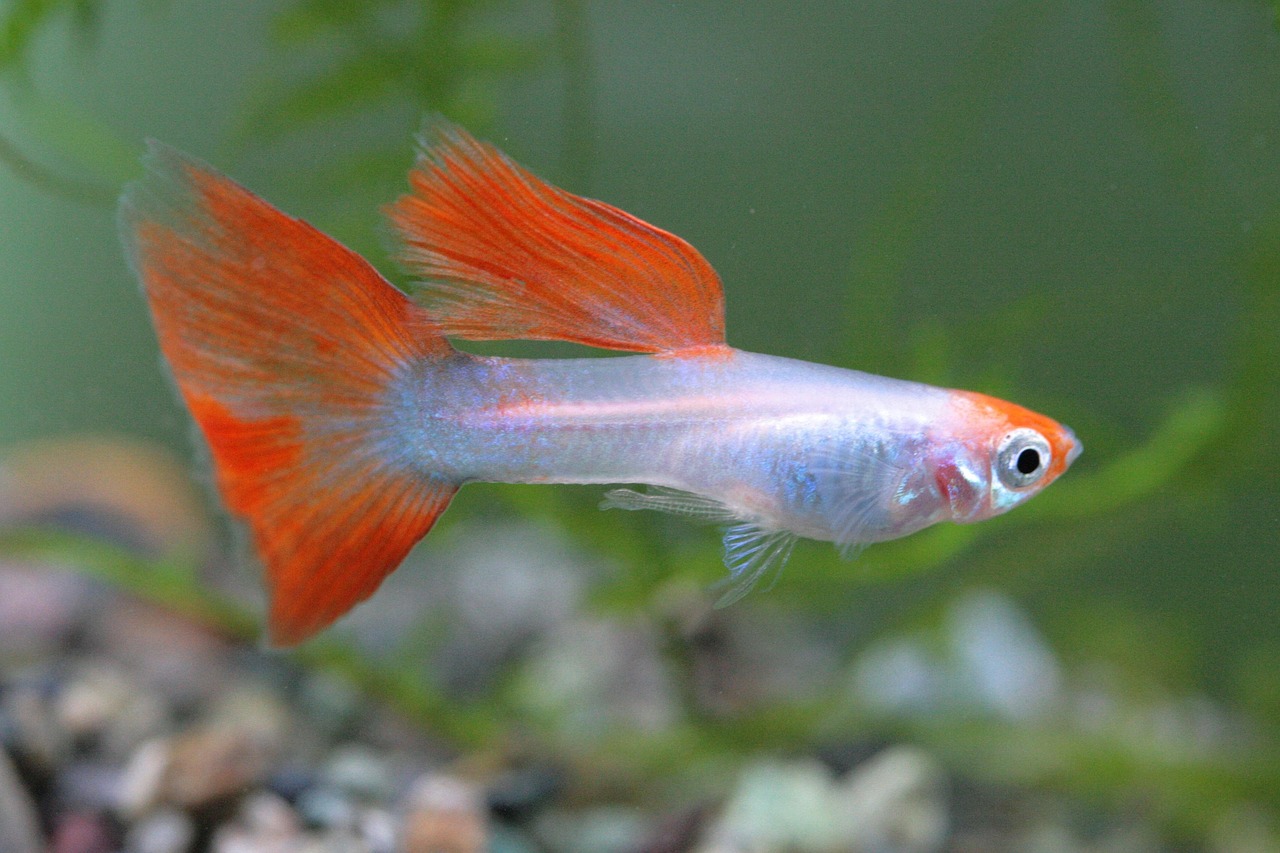
Metal guppies, encompassing the platinum and gold body morphs, owe their reflective body finish to a different genetic mechanism than the polygenic dragon scaling. Reliable metal guppy strain genetics work means understanding the autosomal Asian Blau and Metal alleles, separating gold from platinum despite visual overlap, and managing the modifier interactions that determine whether a fish reads as truly metallic or just lightly washed. This guide from Gensou Aquascaping at 5 Everton Park draws on grow-out work with platinum red and metal yellow lines for clients building display tanks at home, and on long conversations with the Singapore breeders who imported the original platinum stock from Taiwan in the late 2000s. This guide sits inside our broader Tropical Fish Species Master Index reference.
Asian Blau and the Metal Allele
The metal phenotype traces to the Metal autosomal allele, often combined with Asian Blau modifiers, that produces a continuous reflective sheen across the entire body rather than the scale-by-scale iridophore concentration of dragon strains. Two Metal copies produce strong full-body expression; one copy produces partial expression visible mainly on the dorsal half. Asian Blau combined with Metal can produce the bluish-platinum sheen that defines the most striking modern strains.
Platinum Versus Gold Distinction
Platinum metal guppies show a silvery-white reflective body with cool spectral hues, often combined with red, blue or green caudal fins. Gold metal guppies show a warm yellow-gold body sheen, sometimes with red overlay producing a “platinum red” or “gold red” hybrid look. The genetic basis differs: platinum involves Metal plus xanthophore reduction, gold involves Metal plus xanthophore enhancement. Mixed pairings produce intermediate fish that confuse F1 reads.
Inheritance Predictability
The Metal allele follows incomplete-dominance Mendelian patterns: two strong metal parents produce roughly 75 percent visibly metal offspring (50 percent strong, 25 percent partial), 25 percent non-metal. Test crossing identifies homozygous Metal carriers more reliably than visual inspection. Maintain a test cross pen of known non-metal females for this purpose; the F1 readout in seven weeks tells you exactly what your sire carries.
Quality Markers for Show Selection
Look for even body sheen from gill cover to peduncle, no dark patches breaking the metallic field, deep underlying base colour where present (red caudal, blue dorsal), and consistent reflectance under both daylight and aquarium LED. Common faults include dorsal-only metal expression, washed-out gold that reads cream rather than yellow-gold, and platinum strains showing yellow tinge from incomplete xanthophore reduction. Cull at week eight on metallic coverage, week twelve on fin development.
Outcrossing Strategy and Inbreeding Limits
Metal lines tolerate moderate inbreeding for two or three generations before fertility drops sharply. Outcross to a metal line of the same colour subtype every fourth generation. Cross-subtype work (platinum to gold, for instance) scrambles colour for three generations and only makes sense as the start of a deliberate hybrid project. Reference our guppy selective breeding guide for general line management principles.
Water Conditions and Climate Considerations
Hard, alkaline water at GH 10 to 12 and pH 7.6 to 8.0 produces the brightest metallic sheen. Singapore PUB tap requires aggressive remineralisation; we use crushed coral substrate plus measured calcium chloride dosing for our metal lines. Temperature 26 to 28 degC suits both growth and metallic expression. Sustained heat above 30 degC, common in HDB flats during the dry season, dulls the sheen visibly within two weeks. A small fan or chiller pays for itself in show-quality output.
Diet for Sheen Development
Live brine shrimp nauplii from week one, frozen daphnia from week three, blackworms occasionally for body conditioning, and a quality flake fortified with spirulina and astaxanthin from week six. Metal expression depends partly on lipid metabolism for iridophore development; heavy live food intake produces noticeably brighter metallic sheen than dry-food-only diets. Carotenoid intake supports red and gold base colour but does not affect platinum reflectance.
Spawning Setup and Fry Management
Single-pair or trio breeding tanks at 30 to 45 litres with thick java moss or guppy grass for fry refuge. Females drop 20 to 35 fry every four to five weeks. Pull fry to grow-out by week three, sex by week six, grade preliminary metallic expression by week eight. Final metal expression continues developing through week fourteen, so retain a wider initial selection and re-grade at three months. Apply the principles in our aquascape for guppy breeding display piece for tank layouts that allow daily observation of every individual.
Singapore Show Standards
Aquarama and local livebearer judges reward even full-body metallic coverage with deep base colour saturation in the fins. Platinum red strains dominated the 2024 metal class; the winning fish carried a 4 cm body with even platinum sheen, deep red caudal, and a 3 cm crisp delta. Gold strains scored lower not because of quality but because fewer breeders work them locally, leaving the depth of competition shallower.
Sourcing and Long-Term Project Management
Singapore metal guppy foundation stock circulates through specialised breeder Telegram groups, Carousell listings from established hobbyists, and Aquarama booths. Quality pairs run $50 to $150, proven show breeders $300 and up. C328 Clementi occasionally lists metal-tagged fish but the genetics are usually muddy with inconsistent F1 results. Two or three good pairs from a known breeder beats two dozen general-shop fish. Maintain three lines (target subtype, complementary outcross, and a backup), photograph every retained male, log every pairing in a spreadsheet, and you will produce a recognisable Singapore metal strain within four to five years. The discipline parallels the metallisation work we describe in our dragon guppy strain genetics piece, with the genetics differing but the project management identical.
Related Reading



