
Half Black Guppy Strain Genetics Guide
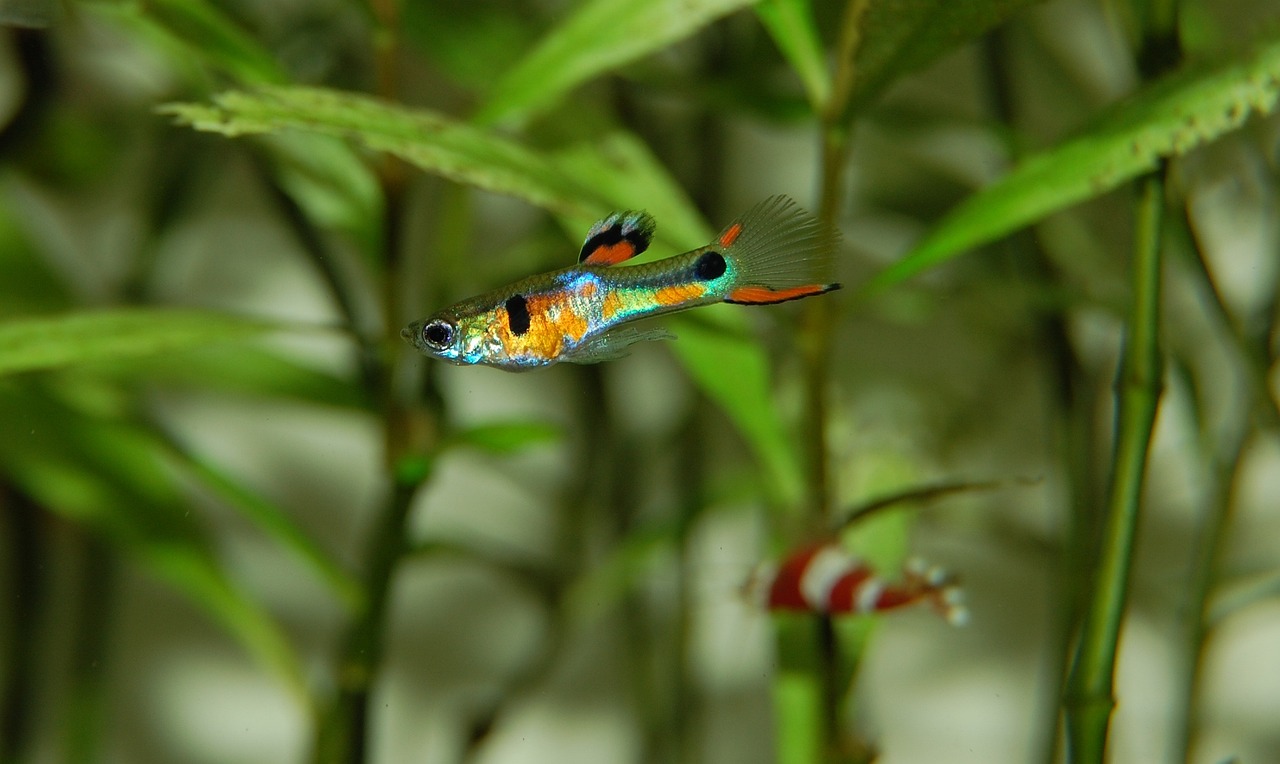
The half black guppy is the foundation strain on which most modern fancy varieties were built, and understanding its inheritance unlocks predictable colour work across the rest of the hobby. Solid half black guppy strain genetics begins with the autosomal Nigrocaudatus gene, then layers in body modifiers, fin shapes and outcrossing strategy. This guide from Gensou Aquascaping at 5 Everton Park draws on conversations with Singapore IFGA-style breeders, our work conditioning show fish for the Aquarama livebearer classes, and grow-out data from three half black lines we maintain for clients running display tanks at home. This guide sits inside our broader Tropical Fish Species Master Index reference.
The Nigrocaudatus Gene Explained
Half black expression traces to the Nigrocaudatus II (Ni II) autosomal recessive gene that produces dense black melanin from the dorsal fin back to the caudal peduncle. Unlike most guppy colour traits, Ni II sits on autosomes, not the sex chromosomes, so it expresses equally in males and females. Two carrier parents produce roughly 25 percent visible half blacks, 50 percent carriers and 25 percent non-carriers in any given spawn. Visual identification of carriers from non-carriers is impossible, which makes test crossing essential.
Recognising True Half Black
The black wash should cover from the dorsal insertion back to the caudal peduncle, with a clean transition line. Spotted, broken or peppered black indicates incomplete expression or modifier interference. Females show a fainter but visible posterior darkening; pure females are slightly smoky on the back third. The defining showroom test is body density viewed against a white background; faded half blacks lose 20 percent of their score immediately.
Common Faults to Cull
Bronze cast in the black wash, broken pattern with white patches, asymmetric distribution between left and right flanks, and weak posterior dorsal coverage. Fin shape faults compound colour faults: a delta tail half black with a bent caudal ray loses on two judging axes. Cull at four weeks for body conformation, six weeks for colour density, and eight weeks for fin shape. Our caridina selective breeding culling piece transfers most principles directly to guppy work.
Outcrossing Without Losing the Black
Inbreeding depression hits half black lines hard after three generations because Ni II carriers also concentrate weakness. Outcross to a complementary strain (commonly a half black AOC, a half black blue, or a half black yellow) every fourth generation. Always test cross by keeping a few F1 individuals back and pairing them; the F2 generation reveals whether the outcross brought hidden faults.
Body Conformation and Fin Genetics
Half black inheritance is independent of fin shape, so you can pair the colour with delta, veil, ribbon or round tails. Modern Singapore show standards favour large delta tails with crisp parallel rays. The deltas come from polygenic inheritance modified by water quality and feeding during the first four weeks. Reference our guppy genetics colour selective breeding guide for the full polygenic breakdown.
Water and Feeding Conditions
Half black expression deepens in slightly hard, alkaline water. Singapore PUB tap is too soft for optimal black density; remineralise with crushed coral or a calcium chloride dose targeting GH 8 to 10 and KH 6. Feed live brine, frozen daphnia and high-quality flake from week one. Carotenoid-rich foods boost background body colour but do not affect Ni II expression itself.
Spawning Setup and Fry Survival
Use a 30 to 45 litre breeding tank per pair, with java moss or guppy grass for fry refuge. Drop females into a separate “drop tank” two weeks after pairing, then return to the colony tank once gravid spots reach gravidity. Half black females tend toward smaller broods (15 to 25 fry) than common-coloured strains. The principles in our guppy breeding for beginners piece apply directly, with extra emphasis on fry density management to develop body depth.
Show Standards and Singapore Judging
Local livebearer classes follow loosely modified IFGA standards with adjustments for the popular delta tail. Half black males ideally measure 4 cm body, 3 cm tail spread, with crisp colour transitions and parallel caudal rays. The judges at the last few Aquarama livebearer events reward depth of body colour over fin extravagance. A balanced fish wins over an extreme one with faults.
Singapore Sourcing of Foundation Stock
Foundation half blacks come from a small group of Pasir Panjang and Bedok hobbyist breeders who sell through Carousell and breeder Telegram groups. Pricing runs $15 to $40 per pair for grow-out fish, $80 to $150 for proven show stock. Avoid the bulk store-grade half blacks at general fish shops; their genetics are usually muddy and produce inconsistent F1 results. Two or three good pairs from a known breeder beat a dozen anonymous fish from a general shop.
Long-Term Line Maintenance
Maintain three lines simultaneously to enable rolling outcrosses without ever buying back into your own genetics. A core line, a complementary outcross line, and a backup carrier line gives you ten years of selective breeding without inbreeding collapse. Keep records of every pairing and cull rate. The discipline mirrors what we describe in betta line breeding colour project; the species changes but the project management does not.
Related Reading



