
Sawbwa Resplendens Naked Microrasbora Care Guide
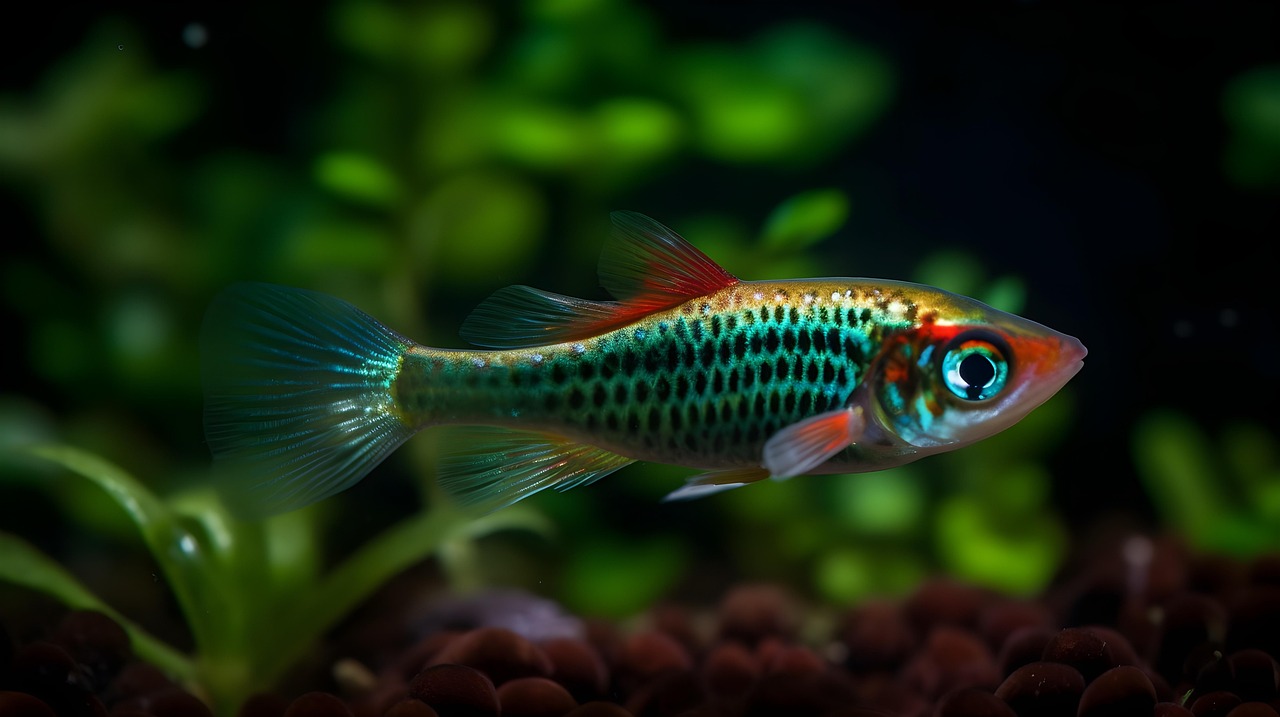
The naked microrasbora is the only fish in its genus, endemic to a single Burmese lake, and demands the opposite water chemistry to most micro-rasboras Singapore aquarists keep. This sawbwa resplendens naked microrasbora care guide from Gensou Aquascaping at 5 Everton Park covers the hard alkaline conditions, the temperate-temperature requirement, and the practical sourcing realities for keeping Sawbwa resplendens in an HDB-scale tank. Expect specific GH and pH targets and an honest assessment of whether the species suits your local water.
Origin and Conservation Status
Endemic to Lake Inle in Shan State, Myanmar, Sawbwa resplendens inhabits hard alkaline freshwater at altitude, where the lake sits at roughly 880 metres. Wild water measures pH 7.8 to 8.6, GH 12 to 18, and 18 to 24 degrees Celsius. The species is IUCN-listed as Vulnerable due to lake pollution and invasive species pressure, which means most aquarium specimens today are tank-bred from European or Czech stock. Wild collection is essentially halted.
Identification
The common name reflects the genus’s lack of scales on the dorsal half of the body, giving a smooth ceramic appearance. Adults reach 30 to 35 mm. Males show a striking sky-blue body with a bright red snout and red caudal-fin lobes; females are silver-bronze with subtle gold flanks and lack the red markings. The dimorphism is so pronounced that beginners sometimes assume two species. There is no analogous look in Singapore native or commonly farmed micro-rasboras.
Tank Size and Layout
A 30 to 45 litre tank with footprint at least 45 cm by 25 cm holds a starter shoal of eight to twelve. Aquascape with calcareous rock such as Seiryu or Ohko stone, sand substrate, and hardy Vallisneria or Crinum. The species avoids dense planting because Lake Inle is open water with sparse vegetation. Use rock features to provide visual breaks rather than dense planting; the open water style suits the species’ natural behaviour.
Singapore Water Chemistry
This is the species’ biggest challenge for local keepers. PUB tap at GH 2 to 4 and pH 7.0 to 7.5 is too soft and slightly too acidic. You need to harden actively using crushed coral in the filter, calcium chloride dosing, or a commercial alkaline buffer. Target GH 12 to 16, KH 8 to 12 and pH 8.0 to 8.4. Our harden soft water guide covers the dosing approach. Without this commitment, the species will live but never colour up properly and will breed poorly.
Temperature Requirements
Sawbwa is a cool-water species; ideal is 20 to 24 degrees Celsius. Singapore HDB ambient at 29 to 31 degrees is hostile, and the species cannot be kept long-term without a chiller. A 100W chiller on a 45 litre tank typically holds 22 degrees year-round and runs at roughly SGD 18 monthly in PUB electricity. Without this commitment, do not buy the species; warm water shortens its lifespan from a potential six years to under eighteen months.
Diet and Feeding
The species is an omnivore with preference for small live and frozen foods. Newly hatched brine shrimp, daphnia, microworm and crushed flake form the practical rotation. Live food two or three times weekly maintains the male’s red snout intensity; on flake-only diets red colouration fades within a month. Feed twice daily in small amounts cleared within thirty seconds. Our daphnia culture guide covers home propagation.
Tank Mates
Compatible species are limited because few popular fish tolerate hard alkaline cool water. Lake Tanganyikan dwarf shell-dwellers (Neolamprologus multifasciatus) work in larger combined tanks. Other Lake Inle species such as Inlecypris auropurpureus are ideal but rarely available. Avoid soft-water species like chili rasbora and tropical tetras; chemistry alone makes them incompatible. Most successful Sawbwa tanks are species-only setups.
Schooling and Behaviour
Sawbwa shoals loosely rather than tightly; eight to twelve gives stable behaviour. Males display constantly to females and to each other with brief fin-flares and chasing along open water. Females ignore most of this and forage along the substrate. Provide an open horizontal lane between rocks for display behaviour; cluttered hardscape reduces visible activity.
Breeding Notes
The species is an egg-scatterer over fine-leaved vegetation or moss. Condition pairs at 22 degrees with daily live food, then transfer to a 5 litre breeding tub with Vesicularia moss. Spawning occurs within days when water hardness and pH are right. Remove adults after 24 hours; eggs hatch in 48 hours and fry require infusoria before microworm. Fry colour up at 4 to 6 weeks. Maintaining hard alkaline water is essential; soft conditions cause shell-related fry deformities.
Lighting and Display
Cool-white LED at 6500 K to 7500 K brings out the male’s blue body. Avoid heavily warm-spectrum or red-biased lights, which mute the colour to washed grey. Open hardscape with light sand substrate enhances the natural look and reflects light back through the fish, intensifying visible colour. Our lighting spectrum guide covers the technical detail.
Sourcing and Who Should Keep Sawbwa
Sawbwa appears irregularly at specialist Shopee importers and occasionally at Y618 at SGD 8 to 14 per fish, with Aquarama trade weeks bringing the largest selection. Buy in groups of at least eight and confirm farm origin because some Czech-bred stock arrives stronger than Southeast Asian farm equivalents. The species rewards committed Singapore keepers willing to maintain hard alkaline cool water in a chiller-equipped species tank, and for anyone with that commitment the visual reward is one of the most distinctive small fish available in the trade. For anyone unwilling to deviate from PUB tap chemistry or invest in a chiller, pick a soft-water Boraras instead.
Related Reading



