
Devario Malabaricus Rainbow Care Guide: Giant Danio Cousin
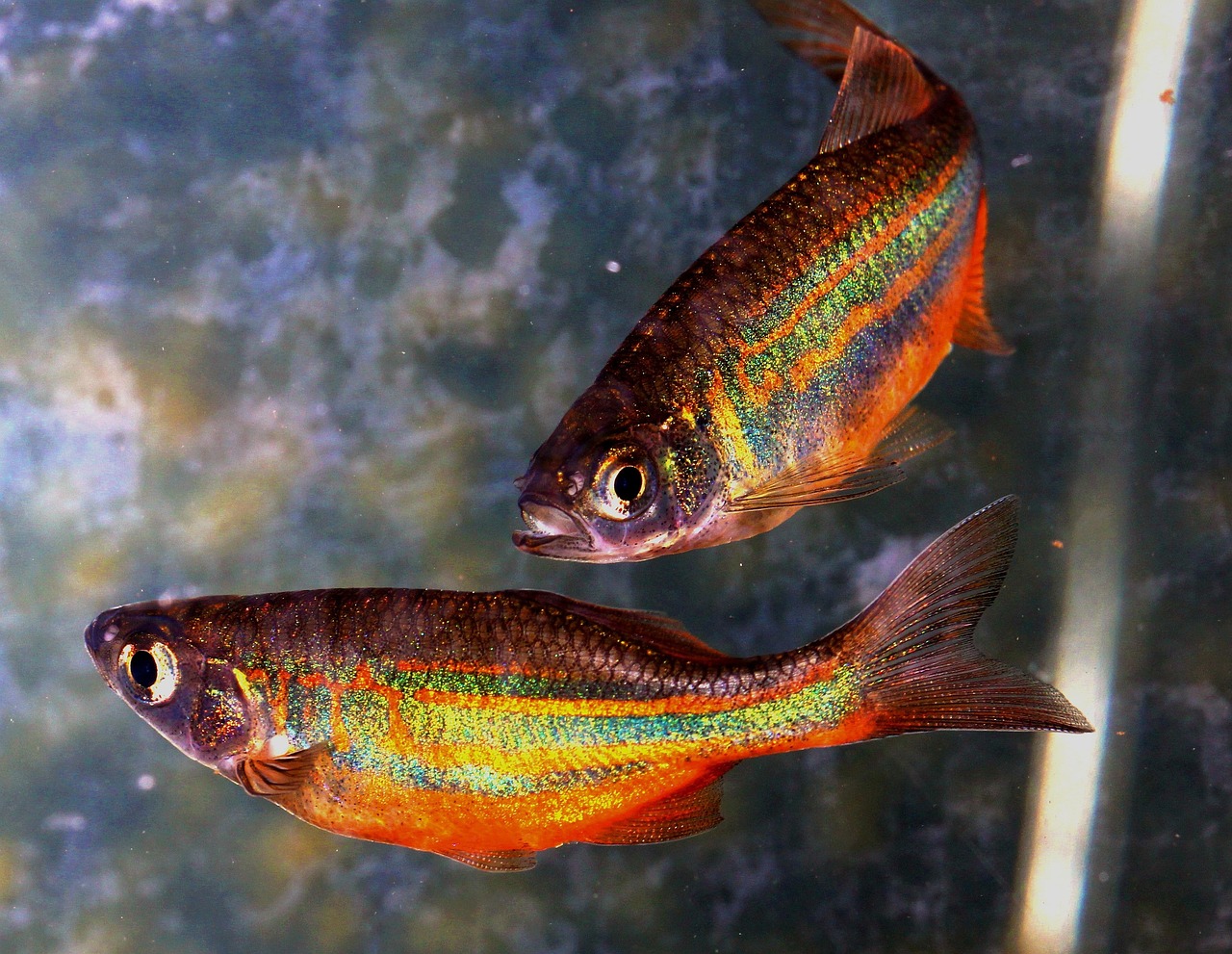
The Malabar danio is the larger, calmer cousin to the giant danio, and its blue-and-yellow flank stripes earn it the rainbow tag despite a misleadingly tame profile. This devario malabaricus rainbow care guide from Gensou Aquascaping at 5 Everton Park covers the species’ Indian Western Ghats roots, the practical tank size that suits HDB layouts, and the cool-water concession Singapore keepers need to plan for. Expect specific parameters and shoal-management notes from active client tanks.
Origins and Habitat
Described in 1839, Devario malabaricus ranges across Sri Lanka and the Western Ghats of southern India, inhabiting clear, fast-flowing hill streams over rocky and sandy substrates. Wild water tests at 22 to 25 degrees Celsius, pH 6.5 to 7.5, and GH 5 to 12. Despite its hill-stream origins it tolerates a broader range than many endemic species, which is partly why it remains the most common Devario in the trade decades after first import.
Identification
Adults reach 9 to 11 cm and show parallel horizontal blue and yellow stripes along the flanks, fading to silver near the belly. The dorsal fin is short and slightly translucent, the caudal forked. Males develop sharper colour edges and slimmer profiles in breeding condition; females are noticeably plumper. Distinguish from giant danio (Devario aequipinnatus) by malabaricus’s more horizontal stripe alignment and slightly deeper body.
Tank Size and Layout
An adult shoal of six to eight needs at least 120 litres with a footprint of 90 cm by 35 cm. Tall narrow tanks waste their swimming preferences; this is a horizontal cruiser. Aquascape with smooth river stones, fine sand, and hardy plants such as Anubias, Microsorum and Vallisneria. Avoid delicate stem plants because the shoal’s swimming wake disturbs anything not firmly anchored. Our Indian Western Ghats biotope tank guide covers a thematic build.
Singapore Water and Temperature
PUB tap matches malabaricus chemistry well after dechlorination: pH 7.0 to 7.5 and GH 4 to 6 sit comfortably inside their range. Temperature is the friction point; ideal is 22 to 26 degrees, while Singapore HDB ambient often hits 30. A small chiller or twin clip-on fans keep the tank in the upper acceptable range. Long-term exposure above 28 degrees shortens the species’ otherwise generous lifespan. Our quiet pump guide covers fans suitable for evaporative cooling.
Diet and Feeding
Malabaricus is an aggressive opportunist that eats almost anything within mouth size. A staple of high-quality flake or small pellet, supplemented two or three times weekly with frozen bloodworm, brine shrimp or daphnia, keeps colour and condition strong. The species hunts at the surface and mid-water; sinking food is largely ignored unless tank mates push it down. Feed twice daily in amounts the shoal clears within a minute.
Tank Mates
Pair with active mid-large fish that can hold their own: giant danio, larger barbs, peaceful loaches, large rainbowfish, and robust plecos. Avoid slow long-finned species (angels, gouramis) because malabaricus harasses trailing fins under boredom or low food. Avoid small fish under 4 cm because the shoal will out-compete and stress them. Cory cats coexist if the tank is large enough to provide refuge zones.
Schooling and Behaviour
This is a strong schooler; six is the practical minimum and eight to ten gives the most stable hierarchy. Below five, individuals turn nervy and may attack each other or smaller tank mates. Provide a clear horizontal swim lane along the front and back glass. The shoal cruises constantly during light hours and rests in mid-water at night, returning to lap-swimming within minutes of dawn light or the lights coming on.
Breeding Notes
Malabaricus is an egg-scatterer that spawns into fine-leaved plants or marbles laid on a bare floor. Condition pairs on live food for two weeks at 25 degrees, then move to a separate 60 litre breeding tank with java moss and lower temperature (23 degrees). Spawning typically follows within a week. Remove adults after 24 hours; eggs hatch in 36 hours and fry feed on infusoria for the first week before graduating to microworm. Our fry food guide covers the first-month feeding ladder.
Plant and Hardscape Choices
Hardy attached plants survive the species’ constant swim turbulence. Anubias barteri, Microsorum pteropus and Bolbitis heudelotii all anchor well to driftwood without root disturbance. Avoid carpeting plants and delicate stems, which uproot under the shoal’s wake within weeks. Smooth pebble substrate complements the species visually and replicates the wild Western Ghats stream bed.
Common Health Issues
The species is hardy but susceptible to bacterial fin rot in chronically warm Singapore tanks above 29 degrees. Maintain consistent cooling and good filtration. Quarantine new arrivals because farm-bred stock occasionally carries fungal infections that bloom under stress. Watch for jaw injuries from glass-jumping; a well-fitted lid prevents losses, since malabaricus can clear 15 cm of water and exit an open-top scape.
Sourcing and Why Choose Malabar Danio
Malabar danio appears regularly at C328 Clementi and Thomson shops at SGD 4 to 8 per fish, with larger wild-pattern individuals occasionally appearing at specialist Shopee importers around Aquarama at SGD 12 to 18. Buy in groups of at least six and verify temperature history with the seller because farm stock raised at warm hatchery temperatures may need acclimation to a chiller-cooled display. For Singapore keepers running a 90 cm or larger horizontal tank with chiller capacity, Devario malabaricus delivers active colourful behaviour, hardy temperament, and an authentic Indian Western Ghats character that pairs well with rocky hardscape and Sri Lankan tank mates.
Related Reading



