
Blue Red Spectrum Tuning Planted Tank Guide: Plant Response
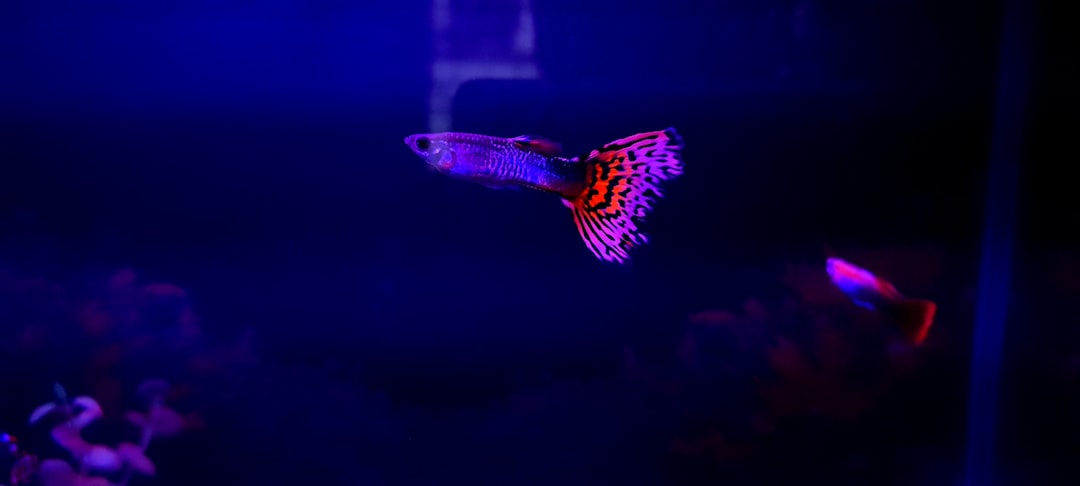
Modern RGB and WRGB fixtures give aquascapers independent control over channels most older fluorescent setups never offered. Intentional blue red spectrum tuning planted tank programming shifts plant colouration, growth habit and algae pressure in ways that dimmer-only adjustments cannot. This guide from Gensou Aquascaping at 5 Everton Park draws on five years of before-and-after comparisons across Singapore customer tanks running Chihiros WRGB II, Twinstar S, Week Aqua and ONF units.
What Plants Actually Absorb
Chlorophyll a and b peak in blue around 430 to 450 nanometres and in red around 660 to 680 nanometres. The gap in the middle, the green and yellow band, is largely reflected, which is why plants look green. Carotenoid accessory pigments capture blue-green, and anthocyanins in red stems are triggered by high blue and UV exposure. Understanding which pigment each colour serves is the foundation of deliberate tuning.
Default RGB Settings Are Not Optimal
Most fixtures ship with a balanced 100-100-100 white-red-green-blue profile that looks neutral and photographs well. It is rarely ideal for plant growth or display aesthetics. Chihiros A-Plus and WRGB II especially lean heavy on white channel brightness at expense of distinct red and blue peaks; tuning lifts colour considerably. Our Chihiros WRGB II review covers the out-of-box profile and suggested tweaks.
The Red-Heavy Aquascape Profile
For Dutch-style stems, Rotala macrandra and Ludwigia super red, boost red to 100 percent and drop white by 20 percent while holding blue at 70 to 80. The resulting spectrum looks slightly pink to the eye but renders red stems dramatically; leaves flush deeper crimson within two weeks. Watch your green plants in the same tank because they will look less vibrant; find a compromise or zone your fixture over specific plant groups. Our Rotala macrandra variants guide discusses variety-specific responses.
The Blue-Heavy Shrimp Profile
Blue-dominant settings look cooler, render cherry and crystal shrimp more vividly, and discourage green dust algae. Target blue at 100, white at 70, red at 50 to 60. Be cautious: high blue with low red tends to encourage black beard algae in tanks with moderate flow problems, so solve circulation first. Our BBA removal guide covers that precondition.
The Growth-First Profile
For tanks where the goal is carpet fill-in or stem propagation rather than showroom aesthetics, push white to 100, red to 100, blue to 90, green to 60. This mimics high noon tropical sunlight and maximises photosynthetic rate across most plants simultaneously. It is visually bright but slightly green-tinged. Use this profile for grow-out in hidden or secondary tanks and switch to an aesthetic profile once plants are established. See our high-tech planted tank setup.
Kelvin Temperature vs Channel Control
Older fixtures give you only a correlated colour temperature slider; newer ones expose individual channels. With CCT-only control, 6500 to 7500K approximates the growth-first profile and 8000 to 10000K leans blue. RGB channel control is strictly better because you can lift red without cooling the whole image. Our aquascape colour temperature guide explains how to reverse-engineer channel mixes from CCT numbers.
Avoiding the Green-Channel Trap
Green channel brightness does almost nothing for plant growth but dramatically affects how the aquascape looks to human eyes. Too little green and photos render yellow-blue; too much green washes out every plant. The sweet spot for most tanks sits at 40 to 70 percent green depending on aquascape style. Dutch tanks run lower green, iwagumi layouts run higher because the stone and sand need accurate rendering.
Algae Response by Spectrum
Green dust algae favours high blue and low red. Brown diatoms tolerate both but thrive at low overall PAR regardless of spectrum; see our brown diatom fix guide. Black beard algae appears where red is high and flow is low. Use spectrum as one lever but never treat it as a substitute for CO2 stability, nutrient dosing or circulation.
Documenting Your Settings
Screenshot or photograph your dimmer app after any change. Note the day and the trigger (new plants added, algae appearing, colour grading concern). Without this log you will tweak in circles because the human eye adapts to gradual shifts within hours. An explicit parameter log tied to your water parameter log is the single biggest improvement most tuners can make.
Singapore-Specific Notes
Local shops stock Chihiros, Twinstar, Week Aqua and ONF at competitive pricing; C328 Clementi and several Serangoon North shops carry demo units where you can see spectrum differences side by side. If ordering online, Shopee listings for these brands occasionally bundle the wrong driver for 230V Singapore mains, so verify voltage before checkout. Our plant LED spectrum comparison covers local availability.
When to Revert to Defaults
If plants decline across multiple species simultaneously after a channel change, you have likely overshot. Revert to the shipped profile, wait two weeks for recovery, then retune one channel at a time. Sudden full-spectrum swings stress plants the same way temperature shocks stress fish. Patience compounds; impatient tuners end up with tanks that look different every month and grow nothing consistently.
Related Reading



