
Snail Eggs in Fish Tank Guide: ID and Control
Waking up to jelly blobs on the glass is a rite of passage for every Singapore fishkeeper. Some of those clusters will hatch into hundreds of pest bladder snails; others will dry up because the species cannot reproduce in freshwater at all. Telling them apart in the first 24 hours saves weeks of downstream population work. This snail eggs in fish tank guide from Gensou Aquascaping at 5 Everton Park walks through visual identification, removal technique and biocontrol — including when to recruit assassin snails and when to wait it out.
Why Egg ID Matters Before You Act
Scraping every egg clutch you see is wasted effort if the species can’t breed in your water. Nerite eggs look alarming but never hatch in freshwater; bladder and ramshorn eggs absolutely will, and one missed clutch seeds the next generation. Spend thirty seconds identifying before reaching for the razor blade — you’ll save the nerites and target the pests only.
Nerite Eggs: White Sesame Seeds
Nerite eggs are small, hard, bright white and almost always laid singly or in tiny clusters on driftwood, glass and plant leaves. They need brackish water (SG 1.005 or higher) to hatch, so in a freshwater tank they remain dormant and eventually dissolve. Cosmetic removal with a razor blade or JBL Floaty II glass cleaner is the only action needed. Most keepers leave them on rocks and driftwood, where they blend in.
Mystery Snail Egg Clutches
Mystery snails (Pomacea bridgesii) lay dense pink or orange calcified clutches above the waterline, usually under the lid or on cover glass. They look like a berry cluster the size of a 20-cent coin. In Singapore the species is legal, but P. canaliculata is not — if you see a pink clutch in a tank you did not intentionally stock with mystery snails, identify the parent before deciding. Remove by scraping the clutch into a sealed bag before it dries and hatches in 2-3 weeks.
Ramshorn and Bladder Jelly Clutches
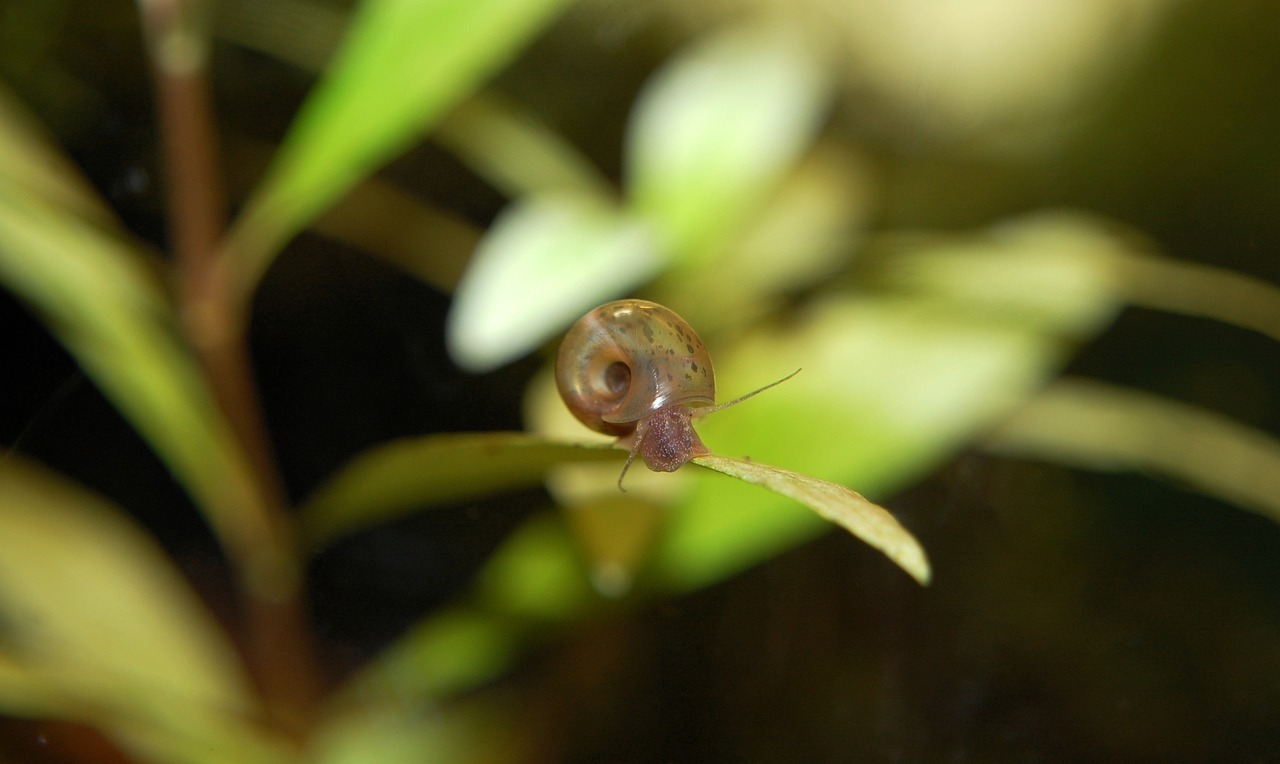
Ramshorn (Planorbella) and bladder (Physella acuta) snails lay translucent jelly clutches on glass, leaves and equipment. Ramshorn clutches are flat ovals with 10-30 embryos visible inside; bladder clutches are smaller, almost linear. Both hatch within 8-14 days at 28°C. A plastic card or razor does the physical removal; wipe the area and dispose of the jelly outside the tank, since embryos survive in mulm.
Malaysian Trumpet Live Birth
You will never find Malaysian trumpet eggs in your tank — the species is livebearing, releasing fully-formed juveniles from a brood pouch. If you notice pin-sized spiral shells in the substrate but no egg clutches, you are looking at trumpet offspring. Control the population by cutting feeding rather than hunting clutches.
Assassin Snails as Biocontrol
For an established ramshorn or bladder outbreak, assassin snails (Clea helena) out-perform chemical treatments and do not poison shrimp. Stock eight to twelve in a 60-litre tank; within three weeks they reduce the pest population by 80-90%. Assassins lay single translucent egg capsules on hardscape — these are welcome additions, not pests. Source them at SGD 4-6 from C328 or Carousell, or check the fish and livestock category.
Manual Removal Tools
A long-handled razor blade, a JBL LimCollect II Snail Trap baited with lettuce or zucchini, and a set of plastic tweezers cover 90% of removal work. Leave the trap overnight — fifty to eighty snails can be extracted in one session. Follow up with a VENY WZ-10 cleaner scraper for any clutches stuck to acrylic where razor blades would scratch.
Chemical Control: Use with Caution
Products like UP AQUA E-403 Snail Control or ISTA Snail Remover kill pest snails quickly but also harm desirable snails and stress shrimp. Reserve them for quarantine tanks or last-resort situations after manual removal and assassins fail. Always follow with a 50% water change and conditioner dose to remove residues.
Prevention on New Plants
Almost every infestation starts with a new plant from the shop. Quarantine all imports in a bucket for 48 hours, dip in a 1:19 bleach solution for 90 seconds, or soak in alum (potassium aluminium sulphate) at 3 g per litre for two hours. Tissue-culture plants from the live plants catalogue ship pest-free and skip the hassle entirely.
When to Leave Eggs Alone
Ramshorn and trumpet populations self-limit at the food supply ceiling — so if your feeding is disciplined, a stable baseline of 20-30 snails across a 100-litre planted tank is beneficial rather than harmful. Glass cleaners, substrate aerators, detritivores — they earn their spot. Remove eggs only if numbers climb beyond what the tank’s biofilm can support.
Singapore-Specific Hatch Rates
Tropical tank temperatures of 28-30°C accelerate every stage of the snail life cycle. Ramshorn clutches that take 14 days in a UK fishkeeper’s tank hatch in 8-10 here, and generations cycle every 6-8 weeks. Stay ahead by scraping eggs weekly during water changes rather than monthly, and the population never gets out of hand.
Related Reading



