
Mystery Snail Complete Care Guide: Pomacea Species
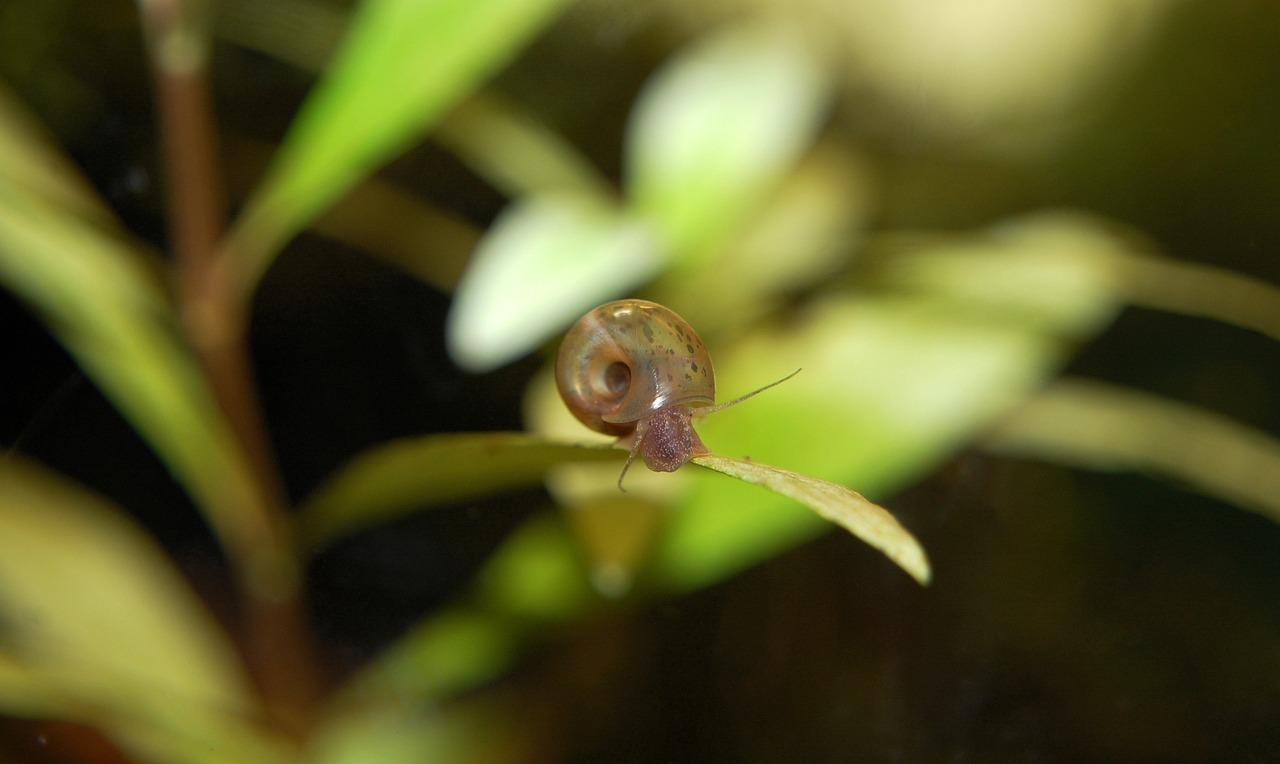
Mystery snails get their name from the way they periscope a long breathing siphon to the surface before sealing themselves against the glass for hours at a time. They are also mysteries in a regulatory sense — two superficially similar Pomacea species exist, and only one is legal to import into Singapore. This mystery snail complete care guide from Gensou Aquascaping at 5 Everton Park covers the biology, husbandry and legal sourcing of Pomacea bridgesii in local tank conditions, including the calcium fixes PUB tap water demands.
Species ID: P. bridgesii vs P. canaliculata
Two apple snails are routinely confused in the trade. Pomacea bridgesii (the mystery snail) has a rounder shell, less pronounced shoulder ridge, and does not eat healthy plants. P. canaliculata (the channelled apple snail) has an elongated shell with a deep ridge, grows faster, and devours live plants. Singapore’s NParks AVA classifies P. canaliculata as invasive — importing it is illegal. Only P. bridgesii is sold at reputable shops. Verify species before purchase every time.
Tank Size and Setup
A single mystery snail needs 20 litres; a small group of four comfortably fits in a 45-60 litre tank. They grow to 5-6 cm and produce more waste than smaller species, so filtration should be one size larger than the tank suggests. Secure a tight-fitting lid — mystery snails climb out and dry up on the floor with alarming regularity. The aquarium equipment range covers replacement lids and filter upgrades.
Water Parameters
Mystery snails tolerate pH 7.0-8.2, temperature 22-28°C and need dKH 4-8 for shell building. Singapore tap water arrives at KH 1-2, which is too soft. Add crushed coral to the filter at 200-400 g per 100 litres, or drop a Zoo Med Dr Turtle Calcium Block in the tank — it lasts 3-4 months and lifts both GH and KH. Retest weekly and dose the water care supplements as needed.
Colour Morphs Available Locally
Gold, ivory, magenta, blue and jade morphs all circulate in Singapore shops. Qian Hu keeps gold and ivory as baseline stock; Iwarna rotates specialty colours. Carousell breeders sometimes list high-colour blue or purple lines at premium prices. Expect SGD 4-8 per piece for standard morphs, SGD 10-15 for rarer blue or magenta. Check the Mystery Snail product listing for current shop availability.
Diet and Supplementation
Mystery snails are opportunistic omnivores. Biofilm, algae, detritus and soft decaying plant matter cover the baseline, but a mature tank alone doesn’t provide enough food for a 5 cm animal. Feed blanched zucchini slices weekly, plus Hikari Algae Wafers and occasional Hikari Sinking Wafers. They also snap up leftover fish food, so stock them in communities with sinking wafer feeders like corydoras.
Breathing Behaviour
Mystery snails are amphibious — they have both a gill for dissolved oxygen and a siphon for air breathing. Expect them to periscope to the surface every 10-15 minutes. A tank with the water level too close to the rim makes this hard; keep 3-5 cm of air gap between water and lid. Low dissolved oxygen drives them to the surface constantly; check aeration if surface trips become non-stop.
Breeding Calcified Pink Clutches
Mystery snails are sexual (not hermaphroditic), so you need a male and female for breeding. Courtship takes hours; the female climbs above waterline to lay a pink or orange calcified clutch the size of a 20-cent coin. Eggs hatch in 14-21 days at 28°C. Move unwanted clutches into a sealed plastic bag — they survive dry for 2-3 days and will hatch in water if dropped back. Removing within 24 hours is safer than waiting.
Tank Mates
Peaceful community fish — tetras, rasboras, guppies, corydoras, peaceful cichlids — ignore mystery snails. Avoid loaches (especially yoyo and clown), puffers, large cichlids and goldfish. Shrimp tanks pair beautifully; neocaridina ignore the snails entirely. In a betta tank, the snail is usually fine but occasionally a feisty male will nip the siphon, so monitor the first 48 hours.
Lifespan and Senescence
Mystery snails live 1-3 years typically, with good husbandry reaching 4. They slow down noticeably in the final 2-3 months of life — less movement, less feeding, more time sealed up. A dead snail produces a distinct sulphurous smell when decomposing; remove immediately to avoid ammonia spike. Check weekly by touching the operculum; a healthy snail retracts instantly.
Shell Damage Repair
Minor shell pitting regrows strong with improved calcium but the damaged section remains visible. Major cracks can be sealed with superglue for emergency triage, though the snail is usually fine with just improved water chemistry. Pair shell damage intervention with a full water care review — damage signals a parameter issue that will affect future snails too.
Related Reading



