
Can Plants Cycle an Aquarium? The Planted Tank Shortcut
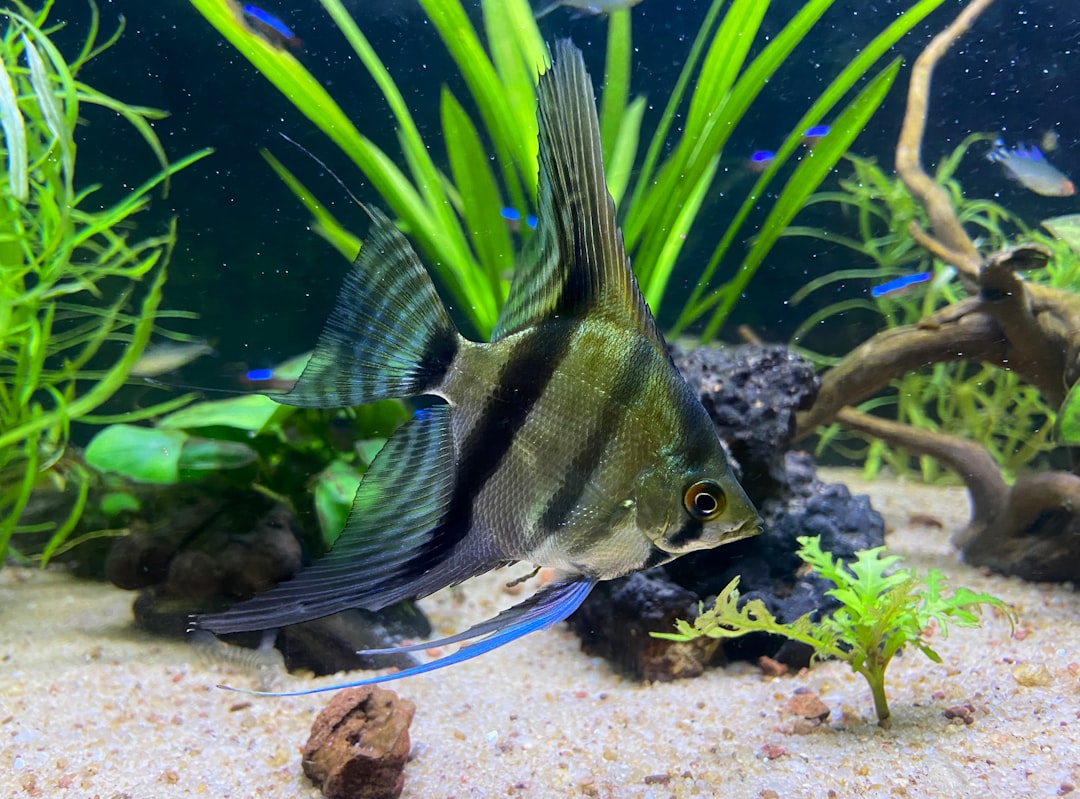
If you have ever set up a new aquarium, you know the frustration of the cycling process — weeks of waiting with an empty tank while beneficial bacteria slowly colonise your filter. But what if there were a faster, more natural approach? Aquarium cycling with plants offers exactly that, and it is a technique that every planted tank enthusiast should understand. This guide sits inside our broader Freshwater Aquarium Complete Beginner Hub reference.
At Gensou, we have set up hundreds of planted aquariums over the past two decades, and we regularly use plants to accelerate or even replace the traditional cycling process. This guide explains the science behind it, which plants work best, and how to do it safely in Singapore’s warm water conditions.
How Plants Absorb Ammonia
Most aquarists know that beneficial bacteria convert ammonia to nitrite, then nitrite to nitrate — the classic nitrogen cycle. What fewer realise is that aquatic plants bypass this chain entirely by absorbing ammonia (specifically ammonium, NH4+) directly through their leaves and roots.
In fact, plants actually prefer ammonium over nitrate as a nitrogen source. Absorbing ammonium requires less energy than converting nitrate back to ammonium for use in protein synthesis. This means that in a heavily planted tank, plants compete with bacteria for ammonia — and often win.
The result is a tank where ammonia never reaches dangerous levels, not because bacteria are processing it fast enough, but because plants are consuming it before it can accumulate. This is the biological basis for aquarium cycling with plants.
The Silent Cycle Concept
The term “silent cycle” describes a planted tank that never shows measurable ammonia or nitrite spikes. If you test the water daily, you will see zeroes across the board from day one — hence “silent.” The cycle is still happening in a biological sense (bacteria are still colonising surfaces), but the ammonia is being removed by plants before it can accumulate to detectable levels.
The silent cycle works because:
- Plants absorb ammonium immediately — no waiting for bacterial colonies to establish.
- Fast-growing plants have an enormous appetite for nitrogen compounds.
- In Singapore’s warm water (28-32 degrees Celsius), plant metabolism and growth rates are naturally elevated, increasing their ammonia absorption capacity.
For a detailed explanation of the traditional nitrogen cycle, see our nitrogen cycle guide.
Best Plants for Cycling
Not all plants absorb ammonia at the same rate. Fast-growing species with high nutrient demands are the most effective. Slow growers like Anubias and Bucephalandra, while lovely, simply do not consume enough nitrogen to cycle a tank on their own.
| Plant | Growth Rate | Ammonia Absorption | Notes |
|---|---|---|---|
| Hornwort (Ceratophyllum demersum) | Very fast | Excellent | Floats or anchored; thrives in SG temperatures |
| Water sprite (Ceratopteris thalictroides) | Very fast | Excellent | Can float or plant; produces many plantlets |
| Amazon frogbit (Limnobium laevigatum) | Fast | Very good | Floating; long roots absorb nutrients directly from water column |
| Duckweed (Lemna minor) | Extremely fast | Excellent | Highly effective but nearly impossible to remove once introduced |
| Salvinia species | Fast | Very good | Floating; easier to control than duckweed |
| Hygrophila polysperma | Fast | Very good | Hardy stem plant; excellent beginner choice |
| Rotala rotundifolia | Fast | Good | Beautiful colour; does well in SG water |
| Vallisneria species | Moderate-fast | Good | Spreads via runners; fills in quickly |
Floating plants are particularly effective because their roots dangle directly in the water column, absorbing dissolved ammonia without any substrate interaction.
How Many Plants Do You Need?
For a silent cycle to work, the tank must be heavily planted from day one. A few sprigs of Hygrophila tucked into a corner will not cut it. As a rough guide:
- At least 70-80 per cent of the substrate should be planted.
- Include a substantial amount of floating plants — enough to cover 30-50 per cent of the water surface.
- Use a mix of fast-growing stem plants and floaters for maximum ammonia absorption.
The concept is straightforward: the more plant mass you start with, the more ammonia your tank can safely handle from the outset. A sparsely planted tank with a few slow-growing Anubias will not achieve a silent cycle and will need traditional cycling instead.
Adding Fish Gradually
Even with heavy planting, you should still add fish gradually rather than fully stocking the tank on day one. This gives both the plants and the developing bacterial colonies time to keep up with the increasing bioload.
- Week 1-2: Add a small group of hardy fish (3-5 small species). Test ammonia and nitrite daily.
- Week 3-4: If parameters remain at zero, add a second group.
- Week 5+: Continue adding fish in small batches, testing between additions.
In Singapore’s warm water, bacterial colonies establish faster than in cooler climates. The combination of active plant uptake and accelerated bacterial growth means you can often reach full stocking within 3-4 weeks rather than the 6-8 weeks required for a traditional fishless cycle.
Combining Plants and Bacterial Starters
For the fastest possible results, combine heavy planting with a bacterial starter product (such as Seachem Stability, API Quick Start, or Dr Tim’s One and Only). This dual approach attacks ammonia from both sides:
- Plants provide immediate ammonia absorption from day one.
- Bacterial starters introduce live nitrifying bacteria that begin colonising your filter media immediately.
Adding mature filter media from an established tank (sometimes called a “seeded” filter) is even more effective than bottled bacteria. If you have a friend with a healthy aquarium, or if you maintain multiple tanks, transferring a portion of established media is the single best shortcut. Visit our filter guide for more on maintaining healthy biological filtration.
Risks of Skipping the Cycle
While the planted cycling method is effective, it is not foolproof. Understanding the risks helps you avoid problems:
- Plant die-off — If a significant number of plants melt, die or are removed, the tank loses its ammonia absorption capacity overnight. This can cause a sudden ammonia spike with fish already in the tank. Melt-prone species like Cryptocoryne are not ideal choices for the initial cycling period.
- Insufficient plant mass — A lightly planted tank cannot absorb enough ammonia to keep fish safe. Do not attempt a planted cycle with sparse planting.
- Overfeeding — Excess food decomposes and releases ammonia faster than plants can absorb it. Feed sparingly during the first month.
- False confidence — Zero ammonia readings do not guarantee that robust bacterial colonies have established. If you later remove a large portion of your plants (for an aquascape redesign, for example), the bacterial population may not be sufficient to handle the bioload alone.
The safest approach is to treat the planted cycle as a way to accelerate cycling rather than eliminate it entirely. Always test your water, always add fish gradually, and always have water conditioner on hand.
Planted Cycle vs Traditional Fishless Cycling
| Factor | Traditional Fishless Cycle | Planted Cycle (Silent Cycle) |
|---|---|---|
| Duration to first fish | 4-8 weeks | 1-2 weeks |
| Ammonia/nitrite spikes | Expected and monitored | Typically undetectable |
| Initial cost | Lower (ammonia source only) | Higher (many plants needed) |
| Complexity | Simple but slow | Moderate — requires plant knowledge |
| Risk if done incorrectly | Low (no fish at risk) | Moderate (fish are present early) |
| Long-term stability | Relies on bacteria | Dual system (plants + bacteria) |
Frequently Asked Questions
Can slow-growing plants like Anubias cycle a tank?
On their own, no. Slow-growing plants absorb ammonia at a rate far too low to prevent dangerous spikes. They can contribute to overall nitrogen uptake in a tank that also contains fast growers, but they should not be relied upon as the primary ammonia sink during cycling.
Do I still need a filter if I have lots of plants?
Yes. A filter provides mechanical filtration (removing debris), water circulation and surface area for beneficial bacteria. Even in a heavily planted tank, a filter is important for long-term stability. If your plants are ever removed, trimmed heavily or experience die-off, the bacterial colony in your filter becomes your safety net.
Will aquasoil affect the cycling process?
Yes. Many nutrient-rich aquasoils (such as ADA Amazonia) leach ammonia during their initial weeks. This is actually beneficial for cycling — the ammonia feeds both plants and bacteria. However, it also means ammonia levels can be higher than expected in the first week or two. Test daily and wait until ammonia stabilises before adding fish, even in a heavily planted setup.
Can I use this method for a shrimp tank?
Caridina shrimp are extremely sensitive to ammonia, so a planted cycle for a shrimp tank must be done with extra caution. We recommend cycling a shrimp tank for a full 4-6 weeks with heavy planting and no livestock, then testing thoroughly before introducing shrimp. Neocaridina shrimp are hardier and can tolerate the standard planted cycling approach described above.
Ready to set up a beautifully planted aquarium with a head start on cycling? Visit Gensou at 5 Everton Park for expert advice, a wide selection of aquatic plants, and everything you need to get your planted tank off to the fastest possible start.
Related Reading
- Boron Deficiency in Aquarium Plants: Twisted Tips and Stunted Growth
- Calcium Deficiency in Aquarium Plants: Twisted New Growth
- Magnesium Deficiency in Aquarium Plants: Symptoms and Solutions
- Manganese Deficiency in Aquarium Plants: Pale Patches Between Veins
- Aquarium Medications Safe for Plants: What to Use and Avoid



