
dGH and dKH Explained: Hardness Units Demystified
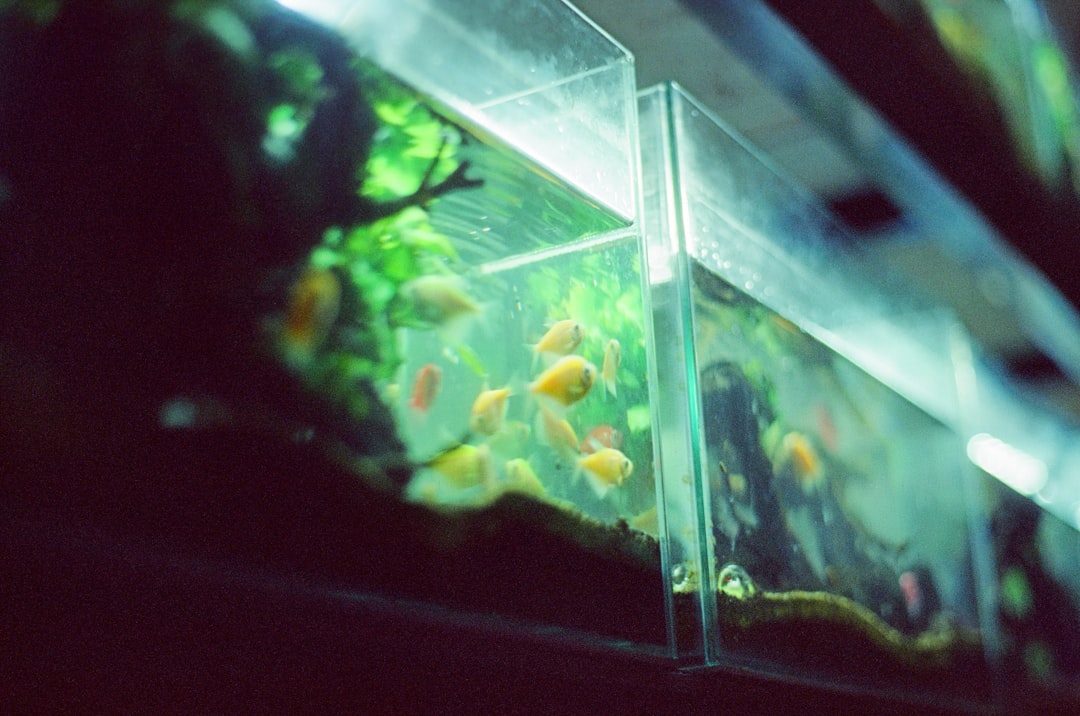
Getting dGH dKH aquarium explained in plain language is something many hobbyists struggle with, yet these two parameters are fundamental to keeping healthy fish, shrimp and plants. They sound similar and are often confused, but they measure entirely different things. At Gensou Aquascaping at 5 Everton Park, we spend a great deal of time helping customers understand these values so they can make informed decisions about their water chemistry.
What dGH Measures
dGH stands for “degrees of General Hardness” and measures the concentration of dissolved calcium and magnesium ions in your water. These divalent cations are essential for biological processes — calcium supports bone, shell and exoskeleton formation, while magnesium is a core component of chlorophyll in plants.
One degree of GH (1 dGH) is equivalent to approximately 17.9 milligrams per litre of calcium carbonate. Water with 0 to 4 dGH is classified as soft, 4 to 8 dGH as moderately hard, 8 to 12 dGH as hard, and above 12 dGH as very hard. Most tropical freshwater species thrive between 4 and 8 dGH.
What dKH Measures
dKH stands for “degrees of Carbonate Hardness” and measures the concentration of carbonate and bicarbonate ions in the water. Despite sharing the word “hardness,” KH has nothing to do with calcium or magnesium directly. Instead, KH functions as a pH buffer — it determines how resistant your water is to pH swings.
One degree of KH (1 dKH) also equals approximately 17.9 milligrams per litre of calcium carbonate equivalent. Water with higher KH resists pH drops more effectively, which is why KH is sometimes called the “buffering capacity” of the water. A KH of 3 to 5 dKH provides stable pH for most community tanks.
Why the Distinction Matters
Many hobbyists assume that if their GH is high, their KH must be high as well. This is not necessarily the case. You can have high GH with low KH if your water contains plenty of calcium and magnesium but few carbonates. Conversely, water treated with sodium bicarbonate can have high KH but low GH.
Understanding this distinction allows you to adjust each parameter independently. For example, a Caridina shrimp tank may need very low KH for a stable acidic pH while maintaining moderate GH for healthy moulting. Treating these as a single parameter would make such fine-tuning impossible.
Converting Between Units
Hardness can be expressed in several units depending on the test kit or region. The most common conversions are as follows. One dGH or dKH equals 17.9 milligrams per litre of calcium carbonate. To convert from parts per million to degrees, divide the ppm value by 17.9. Some European test kits use German degrees, which is the same as dGH and dKH. American kits may report results in ppm directly.
When reading product labels or online advice, always check which unit is being used. A recommendation of “GH 100” likely means 100 ppm, which is approximately 5.6 dGH — a very different number if you mistakenly interpret it as 100 dGH.
Ideal Ranges for Common Setups
Community tanks with tetras, rasboras and livebearers generally do well at 4 to 8 dGH and 3 to 6 dKH. Caridina shrimp tanks typically target 4 to 6 dGH and 0 to 1 dKH, using buffering substrate to maintain acidic pH. Neocaridina shrimp prefer 6 to 8 dGH and 3 to 5 dKH. African cichlid tanks may require 12 to 20 dGH and 10 to 15 dKH to replicate their natural rift lake conditions.
Planted tanks generally perform best at moderate levels — 4 to 8 dGH ensures adequate calcium and magnesium for plant health, while 2 to 5 dKH provides enough buffering to prevent dangerous pH crashes without making the water too alkaline for CO2 efficiency.
Singapore Tap Water Profile
Singapore’s PUB-treated tap water is generally soft, with GH around 1 to 4 dGH and KH around 1 to 3 dKH. This makes it naturally suitable for soft-water species but may require remineralisation for livestock that prefers harder conditions. The relatively low KH also means that pH can be somewhat unstable without buffering substrate or supplementation.
If you keep Neocaridina shrimp or community fish that prefer moderate hardness, add a GH and KH remineraliser to your water change water. Products designed for this purpose allow you to raise both values independently and consistently.
Testing and Maintenance Tips
Test GH and KH at least fortnightly, or weekly for sensitive species. Liquid drop test kits are the most accurate option for home use — count the drops until the colour change occurs, and each drop represents one degree. Record your results to track trends over time.
Consistency is more important than hitting a perfect number. Fish and shrimp adapt to a range of hardness values, but sudden swings cause stress and can trigger disease or moulting failures. When adjusting GH or KH, make changes gradually over several water changes rather than in a single large adjustment.
Bringing It All Together
Once you understand that dGH measures essential minerals and dKH measures buffering capacity, managing water chemistry becomes far less intimidating. Test regularly, adjust gradually, and match your parameters to the needs of your specific livestock and plants. For hands-on help with water testing and remineralisation, visit Gensou Aquascaping — we stock a full range of test kits and remineralisers and are always happy to walk you through the process.
Related Reading



