How to Aquascape for Whiptail Catfish: Sand, Wood and Leaf Litter
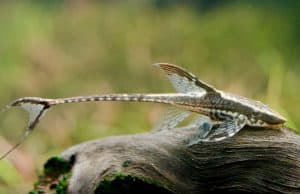
Whiptail catfish are among the most architecturally interesting fish in the freshwater hobby — elongated, flattened bodies, long whip-like caudal filaments in mature males, and a habit of draping themselves across driftwood and sand that turns them into living design elements. An aquascape designed specifically for Rineloricaria and related species needs to work with these behaviours rather than around them. Sand, open floor space, and a generous supply of driftwood are the foundations of a great whiptail catfish aquascape. This guide from Gensou Aquascaping at 5 Everton Park, Singapore covers the design and care considerations that make whiptail tanks both functional for the fish and beautiful to observe.
Understanding Whiptail Catfish Behaviour
Rineloricaria lanceolata, R. parva, and related species from South American river systems are benthic — they live at the bottom, spending most of their time resting on flat surfaces or pressed into crevices in wood. Males are territorial toward each other during breeding and use tubes or hollow wood pieces as spawning sites. Despite their passive appearance, whiptails are active at night, patrolling the substrate for biofilm, aufwuchs, and fine particulate matter.
Any aquascape designed for these fish must provide generous substrate area — at least half the tank floor should be open sand — and multiple pieces of driftwood at different heights and angles. A tank that is over-planted, over-stoned, or lacking open substrate forces the fish into cramped positions and prevents the natural display of their best characteristic: spreading across a piece of wood in full view.
Substrate: Sand Is Essential
Fine sand (0.3–1 mm grain size) is the correct substrate for whiptail catfish. Coarser gravel damages their ventral surfaces over time and prevents the natural bottom-resting posture. Pool filter sand or fine quartz sand in natural cream or brown tones is available at aquarium shops and hardware stores in Singapore for around $3–$5 per kg. Depth of 3–4 cm is adequate — whiptails do not burrow deeply.
Add a shallow layer of leaf litter across portions of the sand — Indian almond leaves, oak leaves, or dried banana leaves. Whiptails rest under and among leaves and graze the biofilm that develops on the leaf surfaces. Leaf litter also softens water slightly as it decomposes, releasing tannins that are beneficial for most South American catfish.
Driftwood: The Most Important Design Element
Driftwood is the centrepiece of any whiptail tank. Use pieces with a combination of flat resting surfaces and tube-like hollows — cholla wood (cactus skeleton) provides the hollow tube structure that males use as spawning caves, while larger flat pieces of Mopani or smooth river driftwood provide resting platforms. Position driftwood at various heights: some pieces lying flat on the substrate, others angled against the tank side or propped on rock, creating a multi-level landscape of resting options.
A specific requirement for breeding: provide hollow tubes 3–4 cm in internal diameter and at least 8–10 cm long for each male in the tank. Bamboo sections, PVC pipe sections, or natural hollow branches all work. Males will inspect and defend these sites; once a female deposits eggs inside, the male guards them through hatching and early fry development without assistance from the keeper.
Plant Choices in a Whiptail Setup
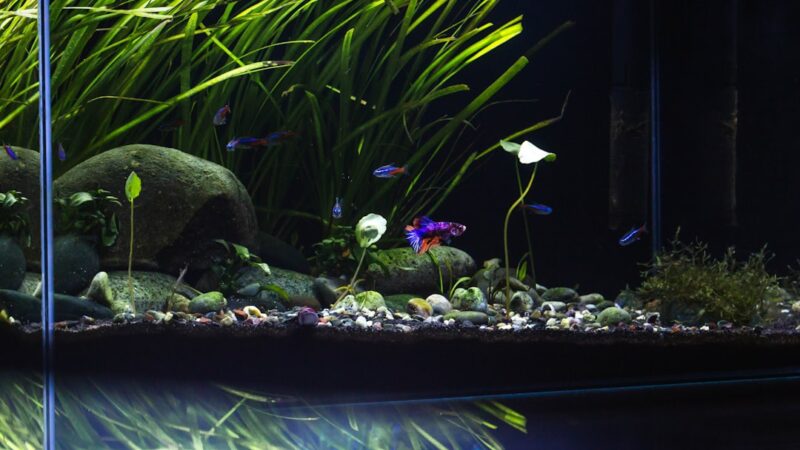
Plants should not dominate the substrate zone in a whiptail tank. Keep the foreground and midground open, with planting concentrated in the background. Vallisneria or Sagittaria subulata at the rear creates a planted curtain without encroaching on the open floor. Anubias attached to driftwood surfaces is ideal — robust, slow-growing, and appropriately associated with South American streambed aesthetics.
Avoid fine-textured carpeting plants like Hemianthus callitrichoides in the foreground — whiptails will uproot them while foraging. Broader-rooted, robust foreground plants like Cryptocoryne parva handle the occasional disturbance better.
Water Parameters and Tank Size
Whiptails prefer soft to moderately hard water: GH 4–10, KH 2–6, pH 6.5–7.5, temperature 22–28°C. Singapore PUB tap water is well within these parameters. A minimum tank size of 60 × 30 × 30 cm is recommended for a small group of 3–5 fish — whiptails need horizontal floor space more than tank height. Increase floor area for larger groups or multiple males.
Good oxygenation is important — use a spray bar return or slightly elevated surface agitation to maintain dissolved oxygen. In Singapore’s warm ambient temperatures, dissolved oxygen is lower than in cooler climates, making surface agitation more important than in temperate country setups.
Community Tank Compatibility
Whiptails are peaceful toward most similarly sized fish. Tetras, rasboras, danios, and peaceful cichlids like German rams are compatible. Avoid aggressive cichlids or large fish that harass bottom dwellers. Neocaridina shrimp can coexist in the same tank — whiptails are not predatory toward adult shrimp, though shrimplets may be taken opportunistically. A lightly stocked, well-planted tank with hiding spots allows shrimp and whiptails to coexist without major losses.
Feeding and Substrate Maintenance
Whiptails are biofilm and aufwuchs grazers — they eat the microscopic algae and organic matter that grows on hard surfaces. Supplement their natural grazing with sinking wafers (algae-based), blanched zucchini or cucumber, and occasional protein-based sinking foods. Feed after lights-out for best results, as they are primarily nocturnal feeders. Remove uneaten fresh vegetables within 24 hours to prevent water quality issues. A weekly gravel vacuum over the open sand areas, combined with a 25% water change, keeps the substrate from accumulating harmful mulm beneath the leaf litter layer.
Related Reading