
Ember Tetra Care Guide: The Perfect Nano Tank Fish
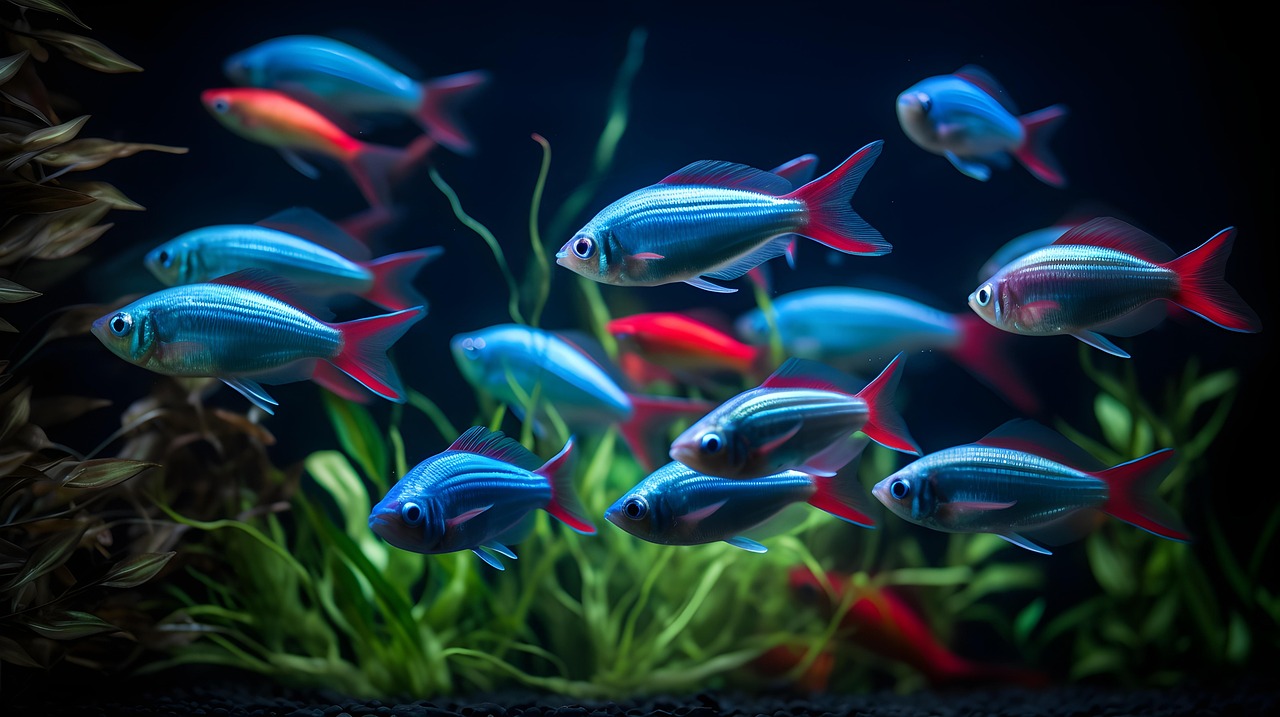
The ember tetra (Hyphessobrycon amandae) is one of the finest nano fish available to freshwater aquarists. Named for its warm, flame-like orange colouration, this tiny Brazilian tetra packs an extraordinary amount of visual impact into a body barely two centimetres long. Better yet for Singapore hobbyists, ember tetras tolerate warm water remarkably well, making them one of the best tetra species for our tropical climate. This ember tetra care guide covers everything you need to keep these glowing little fish thriving. This guide sits inside our broader Freshwater Aquarium Complete Beginner Hub reference.
Appearance and Origin
Ember tetras were first described in 1987 and are named after Amanda Bleher, the mother of the renowned ichthyologist Heiko Bleher. They originate from the Araguaia River basin in central Brazil, where they inhabit slow-moving, heavily vegetated waterways with soft, slightly acidic water.
The ember tetra’s defining feature is its warm orange to reddish-orange body colour. In optimal conditions — soft water, dark substrate, dense planting — their colour deepens to a rich, fiery amber. The fins carry the same warm tone, and the eye has a distinctive orange-red ring. Males tend to be slightly more vibrant than females, though both sexes display beautiful colouration.
| Attribute | Details |
|---|---|
| Scientific name | Hyphessobrycon amandae |
| Adult size | 1.5 – 2 cm |
| Lifespan | 2 – 4 years |
| Diet | Omnivore (micro foods) |
| Temperament | Peaceful, slightly shy |
| Minimum group | 8 |
Tank Size
One of the ember tetra’s greatest strengths is its suitability for nano tanks. Their tiny adult size means they have a genuinely small bioload, and a well-maintained nano aquarium can comfortably support a school.
Recommended Sizes
- Minimum: 20 litres for a school of 8 to 10
- Ideal: 30 to 40 litres for a school of 12 to 15
- Community tank: 60 litres or more when keeping with other species
Even in a compact HDB flat or a condo study desk, a beautifully aquascaped 20 to 30 litre nano tank with a school of ember tetras creates a stunning living display. These are fish that prove you do not need a massive aquarium to enjoy serious fishkeeping.
Water Parameters
Ember tetras prefer soft, slightly acidic water but are adaptable enough to thrive across a reasonable range of conditions. Crucially for Singapore, they handle warmth well.
| Parameter | Ideal Range | Notes |
|---|---|---|
| Temperature | 23 – 29 °C | Handles Singapore ambient temps well |
| pH | 5.5 – 7.0 | Slightly acidic preferred |
| GH | 2 – 10 dGH | Soft to moderately soft |
| KH | 1 – 6 dKH | Low to moderate buffering |
| Ammonia / Nitrite | 0 ppm | Standard requirement |
| Nitrate | Below 20 ppm | Regular water changes important |
With an upper temperature tolerance of 29 °C, ember tetras can handle Singapore’s ambient room temperatures of 28 to 30 °C without a chiller in most cases. During the hottest months (April to June), a small clip-on fan may be helpful, but these fish are significantly more heat-tolerant than neon tetras or many other popular tetras.
Singapore’s PUB tap water will benefit from some softening for ember tetras. Indian almond leaves, peat filtration, or mixing with RO water helps achieve the softer, more acidic conditions where their colours truly glow. Dechlorinate always — PUB water is treated with chloramine.
Tank Setup
Ember tetras look their absolute best in a well-planted aquarium with a natural, botanical aesthetic. The contrast between their warm orange bodies and lush green plants is one of the most pleasing combinations in aquascaping.
Ideal Setup Elements
- Substrate: Dark aquasoil — this enhances their colour dramatically. On pale substrates, embers look washed out
- Plants: Dense planting is essential. Stem plants (Rotala, Ludwigia, Pogostemon), mosses (Java moss, Christmas moss), and carpet plants (Monte Carlo, Marsilea) create the perfect environment
- Hardscape: Small pieces of driftwood and dragon stone create natural-looking compositions. Spider wood is particularly effective in nano tanks
- Floating plants: Salvinia, Amazon frogbit or red root floaters diffuse light and create the dappled, shaded conditions embers prefer
- Lighting: Moderate. Enough for plant growth but not overly bright — embers show their deepest colours under gentle lighting
- Filtration: A small sponge filter or nano hang-on-back filter with gentle output. Avoid strong flow that buffets these tiny fish
Feeding
The primary challenge in feeding ember tetras is their very small mouth. Standard-sized flakes and pellets are too large for them and must be crushed, or you need to source micro-specific foods.
Appropriate Foods
- Staple: Micro pellets (0.5 mm or smaller), finely crushed quality flakes
- Protein (2-3 times weekly): Frozen baby brine shrimp, cyclops, daphnia — these are ideal sizes for ember mouths
- Live foods: Vinegar eels, micro worms, freshly hatched brine shrimp — especially beneficial for conditioning and colour enhancement
- Powdered foods: Fry-grade powders work well for the smallest embers
Feed tiny amounts two to three times daily. In a nano tank, overfeeding is the fastest route to water quality problems. A good rule of thumb: if there is any food visible on the substrate 60 seconds after feeding, you have given too much.
Schooling Behaviour
Ember tetras are a shoaling species rather than a tight-schooling species. This means they prefer the company of their own kind and stay in a loose group, but they do not form the disciplined, synchronised formations seen in species like rummy nose tetras.
In a well-planted tank, a group of embers will spread out among the plants, with individuals exploring different areas while maintaining a general awareness of the group’s location. When startled, they tighten up briefly before dispersing again. This relaxed shoaling behaviour is actually one of their charms — the scattered warm dots of colour distributed across a green planted tank create a living impressionist painting.
Ideal Group Sizes
- Minimum: 8 (below this, they are noticeably timid and pale)
- Good: 12 to 15
- Spectacular: 20 or more in a larger tank
Planted Tank Compatibility
Ember tetras are a dream for planted tank enthusiasts. They are too small to uproot plants, too gentle to damage leaves, and their warm colouration complements virtually any aquascaping style.
They are particularly effective in:
- Nature-style aquascapes: Their warm colour provides a beautiful accent against green stem plants and mossy hardscape
- Iwagumi layouts: A school of embers adds life and warmth to the minimalist rock-and-carpet aesthetic
- Dutch-style planted tanks: They weave through dense plant groupings without disturbing anything
- Nano wabi-kusa: Their tiny size is proportional to small-scale aquascaping
If you are planning a planted aquascape and want a fish that enhances rather than compromises the layout, ember tetras are among the finest choices available. Gensou’s custom aquarium design service frequently incorporates ember tetras into planted aquascapes for exactly this reason.
Tank Mates
Ember tetras are extremely peaceful but also extremely small. Tank mate selection should prioritise equally gentle, small species.
Ideal Companions
- Chili rasboras — similar size and temperament, beautiful colour contrast
- Otocinclus catfish — gentle and occupy different zones
- Pygmy corydoras — tiny bottom-dwellers that complement embers perfectly
- Cherry shrimp — a classic nano tank combination
- Amano shrimp — peaceful and useful for algae control
- Nerite snails — algae eaters that ignore fish entirely
- Endler guppies — small and peaceful, though watch that Endlers do not outcompete embers for food
Avoid
- Any fish large enough to eat them — and at 2 cm, that includes many common community fish
- Boisterous species that create strong water movement or compete aggressively for food
- Aggressive species of any size — even a small aggressive fish can terrorise embers
Breeding
Ember tetras can breed in a well-maintained aquarium, though raising the fry requires some effort due to their minuscule size at birth.
Spawning Conditions
- Soft, acidic water (pH 5.5-6.5, GH below 5)
- Temperature 26 to 28 °C
- Dense fine-leaved plants or spawning mops for egg deposition
- Condition breeders with live foods for one to two weeks
The Process
Ember tetras are egg scatterers. The female deposits small, adhesive eggs among fine-leaved plants, particularly Java moss. A spawning event may produce 20 to 40 eggs. The adults do not provide parental care and will eat eggs if they find them, so dense planting or a separate breeding tank is necessary.
Eggs hatch in 24 to 36 hours. The fry are extremely tiny — nearly invisible to the naked eye — and require infusoria or liquid fry food for the first week before graduating to newly hatched baby brine shrimp. Growth is slow but steady. Fry develop their characteristic orange colouration over several weeks.
In a heavily planted nano tank with no predators, some fry may survive without any intervention. Many ember tetra keepers discover juvenile fish appearing in their tanks seemingly from nowhere — a pleasant surprise that speaks to the self-sustaining potential of a well-balanced setup.
Frequently Asked Questions
Can ember tetras live in a 10-litre tank?
While ember tetras are tiny, a 10-litre tank is at the very limits of viability. Water parameters in such a small volume fluctuate rapidly, and even a small school of 6 to 8 fish produces enough waste to challenge the biological filtration. A 20-litre tank is the practical minimum — it provides enough stability and swimming space for a comfortable school while remaining a compact nano setup.
Why are my ember tetras pale?
Pale colouration in ember tetras is usually caused by one or more of: stress from too few companions (keep at least 8), bright lighting without shade from floating plants, pale or light-coloured substrate, hard and alkaline water, poor diet lacking colour-enhancing foods, or illness. Address these factors systematically. Switching to a dark substrate and adding floating plants often produces the most dramatic colour improvement.
Do ember tetras need a heater in Singapore?
In most Singapore homes, no. Ambient room temperatures of 28 to 30 °C are within the ember tetra’s comfortable range. A heater is only necessary if your tank is in a heavily air-conditioned room where temperatures consistently drop below 23 °C. For most HDB flats and condos, the natural warmth is sufficient and actually ideal for these tropical fish.
How do ember tetras compare to neon tetras for a nano tank?
Ember tetras are significantly better suited to nano tanks than neon tetras. They are smaller (2 cm vs 3-4 cm), tolerate Singapore’s warm temperatures much better (up to 29 °C vs 26 °C for neons), and produce less waste. Neon tetras really need a 40-litre tank minimum and a chiller in Singapore, whereas ember tetras thrive in a 20-litre nano setup at room temperature.
Ready to create a stunning nano aquascape with ember tetras? Gensou designs and builds custom planted aquariums of all sizes, from desktop nano tanks to full-wall installations. Contact us to bring your aquascaping vision to life.
Related Reading
- Celestial Pearl Danio vs Ember Tetra: Which Nano Fish to Choose
- Chili Rasbora vs Ember Tetra: Tiny Red Nano Fish Compared
- How to Breed Ember Tetras: From Conditioning to Free-Swimming Fry
- Ember Tetra Tank Mates: Best Companions for a Warm Nano Tank
- Ember Tetra vs Strawberry Rasbora: Tiny Red Fish Compared



