
Favia and Favites Brain Coral Care: Moon Coral Varieties
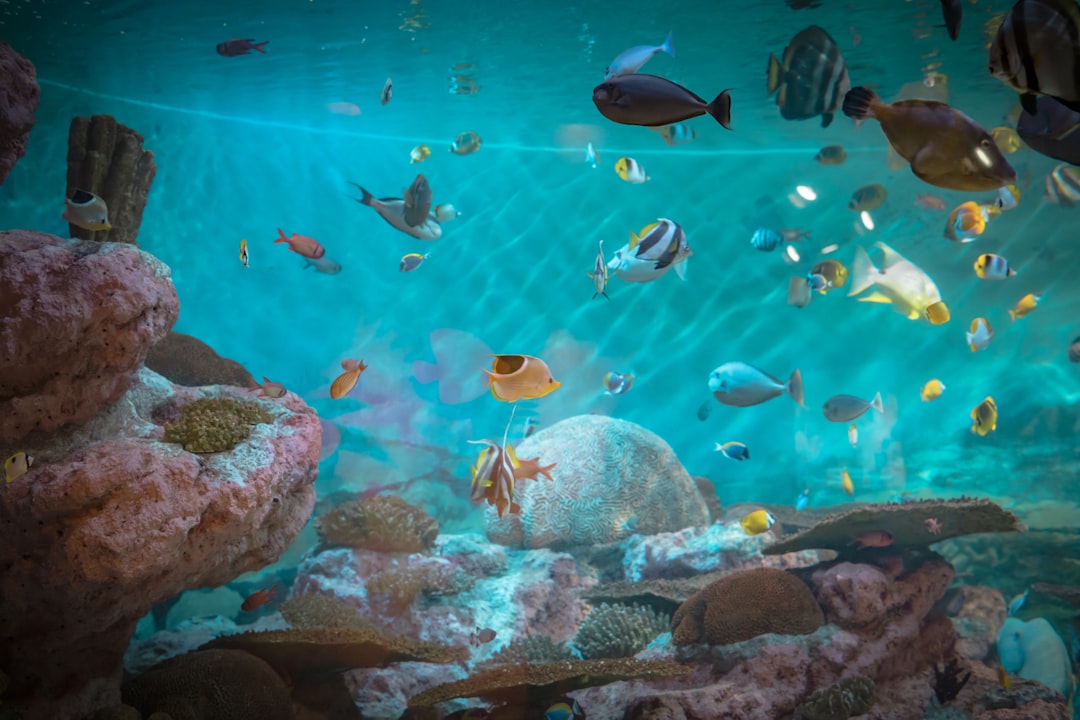
Moon coral colonies encrust rockwork like cobblestone pavements, each corallite glowing as a distinct pixel under actinic light. Favia and Favites are the twin genera behind this look, differing mainly in whether corallites share walls or stand separately. This favia favites brain coral care guide from Gensou Aquascaping at 5 Everton Park distils practical husbandry for Singapore mixed-reef keepers, with particular attention to the sweeper-tentacle aggression that makes placement critical in any tank under 200 litres.
Quick Facts
- Scientific names: Favia spp. (plocoid, separate walls), Favites spp. (cerioid, shared walls)
- Care level: moderate, classified as LPS
- Lighting: PAR 80-150, moderate
- Flow: moderate, turbulent
- Temperature: 24-26 C, alkalinity 8-9 dKH
- Sweeper tentacles extend up to 15 cm after dark
- Typical Singapore price: $60-150 per 5-7 cm colony
Favia vs Favites
The classic distinction is wall structure. Favia colonies are plocoid, meaning each corallite has its own wall and small gaps separate them. Favites colonies are cerioid, with corallites sharing walls in a honeycomb pattern. Care is essentially identical, and Singapore shops frequently lump both under “moon coral” or “brain coral” regardless of genus.
Tank Placement
Mid-level rockwork suits these corals best. Leave generous clearance because their sweeper tentacles can exceed 15 cm when extended at night and will sting anything in reach, including other brain corals. Orient the colony so the growth face is perpendicular to the primary flow direction.
Water Parameters
Keep alkalinity 8-9 dKH, calcium 420-440 ppm, magnesium 1300 ppm. Nitrate 3-10 ppm and phosphate 0.03-0.08 ppm support pigment expression. Moon corals handle slightly higher nutrient levels than Acropora, which makes them a natural step-up LPS for hobbyists coming from soft-coral systems.
Lighting
Moderate light at PAR 80-150 is ideal. Blue-heavy spectra dramatically enhance the fluorescent green, orange, and red morphs that drive pricing. Avoid placing moon corals directly under a high-output fixture without ramping; acclimate new purchases over 3 weeks using a shaded plug or floating acrylic sheet.
Flow
Moderate and turbulent. Direct flow deflates the tissue and stresses the polyp; dead calm lets detritus accumulate between corallites. A random wave pattern from a gyre pump at 50-60% capacity covers most nano and mid-size Singapore tanks adequately.
Feeding
Each corallite is a tiny mouth, and target feeding is straightforward. After lights dim, short feeding tentacles appear across the entire colony. Use a pipette to apply mysis, chopped prawn, or LPS pellets. Weekly feeding is enough to drive visible growth, and the inflated flesh becomes noticeably thicker over two to three months.
Sweeper Tentacle Management
This is the key Favia/Favites handling quirk. Sweeper tentacles are long, solitary, whip-like structures that emerge after dark, distinct from the shorter feeding tentacles. They carry powerful nematocysts and will burn neighbouring corals. Observe the tank with a blue moonlight for a few nights after introducing the colony and adjust placement if sweepers reach active territory.
Compatibility
Peaceful fish are fine. Watch for coral-nipping butterflies, large angels, and rabbitfish. Sweeper-tentacle aggression means other brain corals, frogspawn, torch, and acans need 15 cm of buffer minimum. Zoanthids and palys placed on the same rock will be stung and overgrown.
Common Problems
Brown jelly and bacterial infection follow mechanical damage or parameter crashes. Tissue recession along one edge signals a stressor, often an allelopathy issue from nearby leathers. Increase carbon, check flow, and feed the affected zone directly to encourage regrowth.
Buying in Singapore
C328, Colourful Aquarium, and the Serangoon North cluster all stock moon corals at varying grades. Premium Aussie-collected morphs priced $150+ reward careful quarantine. Inspect for clean corallite rims, no brown jelly film, and uniform inflation. Dip every new purchase; moon corals commonly arrive with flatworms and bristleworms lodged between corallites. Our dipping protocol covers the workflow.
Related Reading
Continue expanding your brain-coral expertise with these Gensou Aquascaping Singapore guides:



