
Green Neon Tetra Care Guide: The Subtle Beauty for Planted Tanks
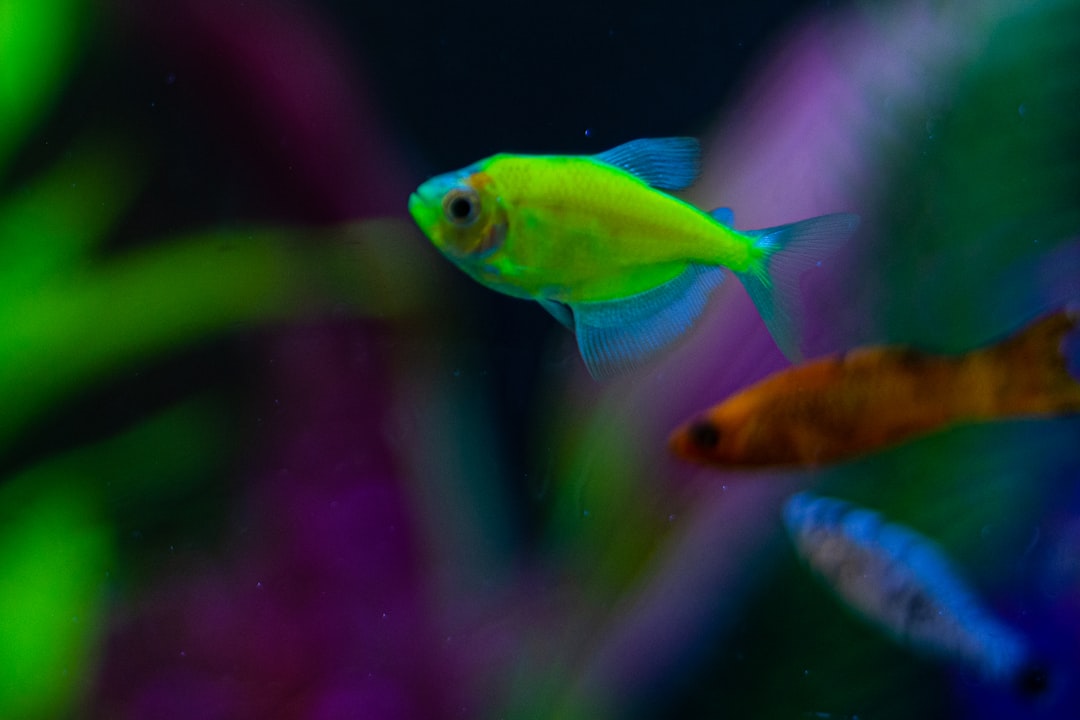
The green neon tetra (Paracheirodon simulans) is the quietest member of a famous family. Overshadowed by the ubiquitous neon tetra and the striking cardinal tetra, this diminutive fish offers something neither of its relatives can match — a delicate, shimmering blue-green stripe that glows like neon tubing under aquarium lighting. For aquascapers seeking a subtle, natural aesthetic in their planted tanks, the green neon tetra is an outstanding choice. This guide sits inside our broader Tropical Fish Species Master Index reference.
At Gensou, we consider the green neon tetra one of the best-kept secrets in the Singapore hobby. It is hardier in our warm climate than the standard neon tetra, stunning in large schools, and perfectly proportioned for nano and mid-sized planted aquariums. This guide covers everything you need to know to keep them thriving.
Identification: Green Neon vs Neon vs Cardinal
The three Paracheirodon species are frequently confused, and the differences matter because each has slightly different care requirements. Understanding what sets the green neon apart will help you provide the best care.
| Feature | Green Neon Tetra | Neon Tetra | Cardinal Tetra |
|---|---|---|---|
| Scientific Name | P. simulans | P. innesi | P. axelrodi |
| Adult Size | 2-2.5 cm | 3-3.5 cm | 3.5-4 cm |
| Blue-Green Stripe | Dominant, spans full body length | Extends from nose to adipose fin | Extends from nose to tail |
| Red Colouration | Minimal — faint blush on lower body | Extends from mid-body to tail | Extends full length of lower body |
| Overall Impression | Blue-green dominant, subtle | Equal blue and red | Vivid red and blue |
| Warm Water Tolerance | Good (to 30 °C) | Moderate (prefers below 26 °C) | Good (to 30 °C) |
The key visual difference is that the green neon tetra appears predominantly blue-green with very little red. Under aquarium lighting, a school of green neons creates an almost electric blue-green shimmer that is quite distinct from the red-and-blue flash of neons or cardinals. They are also noticeably smaller, making them ideal for nano tanks and delicate aquascapes where larger fish would look out of proportion.
Wild-Caught vs Captive-Bred
Unlike neon tetras, which are overwhelmingly farm-raised, the majority of green neon tetras in the trade are wild-caught from the upper Rio Negro basin in Brazil and Colombia. This has several practical implications for their care.
- Acclimation — wild-caught fish need careful acclimation to aquarium conditions, particularly if your water chemistry differs significantly from their native soft, acidic water
- Hardiness — paradoxically, wild-caught green neons are often hardier than farm-bred neon tetras, which are frequently weakened by mass-production practices and neon tetra disease (Pleistophora hyphessobryconis)
- Colouration — wild-caught specimens typically display more vivid, natural colouration than captive-bred equivalents
- Availability — supply can be seasonal, as collection in the wild is dependent on water levels and export quotas
Captive-bred green neon tetras are becoming more available in the Asian market, and these adapt more readily to a wider range of water conditions. When purchasing, ask your supplier about the origin of the fish — this information helps you tailor acclimation procedures.
Tank Size and Setup
Green neon tetras are tiny fish, but they are active mid-water swimmers that benefit from horizontal swimming space. A minimum of 40 litres is suitable for a small school, though 60-80 litres is preferable and allows for a larger, more visually impressive group.
The Ideal Planted Tank Setup
Green neon tetras look their absolute best in planted aquascapes. Their blue-green iridescence contrasts beautifully against lush green plants and dark substrates. Consider the following elements:
- Substrate — dark aquasoil (ADA Amazonia, Tropica Aquarium Soil) to enhance colouration and lower pH
- Background plants — rotala, ludwigia or other stem plants for a natural backdrop
- Mid-ground — cryptocorynes, bucephalandra or anubias attached to driftwood
- Foreground — monte carlo or dwarf hairgrass carpet to complete the aquascape
- Driftwood — provides visual anchoring and releases beneficial tannins
Moderate lighting suits green neon tetras better than intense illumination. Under subdued light, their iridescent stripe appears more vivid as the fish feel more confident and spend more time in open water.
Need help designing a planted tank for green neon tetras? Our custom aquarium service specialises in creating stunning aquascapes tailored to your space and preferences.
Water Parameters for Singapore
Green neon tetras naturally inhabit extremely soft, acidic blackwater environments. While they do not require such extreme conditions in captivity, they do appreciate water on the softer, more acidic side of the spectrum.
| Parameter | Ideal Range | Singapore Tap Water |
|---|---|---|
| Temperature | 24-30 °C | 26-30 °C (no heater needed) |
| pH | 4.5-6.5 (ideal), up to 7.5 (acceptable) | 7.0-8.0 (may need lowering) |
| GH | 1-8 dGH | 1-4 dGH (naturally soft — ideal) |
| KH | 0-4 dKH | 1-3 dKH (acceptable) |
| Ammonia / Nitrite | 0 ppm | Must cycle tank first |
| Nitrate | Below 20 ppm | Keep low with regular changes |
Singapore’s naturally soft tap water is actually an advantage for green neon tetras. The main adjustment is pH — our tap water tends to sit at pH 7-8, while green neons prefer it lower. An active aquasoil substrate will naturally buffer pH downward into the 6.0-6.5 range, which is perfectly acceptable. Adding driftwood and Indian almond leaves further helps acidify the water.
Crucially for Singapore hobbyists, green neon tetras tolerate temperatures up to 30 °C far better than standard neon tetras, which become stressed and disease-prone above 26 °C. This makes green neons a much more practical choice for our warm climate, especially for hobbyists who do not use chillers.
Always treat tap water with a chloramine-neutralising conditioner before use. PUB water contains chloramine, which is more persistent than chlorine and will not dissipate by simply letting water sit overnight.
Schooling Behaviour
Green neon tetras are obligate shoaling fish that must be kept in groups. We recommend a minimum of fifteen individuals. This number may sound high, but their tiny size means even fifteen fish have a negligible impact on bioload.
In a proper school, green neon tetras display mesmerising coordinated movement. They drift through the mid-water column in a loose cloud, their iridescent stripes catching the light as they turn in unison. The visual effect of twenty to thirty green neons gliding through a densely planted aquascape is one of the most beautiful sights in the hobby.
Small groups of fewer than eight individuals tend to be skittish, hide constantly and show washed-out colour. The investment in a larger school pays dividends in both aesthetics and fish welfare.
Feeding and Nutrition
Green neon tetras have tiny mouths and require appropriately sized food. Standard tropical flakes are often too large and must be crushed, making micro-formulated foods a better staple option.
- Staple — micro pellets or crushed flake (Hikari Micro Pellets, Sera Micron, or similar)
- Frozen foods — baby brine shrimp, cyclops, daphnia (thaw and rinse before feeding)
- Live foods — baby brine shrimp, micro worms, vinegar eels (excellent for conditioning)
- Supplementary — freeze-dried tubifex, spirulina powder
Feed small amounts once or twice daily. Green neon tetras are not aggressive feeders and can be outcompeted by faster or larger tank mates at feeding time. If this is a concern, feed at multiple spots in the tank or use a feeding ring to ensure the tetras get their share.
Compatible Tank Mates
Given their diminutive size, tank mate selection should prioritise peaceful, similarly sized species. Any fish large enough to fit a green neon tetra in its mouth will eventually do so.
Excellent Companions
- Other small tetras — ember tetras, chili rasboras
- Rasboras — harlequin rasboras, mosquito rasboras
- Pygmy corydoras (Corydoras pygmaeus, C. habrosus)
- Otocinclus
- Small peaceful shrimp — cherry shrimp, Amano shrimp
- Nerite snails
- Sparkling gouramis
Tank Mates to Avoid
- Angelfish (will eat green neons once they grow)
- Larger barbs or cichlids
- Aggressive or territorial species
- Large predatory shrimp
Blackwater Compatibility
Green neon tetras are arguably the quintessential blackwater aquarium fish. In nature, they inhabit the tea-stained waters of the Rio Negro, where pH can drop below 5.0 and the water is stained dark amber by decomposing leaf litter.
A blackwater setup brings out the very best in green neon tetras. The tannin-stained water makes their iridescent stripe glow even more brilliantly, and the acidic conditions promote better health and more natural behaviour. Key elements for a blackwater green neon tank include:
- Indian almond leaves — release tannins and gradually lower pH
- Driftwood — Malaysian driftwood or mopani for additional tannins
- Peat filtration — optional, for further water softening
- Minimal hardscape — a naturalistic arrangement mimicking a forest stream floor
For a complete guide to creating this type of environment, see our blackwater aquarium setup guide.
Frequently Asked Questions
Are green neon tetras better than neon tetras for Singapore?
In many ways, yes. Green neon tetras tolerate temperatures up to 30 °C comfortably, whereas standard neon tetras become stressed and susceptible to neon tetra disease above 26 °C. Singapore’s ambient temperature of 28-32 °C makes green neons the more practical choice for hobbyists without a chiller. For a detailed comparison, see our neon tetra care guide.
How many green neon tetras should I keep?
We recommend a minimum of fifteen. Their tiny size (2-2.5 cm) means even a large school produces minimal bioload. In a 60-litre planted tank, a school of twenty is entirely manageable and creates a far more impressive visual display than a small group of six or eight.
Can green neon tetras be kept with cardinal tetras?
Yes, the two species can coexist peacefully. However, the size difference means they will not school together. Many aquascapers prefer to keep just one species in a larger group for a more cohesive, natural appearance. If you do mix them, ensure each species has enough members to form its own school.
Do green neon tetras breed in captivity?
Breeding green neon tetras is challenging but possible. They are egg scatterers that require very soft, acidic water (pH below 5.5, near-zero hardness) to trigger spawning. The eggs are light-sensitive and must be kept in darkness for the first few days. Most hobbyists enjoy green neons as display fish rather than breeding projects.
Add Green Neon Tetras to Your Aquascape
Few fish complement a planted aquarium as elegantly as a large school of green neon tetras. Their shimmering blue-green presence brings life and movement to an aquascape without overwhelming the design.
Visit Gensou at 5 Everton Park to see green neon tetras in our display tanks, or contact us to discuss availability and stocking advice for your planted aquarium. Our team has over twenty years of experience helping Singapore hobbyists build beautiful, thriving aquariums.
Related Reading



