
Guppy Tank Mates: Best Companions for a Peaceful Community
Guppies are the quintessential community fish, but not every species makes a peaceful neighbour. This guppy tank mates best companions guide from Gensou Aquascaping Singapore — with over 20 years of hands-on experience at 5 Everton Park — walks you through the top choices, risky pairings, and stocking principles that keep every inhabitant stress-free. Temperature compatibility in Singapore’s warm climate simplifies the selection considerably.
What Makes a Good Guppy Tank Mate
Three criteria matter most: similar temperature tolerance (24–28 °C), peaceful temperament, and a mouth too small to swallow adult guppies. Fin-nippers are an absolute no — male guppy tails are irresistible targets for species like tiger barbs and serpae tetras. Matching swimming zones (top, mid, bottom) also distributes activity across the tank and reduces territorial overlap.
Top Bottom-Dwelling Companions
Corydoras catfish are among the safest guppy tank mates. Species like Corydoras pygmaeus, C. habrosus, and C. paleatus stay on the substrate, ignore guppies entirely, and animate the lowest layer of the tank. Keep them in groups of six or more — solitary corydoras become reclusive and stressed.
Kuhli loaches (Pangio kuhlii) offer another bottom-dwelling option. These slender, eel-like fish burrow into fine substrate and emerge during feeding. They tolerate Singapore’s ambient water temperatures well and coexist with guppies without issue. Otocinclus catfish serve double duty, quietly grazing algae off glass and plant leaves while posing zero threat to guppies or their fry.
Mid-Water Schooling Fish
Harlequin rasboras (Trigonostigma heteromorpha) are a classic pairing — peaceful, hardy, and readily available from local shops at $1–$2 each. Ember tetras (Hyphessobrycon amandae) add warm orange tones without any nipping tendency. Celestial pearl danios (Danio margaritatus) bring pattern variety, though they prefer slightly cooler water at 22–25 °C, which may require a fan in Singapore.
Endler’s livebearers (Poecilia wingei) share guppies’ hardiness and colour intensity. However, they hybridise freely with guppies if both sexes are present. To keep lines pure, stock only one sex of either species — all-male displays work beautifully without the risk of crossbreeding.
Shrimp and Snails
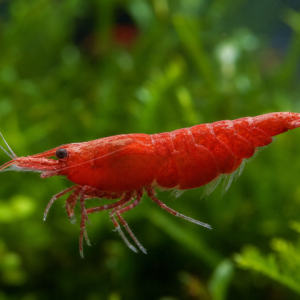
Amano shrimp (Caridina multidentata) are large enough at 4–5 cm to avoid predation by adult guppies and serve as excellent algae crew. Neocaridina shrimp (cherry, yellow, blue varieties) coexist in densely planted tanks, though guppies will pick off newborn shrimplets. If you want a self-sustaining shrimp colony alongside guppies, provide heavy moss coverage.
Nerite snails handle algae on hard surfaces and cannot reproduce in fresh water, preventing population explosions. Mystery snails are engaging to watch but produce significant waste — factor their bioload into your filtration planning.
Species to Avoid
Tiger barbs, serpae tetras, and Buenos Aires tetras are notorious fin-nippers that shred guppy tails within days. Angelfish grow large enough to eat adult guppies and should never share a community tank with them. Bettas — particularly males — view guppy tails as a rival’s fins and react aggressively. Even female bettas pose a risk in smaller setups.
Chinese algae eaters (Gyrinocheilus aymonieri) seem harmless as juveniles but become territorial and harass tank mates as they mature. Avoid any species known to grow aggressive with age.
Stocking Density and Tank Size
A 60-litre tank supports a community of 8–10 guppies plus a school of 6 corydoras or rasboras comfortably. Pushing beyond this strains filtration and increases aggression. Invest in a filter rated for at least 1.5 times your tank volume, and perform weekly 25 % water changes with dechloraminated tap water.
For larger communities, 100–120 litres opens up more options and provides a buffer against water quality swings. In Singapore, tanks of this size fit well in HDB living rooms on a sturdy aquarium cabinet.
Building a Balanced Community
Start with your guppies, let the tank stabilise for two weeks, then introduce companions gradually — one species at a time, with a week between additions. This approach lets the biological filter adapt and allows you to spot incompatibility early. Quarantine all new arrivals for at least a fortnight before adding them to the main display.
At Gensou Aquascaping, we find that the best community tanks are not the most crowded — they are the most thoughtfully stocked. Pick three or four compatible species, give each enough numbers to behave naturally, and the result is a vibrant, harmonious display.
Related Reading
- Guppy Care Guide: Breeding, Colours and Tank Setup
- Guppy Breeding for Beginners: Fry Care, Genetics and Colour Lines
- 20 Most Colourful Tropical Fish for Freshwater Aquariums
- How to Aquascape an Endler and Guppy Display Tank: Colour and Flow
- Prettiest Freshwater Fish for Aquariums: Beauty in Every Size



