
Java Fern FAQ: Browning Reproduction Attachment
Microsorum pteropus is the most forgiving stem of foliage in the planted-tank world, yet beginners still kill it by burying the rhizome. The java fern faq below collects the eleven questions our staff hear most often at the bench. This guide from Gensou Aquascaping at 5 Everton Park covers the everyday rhizome rot, browning crowns and attachment failures that drive returns, and this guide answers the eleven questions Singapore aquarists ask most about java fern faq care.
Why Are My Java Fern Leaves Turning Brown?
Brown patches on java fern almost always trace to one of three causes: nutrient deficiency, melt during transition, or rhizome rot from substrate burial. Translucent brown blotches mid-leaf usually mean potassium or nitrogen shortfall. Crispy brown edges indicate light burn from running 8+ hours at full intensity. Use a complete liquid fert from the water care and treatment range three times weekly and trim affected leaves at the rhizome to redirect energy.
Can I Plant Java Fern in the Substrate?
No. Burying the rhizome — the green-brown horizontal stem that the leaves and roots emerge from — kills java fern within four to eight weeks as the rhizome rots from prolonged anaerobic contact. Tie or glue the rhizome to driftwood or lava rock, with roots free to dangle into the substrate. The roots are the anchor; the rhizome must stay exposed to oxygenated water at all times.
How Do I Attach Java Fern to Wood or Stone?
Three methods work. Cyanoacrylate gel (super glue) bonds the rhizome instantly and is reef-safe; a single dab under the rhizome holds. Cotton or fishing thread wrapped lightly around the rhizome lasts six to eight weeks, by which point the roots have gripped naturally. Dark cotton thread is invisible against driftwood. Avoid plastic-coated wire — it pinches the rhizome and causes localised rot.
Does Java Fern Need CO2?
No. Java fern grows steadily without injected CO2, which is why it dominates low-tech tanks across Singapore. Adding pressurised CO2 from aquarium equipment roughly doubles the growth rate and produces denser, deeper-green foliage, but it is never a requirement. If you run a CO2 system primarily for stem plants, your java fern will quietly thank you.
How Much Light Does Java Fern Need?
Java fern thrives on 30-50 PAR at substrate level, which equates to a budget LED bar running six to eight hours daily over a 60-litre tank. Higher light without CO2 and ferts triggers black spot algae on the older leaves. Singapore HDB tanks placed near west-facing balconies often see ambient light spikes — diffuse this with floating red root floaters or a frosted backing.
What Are Those Little Plants on My Java Fern Leaves?
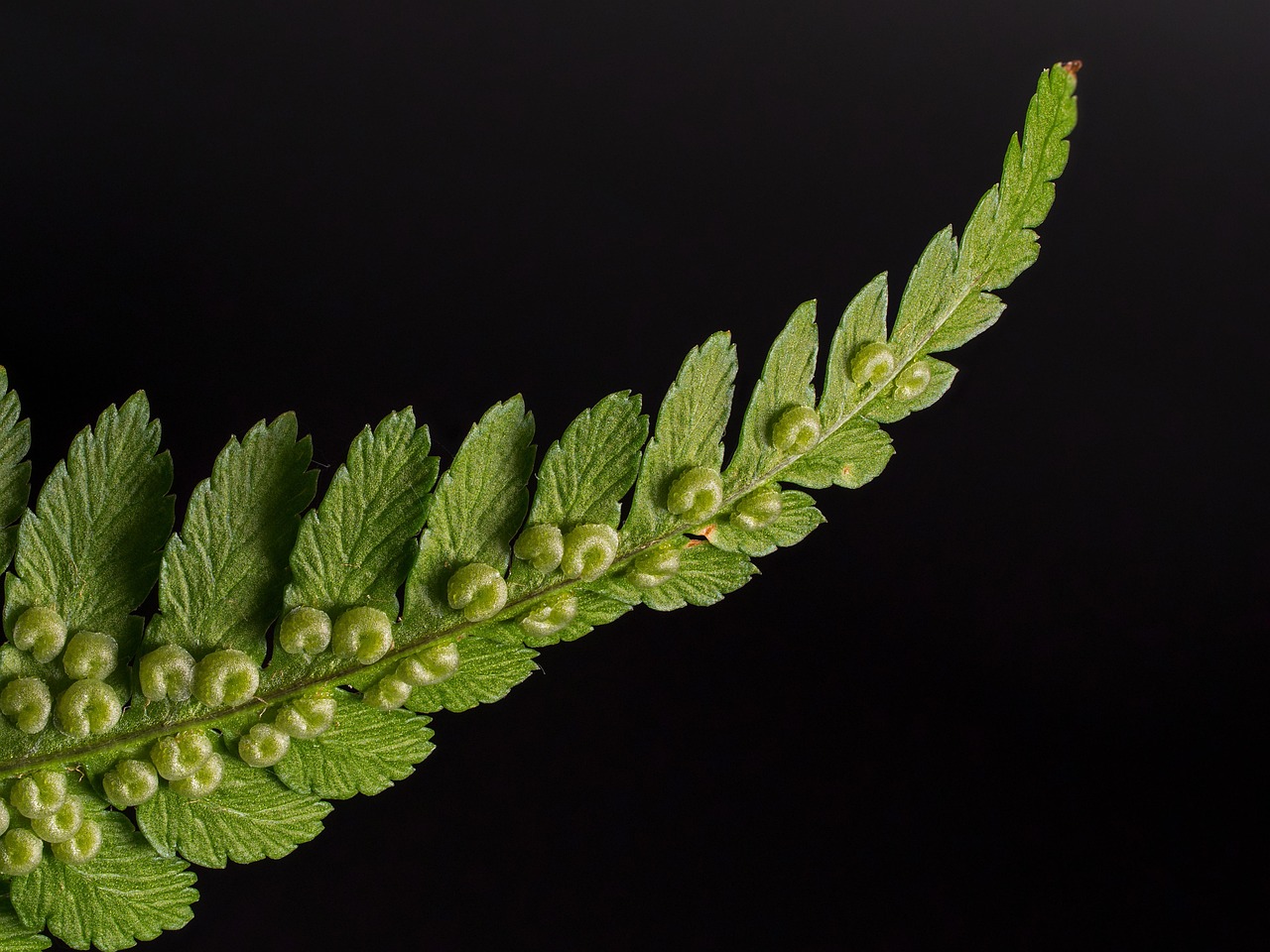
Those are plantlets, the natural reproduction method of Microsorum pteropus. Mature leaves develop tiny ferns along the upper surface and edges, particularly near the leaf tip. Once a plantlet has three to four leaves and visible roots about 1-2 cm long, snap it off and tie it to fresh hardscape. One healthy mother plant can produce twenty to thirty plantlets a year — free stock for the next scape.
Why Does My Java Fern Have Black Spots?
Pinhead black spots that stay small and uniform are sporangia — the plant’s sexual reproduction structures, harmless and a sign of maturity. Larger irregular black blotches that spread are the start of melt, usually caused by sudden parameter swings (large water change, temperature drop, ferts overdose). Trim affected leaves and stabilise water parameters; new growth from the rhizome will follow.
What Java Fern Varieties Are Worth Buying?
Standard Microsorum pteropus is the cheapest and toughest. Narrow leaf Microsorum pteropus “Narrow” gives a more delicate look at SGD 8-12 a portion. Trident has split, antler-like leaves and reaches 25 cm. Windelov features lacy, ruffled leaf tips and is the most ornamental. Philippine has wider, more textured leaves. All cost SGD 6-18 at Singapore shops and follow identical care.
Why Won’t My Java Fern Grow?
Slow growth is normal — expect one to two new leaves per month from a mature plant. If the rhizome is producing nothing for over two months, check for buried rhizome, severe nutrient deficiency, or extreme temperatures above 30°C. Singapore tanks running fanless in hot months may stall. Add a clip fan, dose iron-rich liquid fert, and confirm the rhizome sits clean of substrate.
Is Java Fern Safe With Goldfish and Cichlids?
Yes — java fern is one of the few aquatic plants goldfish and most cichlids leave alone. The leaves contain mildly bitter compounds that herbivorous fish reject after one nibble. Anchor it firmly with glue rather than thread, since large fish will dislodge thread-tied plants. This is why nearly every successful goldfish planted tank in Singapore relies on java fern, anubias and decorative driftwood.
How Do I Propagate Java Fern Faster?
Stress propagation works: trim a healthy mature leaf, lay it leaf-side-up on damp substrate or tie it to wood, and within four to six weeks plantlets sprout along the veins. With liquid carbon dosing, a stock plant fills a 60-litre tank within nine months.
Related Reading



