
Red Rili Shrimp Care Guide: Translucent Body With Red Patches
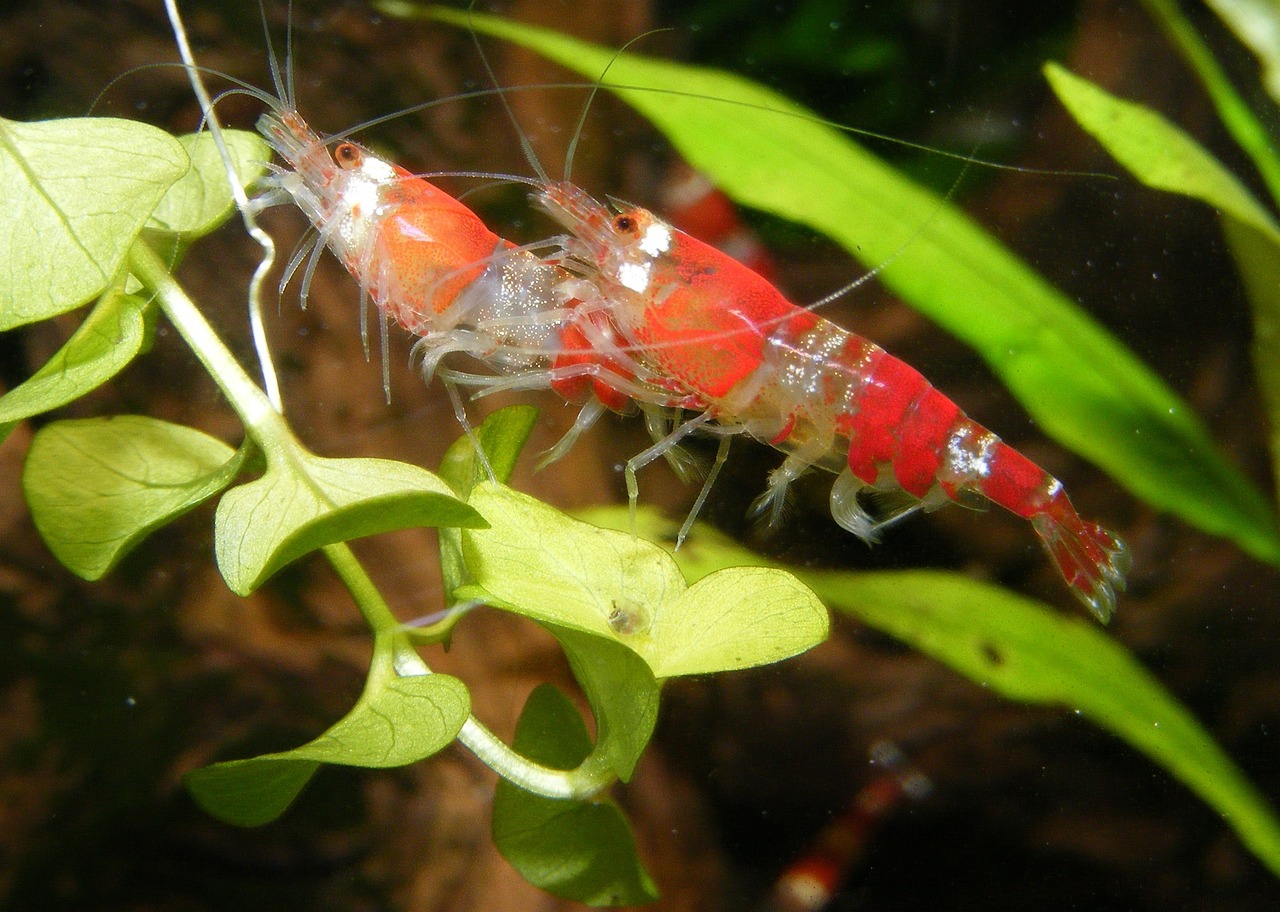
This red rili shrimp care guide is written for hobbyists in Singapore who want a visually distinctive dwarf shrimp with genuine character. At Gensou Aquascaping, 5 Everton Park, we find the red rili to be an excellent entry point into the world of ornamental shrimp keeping, offering striking colour patterns without the extreme parameter demands of more sensitive species.
Species Overview and Origin
The red rili shrimp is a selectively bred colour morph of Neocaridina davidi, the same species that produces cherry shrimp, orange sakura and other popular Neocaridina variants. What sets the red rili apart is its unique colouration pattern: solid red pigment on the head (cephalothorax) and tail segments, separated by a translucent or lightly coloured midsection. This creates a striking broken-colour look that no other common dwarf shrimp replicates. Adults reach 2.5 to 3 centimetres and are active, social invertebrates that thrive in planted aquariums.
Tank Size and Setup
Red rili shrimp can be kept in tanks as small as 20 litres, though 40 litres or more offers greater water stability and allows a colony to grow comfortably. A planted setup is ideal, providing grazing surfaces, hiding spots and natural biofilm production. Mosses such as Java moss and Christmas moss are particularly beneficial, offering shelter for juveniles and a rich source of micro-organisms. Add driftwood, cholla wood or catappa leaves to encourage biofilm growth and release tannins that support shrimp health. A sponge filter is the safest filtration option, as it prevents shrimplets from being drawn into the intake.
Water Parameters
As a Neocaridina variety, red rili shrimp are adaptable across a moderate range of water conditions. Aim for a pH of 6.5 to 7.5, a temperature of 22 to 27 degrees Celsius and a total dissolved solids reading of 150 to 300 parts per million. General hardness of 6 to 12 dGH and carbonate hardness of 2 to 8 dKH provide the minerals needed for healthy moulting. Singapore’s tap water, once dechlorinated, often falls within a suitable range, though testing is advised before introducing shrimp. Ammonia and nitrite must be at zero, and nitrate should remain below 20 parts per million. Stability matters more than hitting a precise number, so avoid sudden swings.
Diet and Feeding
Red rili shrimp are omnivorous scavengers that spend the majority of their day grazing on biofilm, algae and organic debris. In a well-established planted tank, they find much of their food naturally. Supplement with a dedicated shrimp food two to three times per week, along with occasional treats such as blanched spinach, mulberry leaves and freeze-dried bloodworms. Mineral-rich foods containing calcium support moult success. Avoid overfeeding, as uneaten food degrades water quality rapidly in small tanks. Remove any leftover food after two hours.
Moulting and Growth
Like all shrimp, red rilis moult regularly as they grow, shedding their exoskeleton and forming a new, larger one. Moulting frequency increases in younger shrimp and slows with maturity. A freshly moulted shrimp is soft and vulnerable, so adequate hiding places are important. If you notice failed moults, where shrimp struggle to shed their old shell, check mineral levels. Insufficient calcium and magnesium are the most common causes. Adding a mineral supplement or placing cuttlebone fragments in the tank can address deficiencies. In Singapore’s soft water, mineral supplementation is often worthwhile.
Breeding Red Rili Shrimp
Red rili shrimp breed readily in captivity when conditions are stable. Females carry eggs under their abdomen (known as being “berried”) for approximately three to four weeks before releasing fully formed miniature shrimp. No larval stage means there is no need for brackish water, unlike Amano shrimp. A colony can grow rapidly, so plan your tank size accordingly. To maintain the rili colour pattern, avoid mixing with other Neocaridina colour morphs, as interbreeding will produce wild-type offspring over several generations. Selective culling of less desirable colour patterns helps maintain the line’s quality.
Compatible Tankmates
The safest tankmates for red rili shrimp are other peaceful invertebrates and very small, non-predatory fish. Otocinclus catfish, pygmy corydoras and small rasboras such as Boraras brigittae are generally shrimp-safe. Snails like nerite and ramshorn are also compatible. Avoid any fish large enough to eat adult shrimp or shrimplets, which includes most tetras, bettas and gouramis. A species-only shrimp tank is the simplest way to maximise colony growth and enjoy the shrimp’s natural behaviour without predation concerns.
Health and Troubleshooting
Red rili shrimp are hardy by dwarf shrimp standards but sensitive to copper and other heavy metals commonly found in medications and some fertilisers. Always check product labels before dosing a shrimp tank. Bacterial infections, often visible as a milky discolouration, can occur in poorly maintained systems. Planaria and hydra are predatory pests that may target shrimplets; address infestations promptly with shrimp-safe treatments. Perform small, frequent water changes of 10 to 15 per cent rather than large infrequent ones to maintain stability. For quality red rili shrimp and shrimp-keeping supplies in Singapore, visit Gensou Aquascaping at 5 Everton Park.
Related Reading



