
Sparkling Gourami Care Guide: The Tiny Croaking Fish
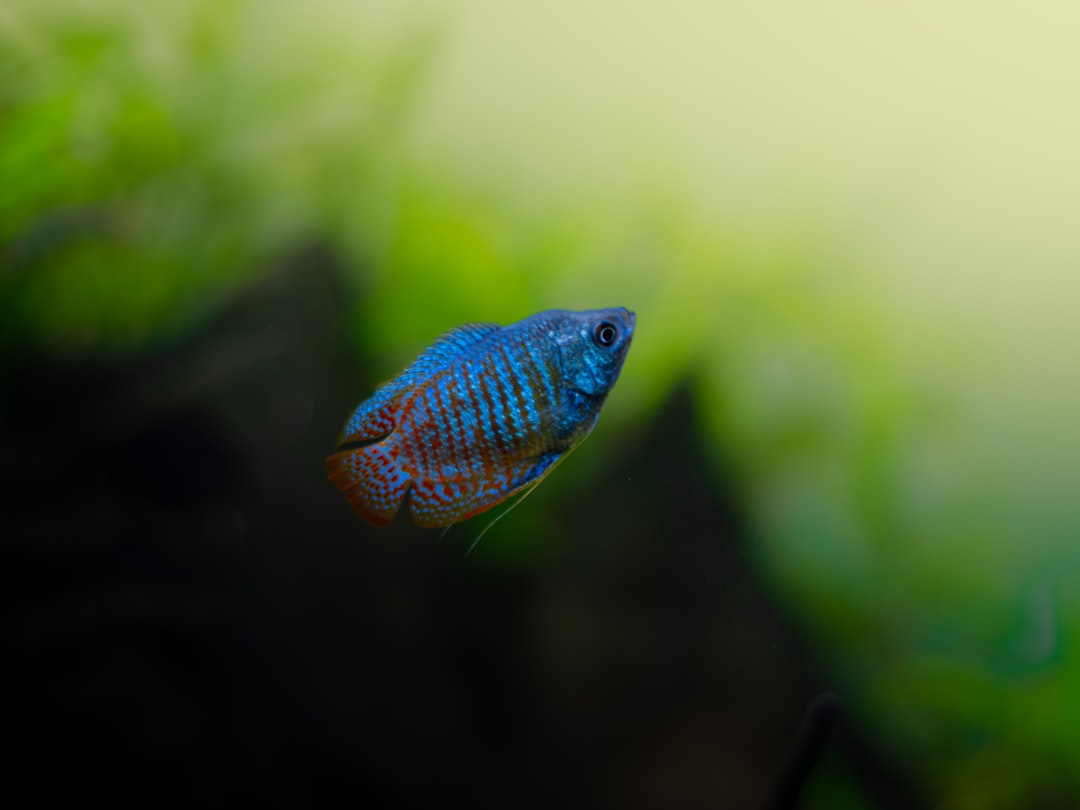
The sparkling gourami is one of the few aquarium fish you can hear as well as see. Trichopsis pumila produces an audible croaking sound during courtship and territorial exchanges — a novelty that surprises every new keeper. This sparkling gourami care guide covers everything from tank setup to breeding for hobbyists in Singapore, where the warm climate and soft tap water make these tiny labyrinth fish particularly easy to keep. Gensou Aquascaping at 5 Everton Park has stocked and bred sparklers for years.
Species Profile
Trichopsis pumila originates from shallow, slow-moving waters across Thailand, Vietnam, Cambodia and Laos — heavily vegetated rice paddies, ditches and floodplain pools. Adults reach just 3.5–4 cm, making them genuine nano fish. Their bodies shimmer with iridescent blue and green speckles under side-lighting, and the fins carry striking red and blue banding. Both sexes are colourful, though males tend to show slightly more intense fin colour and a more pointed dorsal fin. As labyrinth fish, they breathe atmospheric air and regularly rise to the surface for a gulp.
Tank Size and Layout
A 30-litre tank comfortably houses a group of four to six sparkling gouramis. A 45–60 litre setup is better for a group alongside a few peaceful tankmates. Dense planting is essential — these fish are shy and stressed in open layouts. Tall stem plants, floating plants, and plenty of surface cover create the dim, sheltered environment they prefer. Include driftwood and leaf litter (Indian almond leaves are widely available in Singapore for a few dollars a bag) to replicate their natural blackwater-adjacent habitat. Keep the water surface calm; strong surface agitation makes it difficult for labyrinth fish to breathe comfortably at the top.
Water Parameters
Sparkling gouramis tolerate pH 6.0–7.5, GH 2–10, KH 1–6 and temperature 24–30 °C. Singapore’s PUB tap water at GH 2–4 and neutral pH is essentially perfect for this species. Ambient room temperature of 28–31 °C sits comfortably within their range, so a heater is unnecessary in most homes. Treat tap water with a chloramine-neutralising conditioner before every water change. Perform 20–25% changes weekly to maintain water quality.
The Croaking Sound
The defining feature of Trichopsis pumila is its ability to produce sound. The croaking is generated by specialised pectoral fin tendons vibrating against the swim bladder. Males croak during courtship displays and low-level territorial disputes; females occasionally croak in response. The sound is audible from across a quiet room — a soft, rapid clicking that lasts one to two seconds. You are most likely to hear it during feeding time or when males display to each other. A sparkling gourami care guide should prepare you for this: the first time you hear your tank croak, it is startling and delightful in equal measure.
Diet
Sparkling gouramis are micro-predators that naturally feed on tiny invertebrates, insect larvae and zooplankton. In the aquarium, they accept crushed flake and micro pellets, but their best colour and health come from regular live or frozen food. Baby brine shrimp, daphnia, cyclops and micro-worms are all eagerly consumed. Feed small portions twice daily. These fish have tiny mouths, so food must be small enough to swallow — standard-size bloodworms should be chopped or avoided in favour of smaller alternatives.
Behaviour and Tankmates
Despite their small size, sparkling gouramis are mildly territorial, especially males. In a well-planted 45-litre tank, two males typically coexist with frequent but harmless displaying. In tanks under 30 litres, keep a single male with one or two females to prevent persistent chasing. Suitable tankmates include ember tetras, chilli rasboras, pygmy corydoras, otocinclus and neocaridina shrimp. Avoid larger gouramis (dwarf, honey or pearl) that may bully them, and skip fin-nippers like serpae tetras. Sparkling gouramis spend most of their time in the upper half of the tank, hovering among plant stems and floating roots.
Breeding
Sparkling gouramis are bubble-nest builders. The male constructs a small, loose nest among floating plants or under a broad leaf near the surface. After an elaborate courtship involving croaking and body curving, the pair embraces beneath the nest and the female releases five to fifteen eggs per embrace, repeated multiple times. Total clutch size ranges from 40 to 100 eggs. The male collects stray eggs and places them in the nest, then guards it aggressively until the fry become free-swimming in about three days. Fry are extremely small and need infusoria or Paramecium cultures for the first five to seven days, then graduate to freshly hatched brine shrimp nauplii.
Common Health Concerns
Sparkling gouramis are generally robust but susceptible to velvet disease (Piscinoodinium), which presents as a fine gold-dust coating on the body. Dim lighting and warm, stagnant water — conditions they enjoy — unfortunately also favour the velvet parasite. Maintain good water quality and quarantine new additions for two weeks. Treat velvet early with copper-based medication at half-dose, as these small fish are sensitive to full-strength treatments. Avoid sudden temperature drops during water changes by matching the replacement water to tank temperature.
Why They Deserve More Popularity
Sparkling gouramis are inexpensive (SGD 2–4 each locally), colourful, interactive, vocally entertaining and breed readily in home aquariums. They suit nano planted tanks perfectly, tolerate Singapore conditions without modification, and reward observation with constantly shifting iridescent colour. For anyone running a peaceful planted setup between 30 and 60 litres, they are one of the best species you can add.
Visit Gensou Aquascaping to see sparkling gouramis in our display tanks and hear them croak for yourself. We can help you build the perfect planted setup to keep them thriving.
Related Reading
- How to Breed Sparkling Gouramis: Bubble Nests in Nano Tanks
- Sparkling Gourami vs Honey Gourami: Nano Gourami Compared
- How to Breed Chocolate Gouramis: Mouthbrooding and Blackwater Tips
- Chocolate Gourami Care Guide: Beautiful but Demanding
- Chocolate Gourami Tank Mates: Peaceful Companions for Soft Water



