
Spotted Blue Eye Rainbowfish Care Guide: Pseudomugil gertrudae
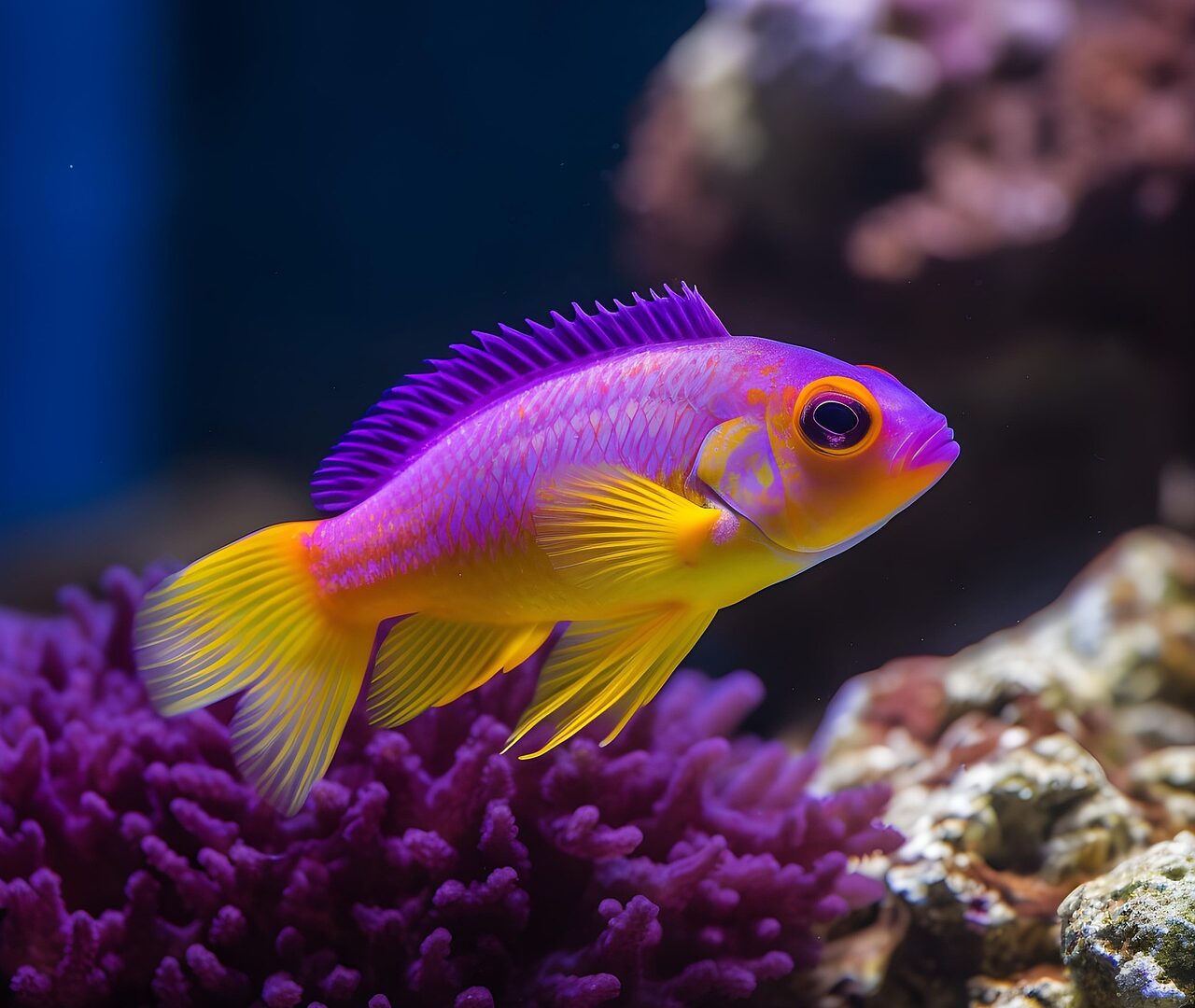
There is something irresistible about a fish small enough to fit on your thumbnail yet adorned with electric blue eyes and ornate spotted fins. Pseudomugil gertrudae, the spotted blue eye rainbowfish, is exactly that kind of micro marvel. This spotted blue eye rainbowfish care guide from Gensou Aquascaping in Singapore details how to keep and breed these delicate Australasian jewels. Native to northern Australia and Papua New Guinea, they bring a refinement to planted nano tanks that few other species can match.
Natural Habitat
Pseudomugil gertrudae inhabits slow-moving creeks, swamp margins, and still backwaters across northern Australia and southern New Guinea. These environments are typically shaded by overhanging vegetation, with tannin-stained water and dense aquatic plant growth. Water is soft and slightly acidic to neutral. Understanding this habitat helps replicate conditions in the aquarium — dim lighting areas, gentle flow, and plenty of plant cover create a setting where these fish display their best colours and most natural behaviours.
Tank Setup
A 40-litre nano tank suits a group of eight to ten comfortably. Densely plant at least half the tank — Java moss, Taxiphyllum species, and fine-leaved stems like Rotala provide spawning sites and security. Floating plants such as Salvinia or red root floaters diffuse overhead light and create the dappled conditions these fish prefer. A dark substrate intensifies the blue eye colouration. Filtration should be gentle; a sponge filter or nano canister on low flow prevents the fish from battling current constantly.
Water Conditions
Target pH 5.5–7.2, GH 2–10, and temperature 24–28 °C. Singapore’s soft, slightly acidic tap water is an excellent starting point — simply treat for chloramine. A handful of Indian almond leaves or a piece of driftwood adds tannins that these fish respond well to, deepening their colouration. Temperature in most Singapore homes sits naturally within range, so a heater is unnecessary. Stability matters above all else; sudden parameter shifts can trigger disease outbreaks in these small-bodied fish.
Feeding
Small mouths demand small food. Micro pellets, crushed quality flakes, and freeze-dried cyclops work as daily staples. Frozen baby brine shrimp and daphnia are particularly effective for conditioning fish into breeding form. Live foods — micro worms, vinegar eels, walter worms — trigger the most enthusiastic feeding responses. Feed two to three small meals daily rather than one large portion. Uneaten food pollutes nano tanks rapidly, so portion control is essential.
Behaviour and Display
Males are the showpieces. They sport elongated first dorsal fins decorated with dark spots on a yellow-white base, and their pectoral fins flash during territorial sparring. Dawn is when the best displays happen — males face off, flaring fins and circling each other in what hobbyists call “morning dances.” Keeping at least three males encourages competitive display without escalating to real aggression. Females are plainer but essential for triggering male colouration; a ratio of roughly equal males and females works well.
Compatible Tankmates
Stick with nano-scale companions. Ember tetras, celestial pearl danios, and other Pseudomugil species share similar requirements and temperament. Pygmy corydoras and otocinclus add bottom-dwelling and algae-cleaning utility without threatening the rainbowfish. Dwarf shrimp coexist peacefully, and their shrimplets are generally safe given enough plant cover. Avoid anything large, fast, or aggressive — even medium-sized tetras can outcompete these delicate feeders at mealtimes.
Breeding
Spotted blue eyes scatter adhesive eggs among fine-leaved plants or spawning mops. A dedicated breeding setup of 15–20 litres with abundant Java moss yields the best results. Eggs hatch in 10–14 days depending on temperature, and the tiny fry need infusoria or paramecium cultures as first food. Growth is slow; fry take three to four months to reach juvenile size. Removing eggs to a separate container prevents adult predation and significantly improves yield.
Lifespan and Availability
One honest caveat: Pseudomugil gertrudae typically lives only 12–18 months. This short lifespan means maintaining a breeding colony is the best long-term strategy. In Singapore, availability is sporadic — speciality shops and Carousell breeders are your best sources, with prices ranging from $5–$10 per fish. This spotted blue eye rainbowfish care guide should help you get the most out of every month with these enchanting little fish.
Related Reading
- Blue-Eye Gertrudae Rainbowfish Care Guide: Spotted Blue-Eye Nano Fish
- Forktail Blue Eye Rainbowfish Care Guide: Pseudomugil Furcatus
- Forktail Blue-Eye Rainbowfish Care Guide: Pseudomugil Furcatus
- Blue Acara Cichlid Care Guide: The Overlooked Gem
- Aura Blue Shrimp Care Guide: Caridina Cantonensis Blue Morph



