
Forktail Blue Eye Rainbowfish Care Guide: Pseudomugil Furcatus
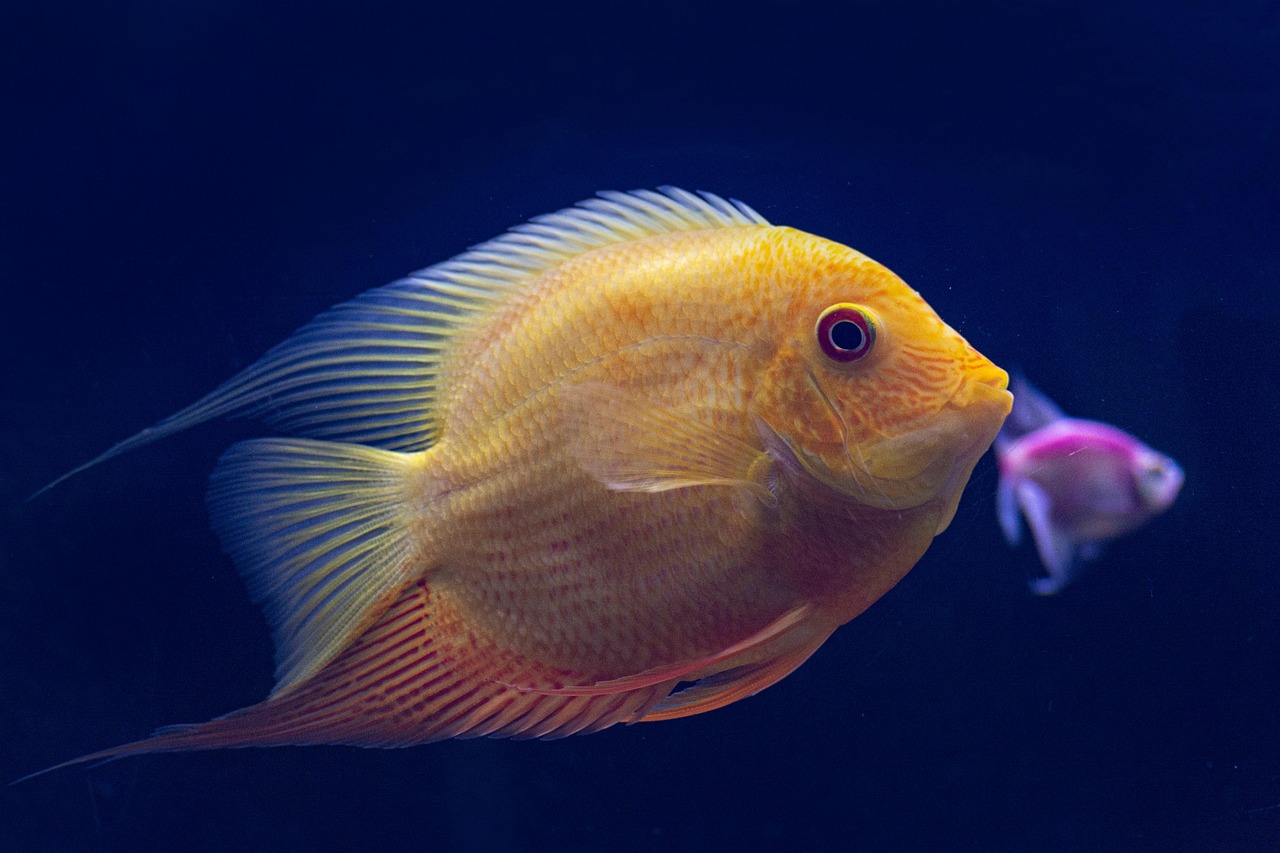
Among the pseudomugils, few species match the delicate beauty of Pseudomugil furcatus. This forktail blue eye rainbowfish care guide from Gensou Aquascaping Singapore, refined over 20 years of hands-on fishkeeping, covers habitat needs, breeding, and long-term maintenance. With electric blue eyes and ornate forked tail fins, the forktail blue eye rainbowfish transforms any planted tank into something genuinely special.
Species Background
Pseudomugil furcatus originates from clear, slow-moving streams in eastern Papua New Guinea. Adults reach 4–6 cm, with males slightly larger and far more colourful. The species name refers to the deeply forked caudal fin — males develop elongated upper and lower lobe rays that create an elegant lyretail silhouette.
Their vivid blue iridescent eyes are a hallmark of the genus Pseudomugil. Combined with bright yellow fins edged in black, males in breeding condition are among the most photogenic nano fish available to hobbyists in Singapore.
Tank Setup
A 40-litre planted tank comfortably houses a group of eight to ten. Moderate planting with open swimming areas suits their active nature — they spend much of the day displaying in the midwater column. Fine-leaved plants like Rotala and Myriophyllum provide spawning sites and visual depth.
Gentle to moderate flow replicates their natural stream habitat. A hang-on-back filter or small canister delivers appropriate current. Keep a secure lid — forktails are known jumpers, especially during active courtship. In Singapore’s HDB and condo settings, a rimless 45-cm tank on a stable surface makes a beautiful display piece.
Water Parameters
Target pH 7.0–8.0, GH 8–15 dGH, and temperature 24–28 °C. Unlike many popular nano species that prefer soft, acidic water, forktail blue eyes do best in slightly alkaline, moderately hard conditions. Singapore’s PUB tap water may need a small GH boost — add a mineralisation product or include limestone chips in the filter.
Weekly 25 % water changes maintain stability. Always dechloraminate replacement water thoroughly; chloramine in local tap water requires a conditioner that breaks the chlorine-ammonia bond.
Feeding
Forktails accept a wide range of foods. High-quality micro pellets and crushed flake form the daily staple. Supplement with frozen brine shrimp, daphnia, and cyclops two to three times per week. Live foods trigger the most intense male displays.
Their small mouths handle particles up to 1 mm comfortably. Avoid large pellets that they cannot swallow — these sink uneaten and foul the water. Feed twice daily in measured portions that disappear within 90 seconds.
Male Display Behaviour
Watching male forktails spar is one of this species’ greatest appeals. Rival males face off with fins fully erect, bodies quivering, intensifying their yellow and blue colouration to maximum effect. These displays are completely harmless — no physical contact occurs.
Keeping at least three males ensures regular displays without any single individual being bullied. A higher male-to-female ratio is perfectly acceptable, unlike many other species where males must be outnumbered.
Breeding
Spawning occurs daily among conditioned adults. Males court females near fine-leaved plants or spawning mops, quivering alongside until the female deposits one to three adhesive eggs. A prolific pair produces five to ten eggs daily over weeks.
Eggs incubate for 10–14 days at 26 °C — unusually long for their size. Collect eggs on spawning mops and transfer to a separate hatching container with gentle aeration. Fry are tiny but immediately accept freshly hatched baby brine shrimp, making them easier to raise than many egg-scattering species.
Tank Mates
Pair forktails with species that enjoy similar conditions: endlers, threadfin rainbowfish (Iriatherina werneri), kuhli loaches, and nerite snails. Avoid aggressive or overly boisterous tank mates that outcompete them for food. Cherry shrimp cohabit safely — adult forktails rarely bother shrimp of any size.
A species-only tank arguably shows them at their best, allowing uninterrupted display behaviour and easier fry collection for breeding projects.
Lifespan and Health
Expect a lifespan of two to three years with proper care. Forktails are generally robust but sensitive to poor water quality — elevated ammonia or nitrite causes rapid decline. Quarantine new additions for two weeks and observe for signs of columnaris, which occasionally affects imported stock.
Following this forktail blue eye rainbowfish care guide positions you for years of enjoyment. Gensou Aquascaping Singapore regards Pseudomugil furcatus as one of the finest small rainbowfish for local conditions — affordable at $3–$5 each and endlessly captivating once settled in a planted aquarium.
Related Reading
- Blue-Eye Gertrudae Rainbowfish Care Guide: Spotted Blue-Eye Nano Fish
- Spotted Blue Eye Rainbowfish Care Guide: Pseudomugil gertrudae
- Forktail Blue-Eye Rainbowfish Guide: Tiny Fins, Big Colour
- Blue Acara Cichlid Care Guide: The Overlooked Gem
- Aura Blue Shrimp Care Guide: Caridina Cantonensis Blue Morph



