
Cardinal Tetra Care Guide: Colours, Tank Mates and Breeding
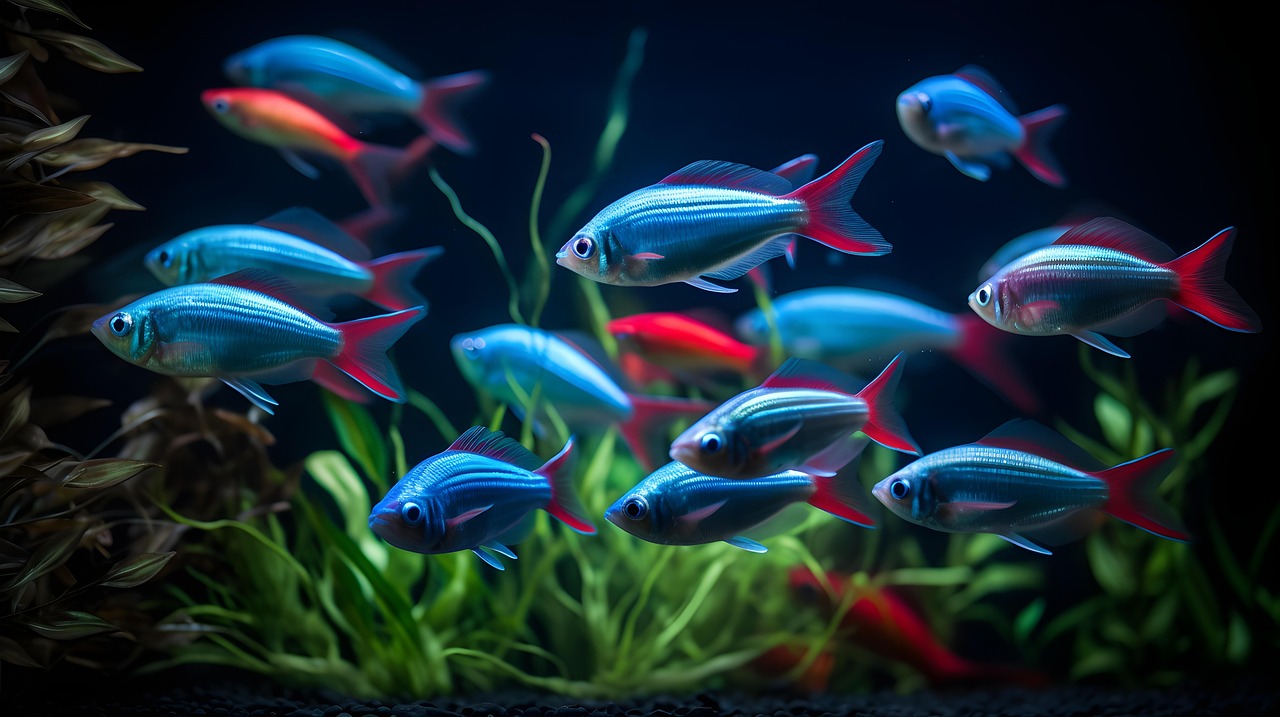
The cardinal tetra (Paracheirodon axelrodi) is often considered the more vibrant cousin of the neon tetra, and for good reason. Its full-length red and blue stripes create one of the most stunning displays in freshwater fishkeeping. Originating from the blackwater tributaries of the Rio Negro in South America, cardinal tetras bring a touch of the Amazon to any planted aquarium. This guide covers everything you need to know about cardinal tetra care, including how they differ from neons and what makes them a strong choice for Singapore hobbyists. This guide sits inside our broader Tropical Fish Species Master Index reference.
Cardinal Tetra vs Neon Tetra
The cardinal and neon tetra are frequently confused, but once you know what to look for, they are easy to distinguish. Here is a side-by-side comparison:
| Feature | Cardinal Tetra | Neon Tetra |
|---|---|---|
| Red stripe | Full length — nose to tail | Mid-body to tail only |
| Adult size | 4 – 5 cm | 3 – 4 cm |
| Colour intensity | Generally more vivid | Slightly more subtle |
| Temperature tolerance | 24 – 28 °C | 22 – 26 °C |
| Wild-caught availability | Very common (seasonal) | Mostly captive-bred |
| Price | Slightly higher | Very affordable |
| Lifespan | 4 – 5 years typical | 5 – 8 years typical |
The cardinal’s willingness to tolerate slightly warmer water gives it an edge in Singapore, where ambient room temperatures often hover between 28 and 32 °C. While neither species thrives at those extremes, the cardinal handles warmth somewhat better.
Origin and Natural Habitat
Cardinal tetras are native to the upper Rio Negro and Orinoco river basins in Brazil, Colombia and Venezuela. The Rio Negro is one of the most famous blackwater rivers in the world — its waters are tea-coloured from humic acids released by decomposing vegetation, extremely soft (often below 1 dGH) and highly acidic, with pH values sometimes dropping below 4.0 in the most extreme stretches.
In these dark, tannin-rich waters, cardinal tetras school in enormous numbers among submerged root systems and leaf litter. The near-absence of mineral content and the acidic conditions create an environment with very low bacterial load, which is one reason why cardinals can be sensitive to the comparatively mineral-rich, alkaline water found in many aquariums.
A significant proportion of cardinal tetras sold in the aquarium trade are still wild-caught. The seasonal harvest of cardinals from the Rio Negro is actually considered a model of sustainable wildlife trade — it provides vital income to local communities and incentivises the protection of these irreplaceable habitats.
Water Parameters
While captive-bred cardinal tetras are more adaptable than their wild cousins, they still do best in soft, acidic water that echoes their natural environment.
| Parameter | Ideal Range | Notes |
|---|---|---|
| Temperature | 24 – 28 °C | Tolerates warmth better than neons |
| pH | 4.5 – 7.0 | Acidic to neutral; 5.5 – 6.5 ideal |
| GH | 1 – 8 dGH | Very soft water preferred |
| KH | 1 – 4 dKH | Low buffering capacity |
| Ammonia / Nitrite | 0 ppm | Very sensitive to nitrogenous waste |
| Nitrate | Below 20 ppm | Lower is better |
Singapore’s PUB tap water typically has a pH of 7.0 to 8.5 and moderate general hardness. To create ideal conditions for cardinal tetras, consider blending tap water with RO water at a ratio of roughly 1:1, and adding botanical elements such as catappa (Indian almond) leaves, driftwood, or peat moss in your filter. These naturally release tannins that soften and acidify the water.
Tank Setup
Cardinal tetras are best showcased in a well-planted aquarium that provides plenty of cover alongside open swimming space. A minimum tank size of 60 litres is recommended for a school of 10 to 12 fish.
Recommended Setup Elements
- Substrate: Dark aquasoil or fine gravel — dark backgrounds make the reds and blues pop dramatically
- Plants: A mix of foreground plants (Cryptocoryne parva, Eleocharis), midground (Cryptocoryne wendtii, Anubias), and background stems (Rotala, Ludwigia) creates depth and shelter
- Hardscape: Driftwood — spider wood or Malaysian driftwood — leeches tannins and creates a natural aesthetic
- Lighting: Moderate intensity. Cardinals look their most vivid under slightly subdued lighting, which also mimics their shaded natural habitat
- Filtration: Gentle to moderate flow. A canister filter with a spray bar or a well-sized sponge filter works well
- Leaf litter: Dried catappa or oak leaves on the substrate complete the biotope look and provide beneficial tannins and microorganism growth
For a truly stunning biotope setup, consider commissioning a custom aquarium designed specifically around the Rio Negro blackwater theme. The combination of stained water, lush plants and a large school of cardinals is one of the most breathtaking displays in freshwater aquascaping.
Feeding
Cardinal tetras are unfussy omnivores, but a varied diet is essential for maintaining their intense colouration and overall health.
Daily Feeding Guide
- Primary diet: High-quality micro pellets or finely crushed flake food — choose a brand with natural colour enhancers like astaxanthin or spirulina
- Protein supplements (2-3 times per week): Frozen baby brine shrimp, daphnia or cyclops
- Live foods (weekly treat): Live baby brine shrimp, micro worms or vinegar eels
Feed small portions twice daily. Cardinal tetras have small stomachs and process food quickly, so two light feedings are better than one heavy one. Remove any uneaten food after a few minutes to maintain water quality.
Tank Mates
Cardinal tetras are peaceful and do well in a thoughtfully stocked community aquarium. The key is choosing tank mates of a similar size and temperament.
Excellent Tank Mates
- Corydoras catfish — sterbai corydoras pair especially well in warmer setups
- Harlequin rasboras — another peaceful schooling fish from soft, acidic water
- Otocinclus catfish — gentle, algae-eating bottom-dwellers
- Dwarf pencilfish — occupy the upper water column and stay small
- Amano shrimp and cherry shrimp — useful clean-up crew members
- Dwarf gouramis — peaceful and colourful centrepiece fish
Avoid These Tank Mates
- Angelfish — will prey on cardinals once they grow large enough
- Most cichlids — too territorial or aggressive
- Tiger barbs — notorious fin nippers
- Large catfish (Plecos over 15 cm) — can create too much waste and disturbance
Breeding Cardinal Tetras
Breeding cardinal tetras is significantly more difficult than breeding neon tetras, and it remains a challenge even for experienced aquarists. The difficulty lies in their extremely demanding water requirements for successful spawning and egg development.
Breeding Requirements
- Water chemistry: Extremely soft water (below 1 dGH) with a pH of 4.5 to 5.5 is essential. Most breeders use pure RO water adjusted with peat extract
- Temperature: 26 to 27 °C
- Tank: A small breeding tank of 10 to 20 litres, dimly lit or covered
- Spawning medium: Fine-leaved plants like Java moss, or synthetic spawning mops
- Conditioning: Feed the breeding pair live foods generously for two weeks before attempting to spawn them
The Spawning Process
Introduce a well-conditioned pair to the breeding tank in the evening. Spawning typically occurs at dawn. The female scatters between 100 and 500 tiny eggs among the plants or mop. These eggs are extremely light-sensitive, so the tank must be kept dark or very dimly lit.
Remove the parents immediately after spawning. Eggs hatch in 24 to 36 hours, and the fry become free-swimming after about five days. Feed infusoria initially, graduating to freshly hatched baby brine shrimp as they grow. Fry mortality is high, even under ideal conditions — this is normal and should not be discouraging.
Singapore Suitability
Cardinal tetras are a better fit for Singapore than neon tetras, thanks to their higher temperature tolerance of up to 28 °C. However, Singapore’s ambient temperatures of 28 to 32 °C still exceed their comfort zone, so some form of cooling is advisable.
Practical Approaches for Singapore
- Air-conditioned rooms: If your tank is in a bedroom or study maintained at 24 to 26 °C, cardinals will thrive without additional cooling
- Aquarium fans: Clip-on cooling fans can reduce water temperature by 2 to 4 °C through evaporation — often enough to keep cardinals comfortable during cooler months
- Aquarium chillers: The most reliable solution for year-round temperature control, especially during the April to June hot season
- Tank placement: Avoid placing the tank near windows receiving direct sunlight, or near electronics that generate heat
Regarding water chemistry, PUB tap water needs treatment to suit cardinals. Always use a dechlorinator that neutralises chloramine (not just chlorine), and consider adding botanicals or mixing with RO water to achieve softer, more acidic conditions. Many local fish shops in Singapore carry RO water or RO units suitable for home use.
For expert guidance on setting up a cardinal tetra aquarium in Singapore, Gensou’s team provides professional aquarium maintenance and consultation services tailored to local conditions.
Frequently Asked Questions
Are cardinal tetras harder to keep than neon tetras?
Cardinal tetras are generally considered slightly more delicate, particularly wild-caught specimens that may struggle to adapt to harder, more alkaline water. However, captive-bred cardinals are fairly resilient and adapt well to a range of conditions. Their higher temperature tolerance actually makes them somewhat easier to maintain in Singapore compared to neon tetras, as they require less aggressive cooling.
How many cardinal tetras should I keep?
Keep a minimum of eight, though a school of 12 to 20 or more is ideal. Cardinal tetras are a schooling species and display their best colours and most natural behaviour when kept in larger groups. A school of 20 cardinals in a well-planted tank is one of the most visually striking sights in the aquarium hobby.
Can I mix cardinal tetras and neon tetras in the same tank?
Yes, you can keep both species together, as they occupy the same water column and have similar care requirements. However, they will typically school separately rather than mixing into one group. Some aquarists find this creates a somewhat disjointed look and prefer to commit to a large school of just one species for maximum visual impact.
Why do my cardinal tetras keep dying?
The most common causes of cardinal tetra deaths in Singapore are heat stress from elevated temperatures, ammonia or nitrite spikes in immature tanks, and disease introduced by not quarantining new fish. Always ensure your tank is fully cycled before adding cardinals, maintain stable temperatures below 28 °C, and quarantine all new arrivals for at least two weeks. Poor acclimation — exposing them to sudden changes in pH, temperature or hardness — is another frequent killer.
Ready to create a stunning cardinal tetra display? Gensou specialises in custom-designed planted aquariums that showcase schooling fish at their best. Browse our shop for aquascaping supplies, or contact us to start planning your aquascape.
Related Reading



