
Pea Puffer Care Guide: Big Personality in a Tiny Package
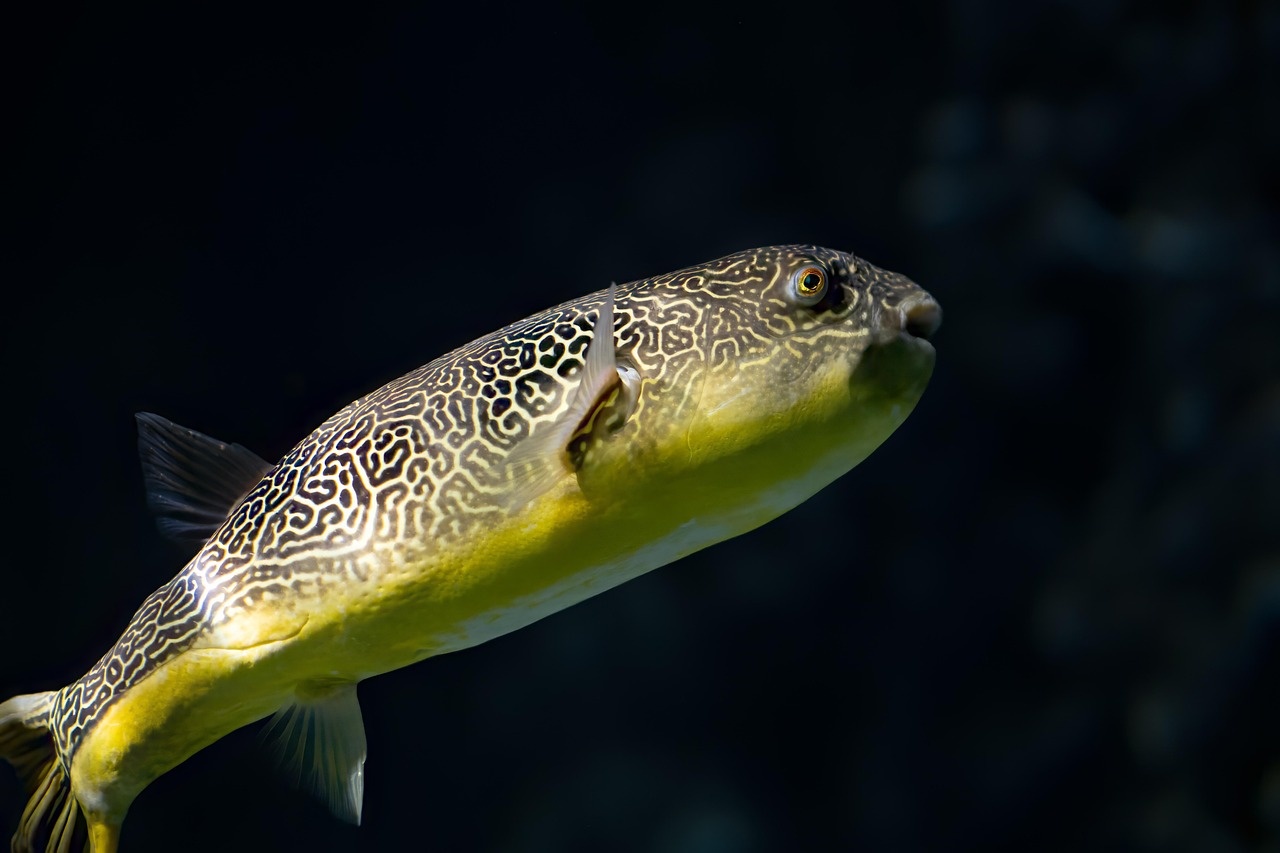
The pea puffer (Carinotetraodon travancoricus) may be the smallest freshwater pufferfish in the world at just 2.5 centimetres, but it packs more personality per square centimetre than almost any other aquarium fish. Also known as the dwarf puffer or Malabar puffer, this tiny predator from the rivers of southwestern India is curious, intelligent and endlessly entertaining to watch. However, pea puffer care comes with unique challenges — from a diet that excludes all dry foods to a temperament that can terrorise tank mates many times its size. This guide covers everything you need to keep these fascinating micro predators thriving in a Singapore aquarium. This guide sits inside our broader Tropical Fish Species Master Index reference.
Origin and Appearance
Pea puffers are native to the Western Ghats region of Kerala and Karnataka in India, where they inhabit slow-moving rivers, streams and lakes rich in vegetation. In the wild, these waterways are warm, slightly acidic and densely planted — conditions that translate well to the tropical aquariums we keep in Singapore.
Despite their diminutive size, pea puffers are unmistakably pufferfish. They have a rounded, somewhat compressed body with large, independently moving eyes that constantly scan their surroundings. Their colouration is a striking yellow-green with dark irregular spots along the body and flanks. Males tend to display a darker belly stripe and more vibrant colouration, while females are generally rounder and paler. Unlike their marine cousins, pea puffers are entirely freshwater fish and do not require any salt in their water.
One of the most captivating aspects of pea puffers is their behaviour. They are genuinely curious fish that will follow your movements outside the tank, recognise their keeper and even beg for food. Many aquarists describe them as having “dog-like” personalities — a remarkable trait for something that fits on your fingernail.
Tank Size and Setup
A single pea puffer can be kept in a tank as small as 20 litres, though 30 to 40 litres provides a much better environment. For a group, allow roughly 15 litres per puffer on top of a 30-litre base. A group of three to five puffers does well in a 60-litre tank, and a group of six will appreciate 80 to 100 litres.
The most important aspect of pea puffer tank setup is dense planting. These fish rely on plants and hardscape to break lines of sight, establish territories and feel secure. Without sufficient cover, pea puffers become stressed and aggression increases dramatically. Consider the following when setting up your tank:
- Live plants are essential. Use a combination of stem plants like Hygrophila, floating plants, mosses and broad-leaved species like Anubias to create a dense, jungle-like environment.
- Hardscape for cover. Driftwood, rocks and coconut shells provide additional hiding spots and help define territories.
- Moderate filtration. Pea puffers are messy eaters, so a good filter is important, but they dislike strong current. A sponge filter or a hang-on-back filter with an adjustable flow rate works well.
- Sand or fine gravel substrate. Pea puffers spend time investigating the substrate for food, so avoid sharp-edged substrates.
- Tight-fitting lid. While pea puffers are not notorious jumpers, a lid helps maintain stable humidity and temperature in air-conditioned Singapore homes.
Water Parameters
Pea puffers are reasonably adaptable when it comes to water chemistry, but they do best in stable, clean water. Here are the ideal parameters:
| Parameter | Ideal Range | Notes |
|---|---|---|
| Temperature | 24 – 28 °C | Comfortable at Singapore room temperature |
| pH | 6.5 – 7.5 | Singapore tap water (pH 7-8) is acceptable |
| GH (General Hardness) | 5 – 15 dGH | Moderately soft to moderate |
| KH (Carbonate Hardness) | 4 – 10 dKH | Provides pH stability |
| Ammonia / Nitrite | 0 ppm | Puffers are sensitive to poor water quality |
| Nitrate | Below 20 ppm | Weekly water changes essential |
Pea puffers are more sensitive to water quality than many commonly kept fish. Weekly water changes of 25 to 30 per cent are recommended, and you should always use a water conditioner to neutralise the chloramine in Singapore’s PUB tap water. An established, fully cycled tank is a must before introducing pea puffers — never add them to a new aquarium.
Feeding
Feeding is perhaps the single most important aspect of pea puffer care, and the area where many new keepers struggle. Put simply: pea puffers will not eat flakes, pellets or any other dry food. They are obligate predators that require live or frozen meaty foods exclusively.
Suitable foods include:
- Live or frozen bloodworms — a favourite and readily available in Singapore
- Live or frozen brine shrimp — excellent for variety
- Live snails — pest snails like ramshorn and bladder snails are ideal (more on this below)
- Frozen daphnia — good for smaller puffers
- Live blackworms or tubifex — occasionally, as a treat
- Mosquito larvae — an excellent live food easily cultured in Singapore’s climate
Feed small amounts once or twice daily. Pea puffers have tiny stomachs, so a few bloodworms or a couple of small snails per feeding is sufficient. Overfeeding leads to obesity and water quality issues. Remove any uneaten food promptly.
Teeth Trimming via Snails
Like all pufferfish, pea puffers have a beak-like dental plate that grows continuously throughout their lives. In the wild, crunching on hard-shelled prey naturally wears down this beak. In captivity, a regular supply of small snails is essential to prevent overgrown teeth, which can eventually prevent the fish from eating altogether.
Many pea puffer keepers maintain a separate container — even a simple bucket with some old filter media — to breed pest snails specifically as puffer food. Bladder snails and small ramshorn snails are perfect for this purpose. If you notice your puffer’s beak becoming visibly overgrown, increase the snail portion of its diet immediately. For more on managing snail populations, see our guide on how to get rid of pest snails in your aquarium.
Solo vs Group Keeping
One of the most debated topics in pea puffer care is whether to keep them alone or in groups. Both approaches have merits.
Solo Keeping
A single pea puffer in a well-planted nano tank can be a wonderful pet. Without the stress of conspecific aggression, solo puffers tend to be bolder, more interactive with their keeper and easier to feed. This is the safest option for beginners and works well in smaller tanks of 20 to 30 litres.
Group Keeping
In a sufficiently large and densely planted tank, a group of pea puffers displays fascinating social dynamics — hierarchies, territorial displays and courtship behaviours. If keeping a group, aim for a ratio of one male to two or three females, and provide heavily planted tanks with numerous sight breaks. Even in ideal conditions, expect some chasing and territorial posturing. Monitor closely for any individual being persistently bullied and be prepared to separate if necessary.
Tank Mates
Let us be straightforward: a species-only tank is almost always the best choice for pea puffers. Despite their tiny size, these fish are notorious fin nippers and will harass tank mates relentlessly. Long-finned fish like guppies and bettas are absolutely out of the question — their flowing fins are irresistible targets.
If you are determined to keep tank mates, the only species with a reasonable chance of coexisting are:
- Otocinclus catfish — fast, unobtrusive and usually ignored
- Amano shrimp — large enough not to be eaten, though juveniles may be at risk
- Fast-swimming, short-finned fish — some keepers have success with ember tetras or chili rasboras in heavily planted tanks, but this is never guaranteed
Avoid all snails you want to keep as pets — pea puffers will hunt them. Nerite and mystery snails will be relentlessly attacked. Small shrimp like cherry shrimp will likely become expensive live food.
Pest Snail Control
One of the most practical reasons aquarists seek out pea puffers is their effectiveness as pest snail controllers. A single pea puffer can eliminate a bladder snail or ramshorn snail infestation within weeks. They actively hunt snails, extracting them from their shells with surgical precision.
However, this use case comes with caveats. Once the snail population is exhausted, you still need to feed the puffer its specialised diet indefinitely. A pea puffer is a long-term commitment (they can live four to five years), not a temporary pest control solution. For a full discussion of snail management strategies, read our guide on getting rid of pest snails.
Breeding
Breeding pea puffers is possible in the home aquarium but requires dedication. Males display vibrant courtship colours and will entice females to spawn among fine-leaved plants or moss. Eggs are tiny and scattered among vegetation, hatching in approximately five days at 26 to 27 degrees Celsius.
The fry are extremely small and require infusoria or vinegar eels as first food before graduating to baby brine shrimp. Parents do not guard eggs or fry and may eat them, so a separate breeding tank or dense moss cover is essential for fry survival. Breeding success is more likely when the fish are well-fed, the tank is mature with plenty of biofilm, and water quality is pristine.
Common Health Issues
Pea puffers are susceptible to several health concerns:
- Internal parasites — Wild-caught pea puffers frequently carry internal parasites. A preventive deworming treatment with praziquantel or levamisole upon acquisition is strongly recommended.
- Overgrown beak — As discussed, a diet lacking hard-shelled prey leads to dental overgrowth.
- Skinny disease — Often linked to internal parasites, affected fish eat but remain thin.
- Ich (white spot) — Puffers are sensitive to ich, particularly when stressed. Maintain stable temperatures and quarantine new additions.
Always quarantine new pea puffers for at least two weeks before adding them to an established tank.
Singapore-Specific Considerations
The good news for Singapore aquarists is that pea puffers are well-suited to our tropical climate. Room temperature of 28 to 30 degrees Celsius falls within their comfortable range, so a heater is typically unnecessary unless the tank is in a heavily air-conditioned room. An aquarium chiller is not required either, as pea puffers tolerate warmth better than many commonly kept species.
Singapore’s PUB tap water, with its pH of around 7 to 8 and moderate hardness, is acceptable for pea puffers. Always treat tap water with a quality water conditioner to neutralise chloramine before use.
Live and frozen foods are readily available at local aquarium shops across Singapore. Bloodworms and brine shrimp can be purchased frozen in convenient blister packs. For a constant snail supply, setting up a small snail breeding container outdoors or on a balcony is straightforward in our warm climate.
Frequently Asked Questions
Can pea puffers live with shrimp?
Small shrimp like cherry shrimp will almost certainly be hunted and eaten. Larger Amano shrimp may coexist with pea puffers, but there is always a risk of harassment. If you want to keep a shrimp colony, a separate tank is the safer option.
How many pea puffers can I keep in a 40-litre tank?
A single pea puffer is ideal for a 40-litre tank. You could attempt a pair (one male, one female) if the tank is very densely planted with abundant sight breaks, but monitor for aggression closely. For a group, aim for 60 litres or more.
Will pea puffers eat flakes or pellets?
No. Pea puffers are one of the few aquarium fish that categorically refuse all dry foods. They require live or frozen meaty foods such as bloodworms, brine shrimp, daphnia and snails. This dietary requirement is non-negotiable, so be prepared for the ongoing commitment before purchasing one.
How long do pea puffers live?
With proper care, pea puffers typically live four to five years in captivity. Some individuals have been reported to reach six or seven years. Lifespan is closely linked to diet quality, water conditions and stress levels.
If you are considering a pea puffer or need help setting up a suitable planted tank, get in touch with Gensou. With over 20 years of aquascaping experience, we can design and maintain a custom aquarium that brings out the best in these remarkable little fish. Visit our shop at 5 Everton Park for plants, hardscape and expert advice.
Related Reading
- Dwarf Pea Puffer Tank Mates: Who Can Survive With a Micro Predator?
- Dwarf Puffer vs Pea Puffer: Are They the Same Fish?
- How to Breed Pea Puffers: Micro Predator Courtship in Planted Tanks
- How to Breed Indian Dwarf Puffers: Conditioning and Fry Care
- Indian Dwarf Puffer Care Guide: Tiny Predator With Huge Character



