
American Flagfish Care Guide: The Algae-Eating Killifish
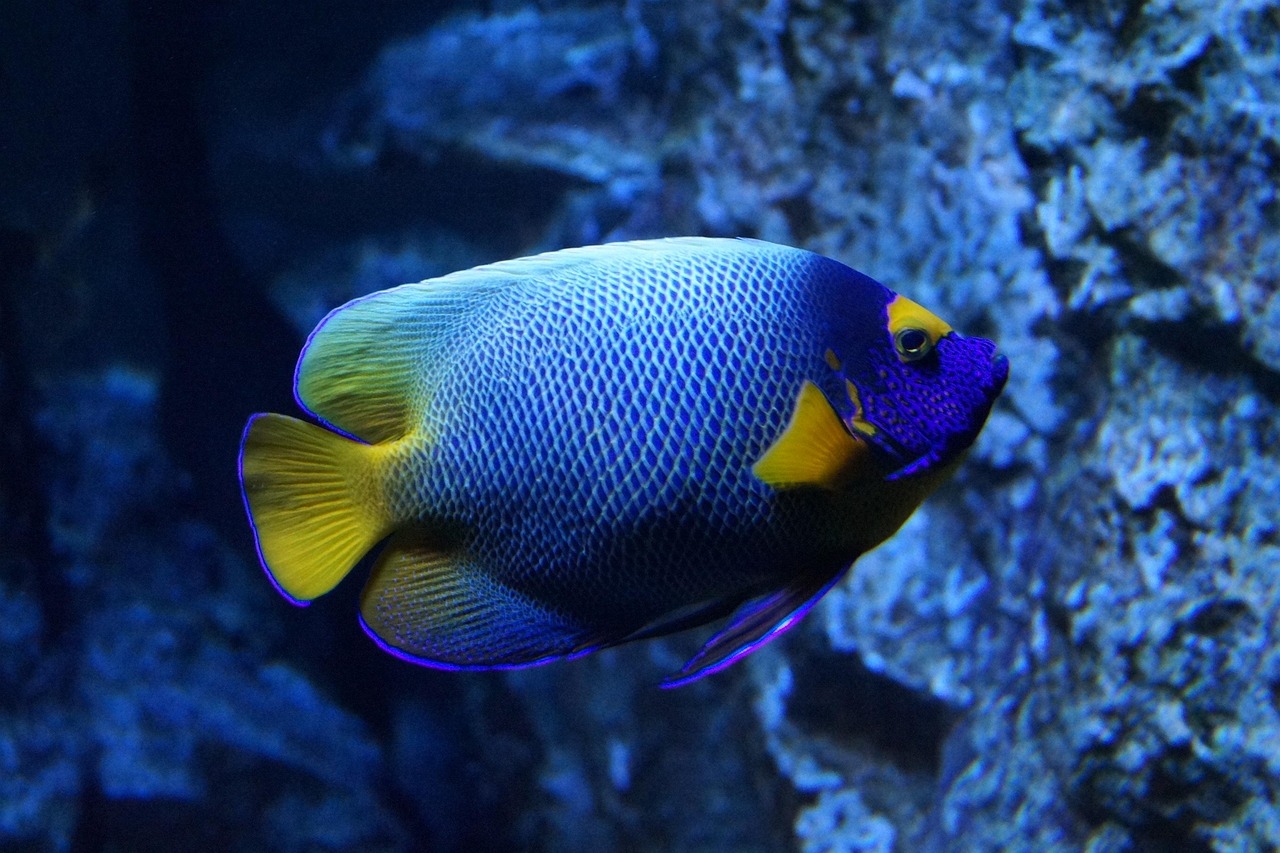
The American flagfish (Jordanella floridae) is one of the most underrated workhorses in the freshwater hobby. Named for the red-and-blue pattern on males that loosely resembles the American flag, this small killifish is prized not for its namesake but for its voracious appetite for hair algae and black beard algae — two nuisances that plague planted tanks worldwide. If you have landed on this flagfish care guide, chances are you are either battling algae or looking for a colourful, low-maintenance fish that earns its keep.
At Gensou, our aquascaping studio at 5 Everton Park, Singapore, we have recommended flagfish to countless clients dealing with persistent algae problems in planted setups. They are hardy, easy to feed, and remarkably effective at their job. This guide covers everything from water parameters and diet to breeding and compatible tank mates.
Species Overview and Origin
The American flagfish is native to the slow-moving ponds, ditches, marshes, and vegetated waterways of peninsular Florida in the United States. It belongs to the family Cyprinodontidae, making it a true killifish — though it looks and behaves quite differently from the annual killifish that most hobbyists associate with that name.
Taxonomy at a Glance
| Detail | Information |
|---|---|
| Scientific name | Jordanella floridae |
| Common names | American flagfish, Florida flagfish, flagfish |
| Family | Cyprinodontidae |
| Origin | Florida, United States |
| Adult size | 5–6 cm (2–2.5 inches) |
| Lifespan | 3–5 years |
| Temperament | Semi-aggressive (males can be territorial) |
| Care level | Beginner |
Males display significantly more colour than females. A mature male in good condition shows iridescent blue-green flanks with rows of red spots and a prominent dark spot on the posterior flank. Females are more olive-toned with a smaller, more defined dark spot. Both sexes are chunky, robust fish with a somewhat “pug-nosed” face.
Tank Setup and Water Parameters
One of the flagfish’s greatest strengths is its adaptability. It tolerates a wide range of water conditions, making it suitable for almost any freshwater community in Singapore.
Recommended Water Parameters
| Parameter | Ideal Range |
|---|---|
| Temperature | 18–26 °C (64–79 °F) |
| pH | 6.5–8.0 |
| General hardness (GH) | 6–20 dGH |
| Carbonate hardness (KH) | 4–15 dKH |
| Ammonia / Nitrite | 0 ppm |
| Nitrate | < 30 ppm |
Singapore’s ambient room temperature — typically 27–30 °C — sits slightly above the flagfish’s ideal range. This is manageable in most air-conditioned rooms or offices where temperatures hover around 24–25 °C. In non-air-conditioned spaces, a small aquarium fan can lower water temperature by 2–3 °C through evaporative cooling, bringing it within range. Flagfish can tolerate brief warm spells, but prolonged temperatures above 28 °C will stress them.
Tank Size
A minimum tank size of 60 litres (approximately 15 US gallons) is suitable for a small group. Flagfish are active swimmers that appreciate horizontal space, so longer tanks are preferred. A 90-litre tank allows you to keep a comfortable group of six with room for tank mates.
Substrate and Planting
Any substrate works — sand, gravel, or aqua soil. For a planted tank, which is the most common use case for flagfish, a nutrient-rich aqua soil supports both the plants and the flagfish’s algae-grazing behaviour. Dense planting is beneficial: it provides line-of-sight breaks that reduce male aggression, and it gives females and subordinate males places to retreat.
Recommended plants include Java moss, Vallisneria, Hygrophila, and Rotala. Floating plants such as Salvinia or red root floaters add shade and help moderate temperature in warmer setups.
Filtration
A standard sponge filter or hang-on-back filter is sufficient. Flagfish do not require strong current and come from still to slow-moving waters. Gentle filtration that does not create excessive flow suits them perfectly.
Feeding and Diet
Flagfish are true omnivores with a strong vegetarian inclination. This herbivorous tendency is precisely what makes them such effective algae eaters.
Suggested Diet
- Algae — Their natural food source in the aquarium. They actively graze on hair algae, black beard algae (BBA), green spot algae, and general biofilm.
- Spirulina-based flakes or pellets — A vegetable-rich staple ensures they receive sufficient nutrition even when algae is scarce.
- Blanched vegetables — Courgette (zucchini), peas (shelled), and spinach are readily accepted.
- Frozen foods — Daphnia, brine shrimp, and bloodworm provide protein and variety. Offer these two to three times per week.
- Live foods — Mosquito larvae (abundant in Singapore’s tropical climate) and blackworm are enthusiastically consumed.
Feed lightly once or twice daily. Overfeeding reduces their motivation to graze on algae, which defeats the purpose if you have introduced them as a clean-up crew.
Algae-Eating Ability
This is the primary reason most aquarists seek out flagfish, so it warrants its own section.
What Algae Do Flagfish Eat?
| Algae Type | Effectiveness |
|---|---|
| Hair algae (green filamentous) | Excellent — this is their speciality |
| Black beard algae (BBA) | Good — one of very few fish that eat it |
| Green spot algae (GSA) | Moderate — they will graze on it but may not eliminate it |
| Green dust algae (GDA) | Good |
| Blue-green algae (cyanobacteria) | Poor — most fish avoid it |
| Staghorn algae | Moderate |
Flagfish are among the only commonly available aquarium fish that will eat black beard algae. This alone makes them invaluable to planted-tank hobbyists in Singapore, where BBA is a persistent issue exacerbated by warm temperatures and CO2 fluctuations. A group of four to six flagfish in a moderately sized planted tank can visibly reduce BBA within two to three weeks.
Maximising Their Algae-Eating Behaviour
- Keep them slightly underfed (but not starving) to encourage grazing.
- Avoid pairing them with aggressive algae competitors like Siamese algae eaters, which may intimidate them.
- Provide sufficient lighting to sustain algae growth — flagfish cannot eat algae that does not exist.
Behaviour and Temperament
Flagfish are lively, inquisitive, and — particularly the males — somewhat feisty. They are not aggressive in the way cichlids are, but dominant males will defend territories and may chase subordinate males or slow-moving tank mates.
Male Aggression
Male flagfish establish small territories, usually centred around a plant clump or piece of décor. Within this territory, they will chase away rival males and occasionally nip at slow-moving fish. The best strategy for managing this aggression is to keep a higher ratio of females to males (2:1 or 3:1) and provide ample cover with dense planting and line-of-sight breaks.
Fin Nipping
Flagfish have a documented tendency to nip the fins of slow-moving, long-finned fish. Bettas, fancy guppies, and angelfish are common targets. This behaviour is more prevalent when flagfish are kept in small groups or understocked tanks where boredom sets in. Keeping them in larger groups of six or more and ensuring a stimulating environment minimises this tendency.
Compatible Tank Mates
Good Tank Mates
- Fast-moving, short-finned fish: danios, white cloud mountain minnows, rosy barbs
- Other robust community fish: platies, swordtails, larger tetras (black skirt, serpae)
- Bottom-dwellers: Corydoras catfish, kuhli loaches, bristlenose plecos
- Shrimp: Amano shrimp and larger species (adult cherry shrimp are generally safe, though fry may be eaten)
- Snails: nerites and mystery snails
Tank Mates to Avoid
- Bettas and fancy guppies — Long fins invite nipping.
- Slow-moving or timid fish — Celestial pearl danios, sparkling gouramis, and similar delicate species can be bullied.
- Other territorial bottom-dwellers of similar size — Dwarf cichlids may clash with male flagfish over territory.
Breeding Flagfish
Flagfish are one of the easiest killifish to breed in captivity. With minimal effort, you may find fry appearing in a well-maintained planted tank even without deliberate intervention.
Spawning Behaviour
Males establish a spawning site — usually a dense clump of Java moss, a spawning mop, or a depression in the substrate near plant roots. They display intensified colours and perform vigorous dances to attract females. Once a female is receptive, eggs are deposited among plant material. A single spawning event can produce 20–50 eggs.
Egg and Fry Care
| Stage | Details |
|---|---|
| Egg incubation | 6–10 days at 24 °C |
| Fry become free-swimming | 2–3 days after hatching |
| First food | Infusoria, powdered spirulina, liquid fry food |
| Transition to larger food | Baby brine shrimp from day 7–10 |
| Parental care | Males guard eggs; remove female after spawning |
Males are attentive parents that guard the eggs from other fish and fan them with their fins to ensure oxygenation. Females, however, may eat the eggs if left in the breeding area, so it is best to remove them after spawning. Once the fry are free-swimming, the male should also be removed, as he may begin to view the fry as food.
Raising Fry
Flagfish fry are relatively large for killifish and grow quickly. A small, heated rearing tank with a gentle sponge filter and daily water changes provides the best survival rate. At two months of age, juveniles can typically be introduced into the main tank if the community is suitable.
Frequently Asked Questions
Do flagfish really eat black beard algae?
Yes, they are one of the few commonly available fish that actively consume black beard algae (BBA). They are not a miracle cure — severe BBA infestations also require addressing underlying causes such as CO2 instability and excess nutrients — but a group of flagfish can significantly reduce BBA in a planted tank over several weeks.
Can flagfish live in a tropical tank in Singapore?
Flagfish prefer temperatures of 18–26 °C, which is cooler than the typical 28–30 °C in a non-air-conditioned Singaporean room. They do well in air-conditioned spaces or tanks fitted with an evaporative cooling fan. Prolonged temperatures above 28 °C may shorten their lifespan and reduce breeding activity.
Are flagfish aggressive?
Males can be territorial and will nip fins of slow-moving, long-finned tank mates. However, in a well-planted tank with a proper female-to-male ratio (2:1 or higher) and a group of six or more, aggression is manageable. They are not aggressive in the same way as cichlids — it is more persistent pestering than outright violence.
How many flagfish do I need for algae control?
For a 60–90-litre planted tank, four to six flagfish provide effective algae control. Larger tanks benefit from proportionally larger groups. Keep them slightly underfed (but not starved) to encourage active grazing behaviour.
Related Reading
- Blue Acara Cichlid Care Guide: The Overlooked Gem
- Acei Cichlid Care Guide: The Peaceful Mbuna Exception
- African Butterfly Fish Care Guide: The Ancient Surface Predator
- African Butterfly Fish Feeding Guide: Live Food and Surface Prey
- African Butterfly Fish Tank Mates: Compatible Surface Companions
Conclusion
The American flagfish is a compact, colourful, and genuinely useful addition to the freshwater aquarium. Its ability to tackle hair algae and black beard algae sets it apart from nearly every other community fish, and its hardy nature makes it forgiving of beginner mistakes. The main consideration is managing male territorial behaviour through proper stocking ratios and dense planting.
For planted-tank enthusiasts in Singapore dealing with stubborn algae — especially BBA — flagfish are well worth considering. If you would like advice on algae management, tank design, or species selection, the Gensou team has over 20 years of experience to draw on. Reach out to us for a consultation, visit our online shop, or discover our bespoke aquarium design services.



